Study on national coal resources exploration and exploitation layout under carbon neutrality and emission peak settings
1
2022
... 我国作为煤炭大国,能源资源呈现“富煤、缺油、少气、缺铀”的特点,因此煤炭成为我国最主要的基础能源[1 ] .井下采煤法是目前主要采矿方法之一[2 ] ,井下采矿的前提是矿洞的可靠支撑.为此,液压支架成为矿用机械重要组成部分.与露天煤矿开采作业环境相比,井下作业的环境更为恶劣.矿洞内湿度较高,存在较浓的Cl- 、H2 S、SO4 2 - [3 ,4 ] ,同时矿井内部粉尘较多,并伴有掉落的细小坚硬碎石,使得所服役液压支架暴露表面极易被腐蚀、磨损.液压支架主要承重部分为其立柱中的液压油缸,当液压油缸工作内外表面产生缺陷后,其表面粗糙度的改变将使得承重能力也发生改变,进而影响液压支架的整体寿命[5 ] ,严重时将直接导致矿井安全事故.目前,我国液压支架的使用数量不断增加,因此对已故障设备或关键零件的再制造,以及对即将投入使用设备的升级显得尤为重要[6 ~8 ] . ...
双碳背景下我国煤炭资源勘查开发布局研究
1
2022
... 我国作为煤炭大国,能源资源呈现“富煤、缺油、少气、缺铀”的特点,因此煤炭成为我国最主要的基础能源[1 ] .井下采煤法是目前主要采矿方法之一[2 ] ,井下采矿的前提是矿洞的可靠支撑.为此,液压支架成为矿用机械重要组成部分.与露天煤矿开采作业环境相比,井下作业的环境更为恶劣.矿洞内湿度较高,存在较浓的Cl- 、H2 S、SO4 2 - [3 ,4 ] ,同时矿井内部粉尘较多,并伴有掉落的细小坚硬碎石,使得所服役液压支架暴露表面极易被腐蚀、磨损.液压支架主要承重部分为其立柱中的液压油缸,当液压油缸工作内外表面产生缺陷后,其表面粗糙度的改变将使得承重能力也发生改变,进而影响液压支架的整体寿命[5 ] ,严重时将直接导致矿井安全事故.目前,我国液压支架的使用数量不断增加,因此对已故障设备或关键零件的再制造,以及对即将投入使用设备的升级显得尤为重要[6 ~8 ] . ...
Selection and influencing factors of coal mining methods and technologies in coal mines
1
2023
... 我国作为煤炭大国,能源资源呈现“富煤、缺油、少气、缺铀”的特点,因此煤炭成为我国最主要的基础能源[1 ] .井下采煤法是目前主要采矿方法之一[2 ] ,井下采矿的前提是矿洞的可靠支撑.为此,液压支架成为矿用机械重要组成部分.与露天煤矿开采作业环境相比,井下作业的环境更为恶劣.矿洞内湿度较高,存在较浓的Cl- 、H2 S、SO4 2 - [3 ,4 ] ,同时矿井内部粉尘较多,并伴有掉落的细小坚硬碎石,使得所服役液压支架暴露表面极易被腐蚀、磨损.液压支架主要承重部分为其立柱中的液压油缸,当液压油缸工作内外表面产生缺陷后,其表面粗糙度的改变将使得承重能力也发生改变,进而影响液压支架的整体寿命[5 ] ,严重时将直接导致矿井安全事故.目前,我国液压支架的使用数量不断增加,因此对已故障设备或关键零件的再制造,以及对即将投入使用设备的升级显得尤为重要[6 ~8 ] . ...
煤矿采煤方法与采煤技术的选择及其影响因素
1
2023
... 我国作为煤炭大国,能源资源呈现“富煤、缺油、少气、缺铀”的特点,因此煤炭成为我国最主要的基础能源[1 ] .井下采煤法是目前主要采矿方法之一[2 ] ,井下采矿的前提是矿洞的可靠支撑.为此,液压支架成为矿用机械重要组成部分.与露天煤矿开采作业环境相比,井下作业的环境更为恶劣.矿洞内湿度较高,存在较浓的Cl- 、H2 S、SO4 2 - [3 ,4 ] ,同时矿井内部粉尘较多,并伴有掉落的细小坚硬碎石,使得所服役液压支架暴露表面极易被腐蚀、磨损.液压支架主要承重部分为其立柱中的液压油缸,当液压油缸工作内外表面产生缺陷后,其表面粗糙度的改变将使得承重能力也发生改变,进而影响液压支架的整体寿命[5 ] ,严重时将直接导致矿井安全事故.目前,我国液压支架的使用数量不断增加,因此对已故障设备或关键零件的再制造,以及对即将投入使用设备的升级显得尤为重要[6 ~8 ] . ...
Analysis on the localized corrosion of hydraulic support after short-term service in coal mine
3
2022
... 我国作为煤炭大国,能源资源呈现“富煤、缺油、少气、缺铀”的特点,因此煤炭成为我国最主要的基础能源[1 ] .井下采煤法是目前主要采矿方法之一[2 ] ,井下采矿的前提是矿洞的可靠支撑.为此,液压支架成为矿用机械重要组成部分.与露天煤矿开采作业环境相比,井下作业的环境更为恶劣.矿洞内湿度较高,存在较浓的Cl- 、H2 S、SO4 2 - [3 ,4 ] ,同时矿井内部粉尘较多,并伴有掉落的细小坚硬碎石,使得所服役液压支架暴露表面极易被腐蚀、磨损.液压支架主要承重部分为其立柱中的液压油缸,当液压油缸工作内外表面产生缺陷后,其表面粗糙度的改变将使得承重能力也发生改变,进而影响液压支架的整体寿命[5 ] ,严重时将直接导致矿井安全事故.目前,我国液压支架的使用数量不断增加,因此对已故障设备或关键零件的再制造,以及对即将投入使用设备的升级显得尤为重要[6 ~8 ] . ...
... Advantages and disadvantages of common preparation processes of coatings for the repair of hydraulic support columns
Table 1 Processing Advantage Disadvantage Electroplating ① Low process costs ① Prone to defects ② High hardness ② Generating hazardous substances during the process Thermal spray ① Wide choice of coating materials ① The coating and the substrate are mainly mechanically bonded, and the bonding strength is weak ② Good overall performance ② Cracks may occur when unmelted powder hits the substrate at high speeds Laser cladding ① Metallurgical bonding of the coating to the substrate ① The coating is susceptible to cracking due to thermal stress ② Good density Arc melting copper ① Metallurgical bonding of the coating to the substrate ① High equipment costs ② Good electrical conductivity, thermal conductivity, self-lubricating properties ② Single copper coating performance is weak, need to add other alloying elements
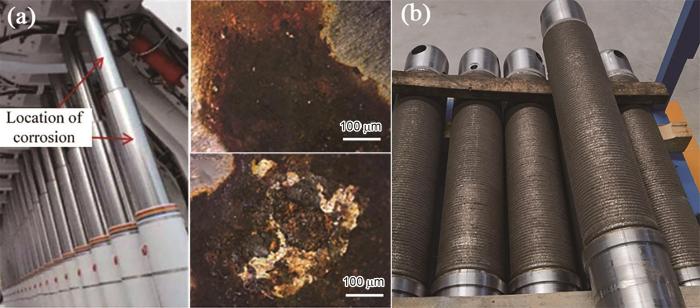
图1 液压支架立柱外表面腐蚀及涂层修复状况<sup>[<xref ref-type="bibr" rid="R3">3</xref>]</sup> Corrosion (a) and coating repair (b) of external surfaces of hydraulic support columns<sup>[<xref ref-type="bibr" rid="R3">3</xref>]</sup> Fig.1 ![]()
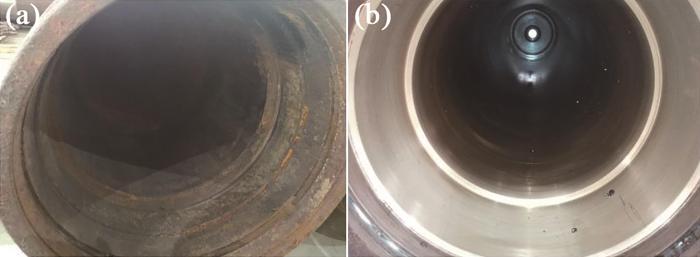
图2 液压支架立柱内表面腐蚀及涂层修复<sup>[<xref ref-type="bibr" rid="R23">23</xref>]</sup> Corrosion (a) and coating repair (b) of inner surfaces of hydraulic support columns<sup>[<xref ref-type="bibr" rid="R23">23</xref>]</sup> Fig.2 ![]()
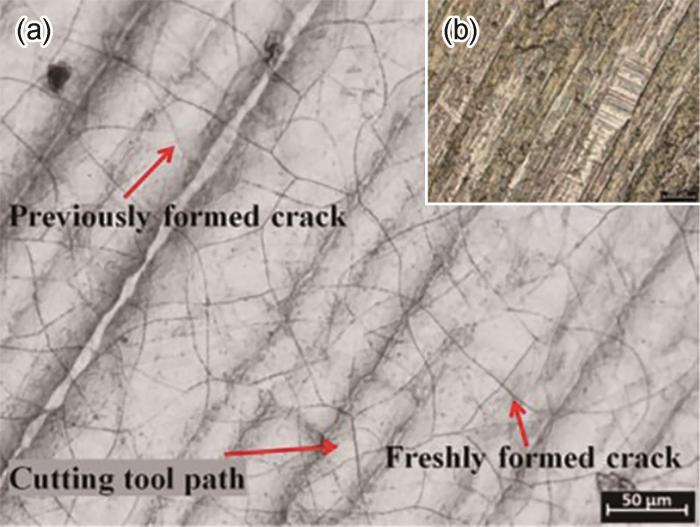
<strong>2.1</strong> 电镀 电镀是在金属离子溶液中,不溶性合金(铅、铂等)作为阳极、待镀金属作为阴极,施加电流后从正极处的阳极溶解的金属沉积在另一极处的阴极上,从而形成涂层[24 ,25 ] .电镀镀层连续性与均匀性较好,且对试件形状无限制[26 ] .液压油缸的防腐耐磨涂层通常采用硬铬涂层,Cr的加入提高了表面的硬度和耐腐蚀性.Abdullah等[27 ] 在416不锈钢上制备不同厚度硬铬涂层,并测试其力学性能.416不锈钢的杨氏模量为(179 ± 4) MPa,所制备的涂层杨氏模量提高到(290 ± 67) MPa,同时涂层的平均硬度为基体的4.5倍,且硬度与涂层厚度无关.纪正君等[28 ] 对27SiMn材料的液压支架立柱电镀硬铬涂层进行168 h的Cu加速盐雾腐蚀试验,其耐腐蚀性能可达到9级标准,能满足井下生产需求.电镀在工艺成本上有一定的优势,同时电镀涂层硬度较高,耐腐蚀性能也能满足基本使用需求.但铬涂层存在固有的裂纹和气孔(如图3 ),很大程度上影响电镀涂层的耐腐蚀性能.此外,电镀液中的Cr6+ 对环境和人体均有不良影响[29 ] . ...
... [
3 ]
Fig.1 ![]()
图2 液压支架立柱内表面腐蚀及涂层修复<sup>[<xref ref-type="bibr" rid="R23">23</xref>]</sup> Corrosion (a) and coating repair (b) of inner surfaces of hydraulic support columns<sup>[<xref ref-type="bibr" rid="R23">23</xref>]</sup> Fig.2 ![]()
<strong>2.1</strong> 电镀 电镀是在金属离子溶液中,不溶性合金(铅、铂等)作为阳极、待镀金属作为阴极,施加电流后从正极处的阳极溶解的金属沉积在另一极处的阴极上,从而形成涂层[24 ,25 ] .电镀镀层连续性与均匀性较好,且对试件形状无限制[26 ] .液压油缸的防腐耐磨涂层通常采用硬铬涂层,Cr的加入提高了表面的硬度和耐腐蚀性.Abdullah等[27 ] 在416不锈钢上制备不同厚度硬铬涂层,并测试其力学性能.416不锈钢的杨氏模量为(179 ± 4) MPa,所制备的涂层杨氏模量提高到(290 ± 67) MPa,同时涂层的平均硬度为基体的4.5倍,且硬度与涂层厚度无关.纪正君等[28 ] 对27SiMn材料的液压支架立柱电镀硬铬涂层进行168 h的Cu加速盐雾腐蚀试验,其耐腐蚀性能可达到9级标准,能满足井下生产需求.电镀在工艺成本上有一定的优势,同时电镀涂层硬度较高,耐腐蚀性能也能满足基本使用需求.但铬涂层存在固有的裂纹和气孔(如图3 ),很大程度上影响电镀涂层的耐腐蚀性能.此外,电镀液中的Cr6+ 对环境和人体均有不良影响[29 ] . ...
Corrosion mechanism and protection techniques of columns of hydraulic supports
2
2011
... 我国作为煤炭大国,能源资源呈现“富煤、缺油、少气、缺铀”的特点,因此煤炭成为我国最主要的基础能源[1 ] .井下采煤法是目前主要采矿方法之一[2 ] ,井下采矿的前提是矿洞的可靠支撑.为此,液压支架成为矿用机械重要组成部分.与露天煤矿开采作业环境相比,井下作业的环境更为恶劣.矿洞内湿度较高,存在较浓的Cl- 、H2 S、SO4 2 - [3 ,4 ] ,同时矿井内部粉尘较多,并伴有掉落的细小坚硬碎石,使得所服役液压支架暴露表面极易被腐蚀、磨损.液压支架主要承重部分为其立柱中的液压油缸,当液压油缸工作内外表面产生缺陷后,其表面粗糙度的改变将使得承重能力也发生改变,进而影响液压支架的整体寿命[5 ] ,严重时将直接导致矿井安全事故.目前,我国液压支架的使用数量不断增加,因此对已故障设备或关键零件的再制造,以及对即将投入使用设备的升级显得尤为重要[6 ~8 ] . ...
... 液压支架电化学腐蚀主要发生在特定位置,如裂纹、气孔缺陷处.王志华[4 ] 研究了镀铁镀铬双层复合镀层的电化学腐蚀反应.在液压支架工作时,其表面会形成水膜,腐蚀性气体会溶解在水膜之中,而水膜会随着缺陷渗入基体内部发生电化学腐蚀.镀层表面极易出现裂纹和针孔.当含有腐蚀离子的水膜由裂纹从镀铬层渗入到镀铁层时,Fe在缺陷内部作为阳极失去电子,如 式(1) 所示.在缺陷内部,Fe2+ 不断增多,电场强度提高,S2- 、Cl- 迁移至缺陷内部并与Fe2+ 发生反应.Fe2+ 与腐蚀介质S2- 、Cl- 、SO4 2 - 2 ~ 4 )).之后FeCl2 与FeSO4 继续发生 式(5) 和(6)反应生成新的沉淀及腐蚀酸.由于缺陷内部的水膜不流通,生成的HCl、H2 SO4 会提高水膜的酸度,加速电化学反应.所生成的沉淀在坑洞内不断堆积,增加膨胀力,最终使涂层出现鼓泡缺陷. ...
液压支架立柱的腐蚀机理及其防护
2
2011
... 我国作为煤炭大国,能源资源呈现“富煤、缺油、少气、缺铀”的特点,因此煤炭成为我国最主要的基础能源[1 ] .井下采煤法是目前主要采矿方法之一[2 ] ,井下采矿的前提是矿洞的可靠支撑.为此,液压支架成为矿用机械重要组成部分.与露天煤矿开采作业环境相比,井下作业的环境更为恶劣.矿洞内湿度较高,存在较浓的Cl- 、H2 S、SO4 2 - [3 ,4 ] ,同时矿井内部粉尘较多,并伴有掉落的细小坚硬碎石,使得所服役液压支架暴露表面极易被腐蚀、磨损.液压支架主要承重部分为其立柱中的液压油缸,当液压油缸工作内外表面产生缺陷后,其表面粗糙度的改变将使得承重能力也发生改变,进而影响液压支架的整体寿命[5 ] ,严重时将直接导致矿井安全事故.目前,我国液压支架的使用数量不断增加,因此对已故障设备或关键零件的再制造,以及对即将投入使用设备的升级显得尤为重要[6 ~8 ] . ...
... 液压支架电化学腐蚀主要发生在特定位置,如裂纹、气孔缺陷处.王志华[4 ] 研究了镀铁镀铬双层复合镀层的电化学腐蚀反应.在液压支架工作时,其表面会形成水膜,腐蚀性气体会溶解在水膜之中,而水膜会随着缺陷渗入基体内部发生电化学腐蚀.镀层表面极易出现裂纹和针孔.当含有腐蚀离子的水膜由裂纹从镀铬层渗入到镀铁层时,Fe在缺陷内部作为阳极失去电子,如 式(1) 所示.在缺陷内部,Fe2+ 不断增多,电场强度提高,S2- 、Cl- 迁移至缺陷内部并与Fe2+ 发生反应.Fe2+ 与腐蚀介质S2- 、Cl- 、SO4 2 - 2 ~ 4 )).之后FeCl2 与FeSO4 继续发生 式(5) 和(6)反应生成新的沉淀及腐蚀酸.由于缺陷内部的水膜不流通,生成的HCl、H2 SO4 会提高水膜的酸度,加速电化学反应.所生成的沉淀在坑洞内不断堆积,增加膨胀力,最终使涂层出现鼓泡缺陷. ...
Corrosion behavior of low alloy steels in high-mineralized mine water
1
2016
... 我国作为煤炭大国,能源资源呈现“富煤、缺油、少气、缺铀”的特点,因此煤炭成为我国最主要的基础能源[1 ] .井下采煤法是目前主要采矿方法之一[2 ] ,井下采矿的前提是矿洞的可靠支撑.为此,液压支架成为矿用机械重要组成部分.与露天煤矿开采作业环境相比,井下作业的环境更为恶劣.矿洞内湿度较高,存在较浓的Cl- 、H2 S、SO4 2 - [3 ,4 ] ,同时矿井内部粉尘较多,并伴有掉落的细小坚硬碎石,使得所服役液压支架暴露表面极易被腐蚀、磨损.液压支架主要承重部分为其立柱中的液压油缸,当液压油缸工作内外表面产生缺陷后,其表面粗糙度的改变将使得承重能力也发生改变,进而影响液压支架的整体寿命[5 ] ,严重时将直接导致矿井安全事故.目前,我国液压支架的使用数量不断增加,因此对已故障设备或关键零件的再制造,以及对即将投入使用设备的升级显得尤为重要[6 ~8 ] . ...
低合金钢在高矿化度矿井水环境下的腐蚀行为
1
2016
... 我国作为煤炭大国,能源资源呈现“富煤、缺油、少气、缺铀”的特点,因此煤炭成为我国最主要的基础能源[1 ] .井下采煤法是目前主要采矿方法之一[2 ] ,井下采矿的前提是矿洞的可靠支撑.为此,液压支架成为矿用机械重要组成部分.与露天煤矿开采作业环境相比,井下作业的环境更为恶劣.矿洞内湿度较高,存在较浓的Cl- 、H2 S、SO4 2 - [3 ,4 ] ,同时矿井内部粉尘较多,并伴有掉落的细小坚硬碎石,使得所服役液压支架暴露表面极易被腐蚀、磨损.液压支架主要承重部分为其立柱中的液压油缸,当液压油缸工作内外表面产生缺陷后,其表面粗糙度的改变将使得承重能力也发生改变,进而影响液压支架的整体寿命[5 ] ,严重时将直接导致矿井安全事故.目前,我国液压支架的使用数量不断增加,因此对已故障设备或关键零件的再制造,以及对即将投入使用设备的升级显得尤为重要[6 ~8 ] . ...
Influence of different feeding process on laser cladding remanufacturing of hydraulic support
1
2021
... 我国作为煤炭大国,能源资源呈现“富煤、缺油、少气、缺铀”的特点,因此煤炭成为我国最主要的基础能源[1 ] .井下采煤法是目前主要采矿方法之一[2 ] ,井下采矿的前提是矿洞的可靠支撑.为此,液压支架成为矿用机械重要组成部分.与露天煤矿开采作业环境相比,井下作业的环境更为恶劣.矿洞内湿度较高,存在较浓的Cl- 、H2 S、SO4 2 - [3 ,4 ] ,同时矿井内部粉尘较多,并伴有掉落的细小坚硬碎石,使得所服役液压支架暴露表面极易被腐蚀、磨损.液压支架主要承重部分为其立柱中的液压油缸,当液压油缸工作内外表面产生缺陷后,其表面粗糙度的改变将使得承重能力也发生改变,进而影响液压支架的整体寿命[5 ] ,严重时将直接导致矿井安全事故.目前,我国液压支架的使用数量不断增加,因此对已故障设备或关键零件的再制造,以及对即将投入使用设备的升级显得尤为重要[6 ~8 ] . ...
不同送料工艺对液压支架激光熔覆再制造的影响
1
2021
... 我国作为煤炭大国,能源资源呈现“富煤、缺油、少气、缺铀”的特点,因此煤炭成为我国最主要的基础能源[1 ] .井下采煤法是目前主要采矿方法之一[2 ] ,井下采矿的前提是矿洞的可靠支撑.为此,液压支架成为矿用机械重要组成部分.与露天煤矿开采作业环境相比,井下作业的环境更为恶劣.矿洞内湿度较高,存在较浓的Cl- 、H2 S、SO4 2 - [3 ,4 ] ,同时矿井内部粉尘较多,并伴有掉落的细小坚硬碎石,使得所服役液压支架暴露表面极易被腐蚀、磨损.液压支架主要承重部分为其立柱中的液压油缸,当液压油缸工作内外表面产生缺陷后,其表面粗糙度的改变将使得承重能力也发生改变,进而影响液压支架的整体寿命[5 ] ,严重时将直接导致矿井安全事故.目前,我国液压支架的使用数量不断增加,因此对已故障设备或关键零件的再制造,以及对即将投入使用设备的升级显得尤为重要[6 ~8 ] . ...
Microstructure and properties of Fe-based alloy prepared by ultra-high speed laser cladding and conventional laser cladding
0
2022
超高速与常规激光熔覆Fe基涂层微观组织及性能研究
0
2022
Study on wear resistance and corrosion resistance of HVOF surface coating refabricate for hydraulic support column
3
2021
... 我国作为煤炭大国,能源资源呈现“富煤、缺油、少气、缺铀”的特点,因此煤炭成为我国最主要的基础能源[1 ] .井下采煤法是目前主要采矿方法之一[2 ] ,井下采矿的前提是矿洞的可靠支撑.为此,液压支架成为矿用机械重要组成部分.与露天煤矿开采作业环境相比,井下作业的环境更为恶劣.矿洞内湿度较高,存在较浓的Cl- 、H2 S、SO4 2 - [3 ,4 ] ,同时矿井内部粉尘较多,并伴有掉落的细小坚硬碎石,使得所服役液压支架暴露表面极易被腐蚀、磨损.液压支架主要承重部分为其立柱中的液压油缸,当液压油缸工作内外表面产生缺陷后,其表面粗糙度的改变将使得承重能力也发生改变,进而影响液压支架的整体寿命[5 ] ,严重时将直接导致矿井安全事故.目前,我国液压支架的使用数量不断增加,因此对已故障设备或关键零件的再制造,以及对即将投入使用设备的升级显得尤为重要[6 ~8 ] . ...
... 热喷涂是将金属或非金属颗粒加热融化或呈现熔融状态,加速撞击到母材表面,形成涂层[30 ] .根据热源不同,热喷涂技术可分为火焰喷涂、电弧喷涂、爆炸喷涂、等离子喷涂等[31 ] .液压油缸涂层的制备常用超音速火焰喷涂,并选用碳化钨、镍基合金、不锈钢等材料,使得涂层提高硬度并具有一定的防腐性能.Wu等[8 ] 使用超音速火焰喷涂(HVOF)在液压支架立柱表面制备Ni60、WC10Co4Cr、316L 3种涂层,涂层厚度在420~450 μm.在加载载荷100 g加载时间15 s的条件下,WC10Co4Cr涂层显微硬度最高,可达(1163.6 ± 12.4)HV300.在盐雾腐蚀试验中,WC10Co4Cr涂层在120 h后出现锈蚀,Ni60合金、316L不锈钢涂层耐腐蚀性更好,在720 h后出现锈蚀.张景河等[32 ] 通过超音速火焰喷涂在27SiMn材料的液压支架立柱表面制备WC-Cr3C2-M涂层,涂层显微组织致密,不存在贯穿性裂纹,WC的加入使得涂层硬具有更高的硬度,达到951.4HV0.3 ,远高于27SiMn.经过Cu加速盐雾腐蚀试验,H2 S,SO2 腐蚀试验,涂层均表现出良好的耐腐蚀性.热喷涂涂层表现出较好的耐腐蚀性能主要归因于涂层致密的组织,以及部分元素(Cr、Al等)氧化后形成保护性氧化膜,二者共同作用延缓腐蚀介质向内部扩散.尽管热喷涂涂层一定程度上能提升油缸材料的耐磨性和耐腐蚀性,但其制备过程仍存在一定短板.未完全熔融粉末在高速撞击到基体时易形成裂纹,同时涂层与基材的结合形式主要是机械结合,涂层易脱落.王勇等[33 ] 在液压支架用27SiMn钢上通过超音速火焰喷涂制备WC-10Co-4Cr涂层,并分析涂层组织及沉积机理.观察到在涂层与基体结合处有WC颗粒嵌入基体中,产生明显裂纹,但并未留下轨迹痕迹,其中必定产生了冶金结合(如图4 ).通过从基体到涂层中的扫描能谱可以看到,基体中的Fe有向涂层内部扩散的趋势,而W也有向基体扩散的现象,因此涂层与基体的结合形式为机械结合并伴随少量冶金结合和元素扩散. ...
... Application examples of protective coatings for hydraulic supports
Table 2 Substrate Coating material Thickness / μm Hardness Corrosion test method Corrosion test results Electroplating 416 stainless steel Hard chrome[27 ] 11-194 (Depends on plating time) 900HV 27SiMn Cu-Cr[28 ] 30-45 800HV Copper accelerated acetic acid salt spray (CASS) Meeting production needs Thermal 45 steel WC10Co4Cr[8 ] 420-450 (1163.6 ± 12.4)HV300 CASS Rusting after 120 h spraying 27SiMn WC-Cr3C2-M[32 ] 300-350 951.4HV0.3 CASS No visible corrosion spots after 312 h Hydrogen sulfide No visible corrosion corrosion test spots after 240 h Sulfur dioxide No visible corrosion corrosion test spots after 312 h 27SiMn WC[33 ] 1200HV[27 ] Laser cladding 27SiMn Fe-based alloy 500.1HV0.3 powder[35 ] 27SiMn 316L[36 ] 1000 400HV0.2 3.5%NaCl electrochemical E corr = 0.053 Vcorrosion R p = 22.881 Ω·cm²I corr = 1.018 A/cm²Arc melting 27SiMn Aluminum 200HV0.5 3.5%NaCl electrochemical E corr = -0.53 Vcopper bronze[43 ] corrosion Dense holes in the surface of the coating CASS Corrosion material after 100 h 27SiMn Aluminum 540HV0.5 3.5%NaCl electrochemical E corr = -0.85 Vbronze[44 ] corrosion Aluminum bronze + 550HV0.5 E corr = -0.8 VNi、Mn[44 ] Aluminum bronze + 550HV0.5 E corr = -0.6 VSi[44 ]
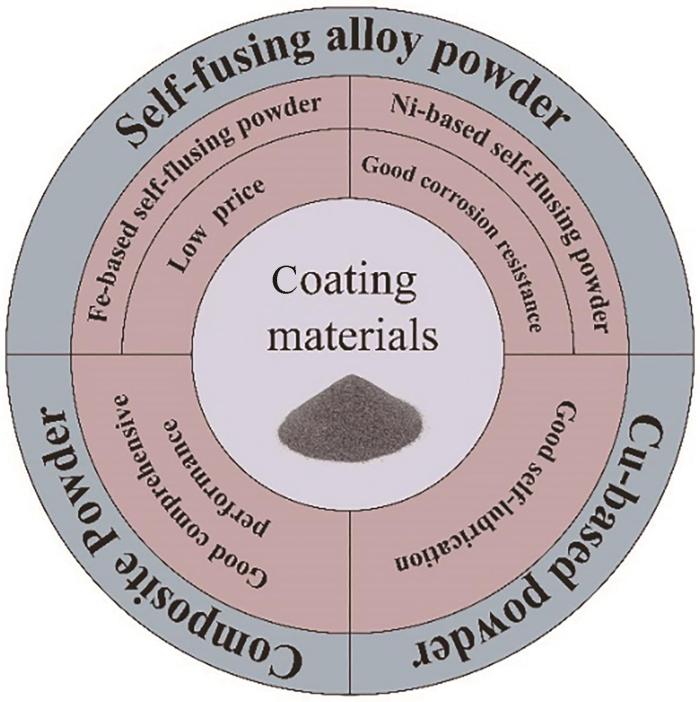
<strong>3</strong> 液压支架立柱涂层材料体系 液压油缸常见材料为27SiMn、30CrMo、30Cr-MnSi,目前国内外学者主要围绕27SiMn液压油缸材料表面修复展开研究.对于较为理想的激光熔覆涂层制备技术,其涂层制备材料体系如图5 所示,主要有自熔性合金粉末、铜基粉末以及复合粉末,其中自熔性合金粉末分为铁基自熔性粉末,镍基自熔性粉末.对于液压油缸不同位置的使用需求及加工条件,选择不同加工材料,油缸活塞杆外表面一般采用自熔性粉末或复合粉末,而内表面则采用铜基粉末或复合粉末. ...
Review of effective techniques for surface engineering material modification for a variety of applications
1
2023
... 在材料表面保护方面,主要包括:物理化学功能化、表面涂层技术、机械结构功能化[9 ] .涂层技术是一种表面改性的方法,可以将高性能材料复合到普通材料表面,从而赋予材料和零部件特定的性能,提升其使用价值.涂层技术主要包括电镀[10 ] 、热喷涂[11 ] 、激光熔覆[12 ,13 ] 以及各种堆焊技术[14 ] 等.现役的液压支架由于井下的腐蚀环境,表面容易产生腐蚀和磨损等缺陷,因此可以采用涂层技术制备防护涂层,以延长其使用寿命[15 ] .对于已失效或局部损坏的液压支架,涂层技术也可以作为再制造和修复的手段,确保资源的可持续发展[16 ] . ...
Electroplating for decorative applications: Recent trends in research and development
1
2018
... 在材料表面保护方面,主要包括:物理化学功能化、表面涂层技术、机械结构功能化[9 ] .涂层技术是一种表面改性的方法,可以将高性能材料复合到普通材料表面,从而赋予材料和零部件特定的性能,提升其使用价值.涂层技术主要包括电镀[10 ] 、热喷涂[11 ] 、激光熔覆[12 ,13 ] 以及各种堆焊技术[14 ] 等.现役的液压支架由于井下的腐蚀环境,表面容易产生腐蚀和磨损等缺陷,因此可以采用涂层技术制备防护涂层,以延长其使用寿命[15 ] .对于已失效或局部损坏的液压支架,涂层技术也可以作为再制造和修复的手段,确保资源的可持续发展[16 ] . ...
The 2016 thermal spray roadmap
1
2016
... 在材料表面保护方面,主要包括:物理化学功能化、表面涂层技术、机械结构功能化[9 ] .涂层技术是一种表面改性的方法,可以将高性能材料复合到普通材料表面,从而赋予材料和零部件特定的性能,提升其使用价值.涂层技术主要包括电镀[10 ] 、热喷涂[11 ] 、激光熔覆[12 ,13 ] 以及各种堆焊技术[14 ] 等.现役的液压支架由于井下的腐蚀环境,表面容易产生腐蚀和磨损等缺陷,因此可以采用涂层技术制备防护涂层,以延长其使用寿命[15 ] .对于已失效或局部损坏的液压支架,涂层技术也可以作为再制造和修复的手段,确保资源的可持续发展[16 ] . ...
Recent research and development status of laser cladding: a review
1
2021
... 在材料表面保护方面,主要包括:物理化学功能化、表面涂层技术、机械结构功能化[9 ] .涂层技术是一种表面改性的方法,可以将高性能材料复合到普通材料表面,从而赋予材料和零部件特定的性能,提升其使用价值.涂层技术主要包括电镀[10 ] 、热喷涂[11 ] 、激光熔覆[12 ,13 ] 以及各种堆焊技术[14 ] 等.现役的液压支架由于井下的腐蚀环境,表面容易产生腐蚀和磨损等缺陷,因此可以采用涂层技术制备防护涂层,以延长其使用寿命[15 ] .对于已失效或局部损坏的液压支架,涂层技术也可以作为再制造和修复的手段,确保资源的可持续发展[16 ] . ...
Research status and development of laser cladding high temperature protective coating
1
2023
... 在材料表面保护方面,主要包括:物理化学功能化、表面涂层技术、机械结构功能化[9 ] .涂层技术是一种表面改性的方法,可以将高性能材料复合到普通材料表面,从而赋予材料和零部件特定的性能,提升其使用价值.涂层技术主要包括电镀[10 ] 、热喷涂[11 ] 、激光熔覆[12 ,13 ] 以及各种堆焊技术[14 ] 等.现役的液压支架由于井下的腐蚀环境,表面容易产生腐蚀和磨损等缺陷,因此可以采用涂层技术制备防护涂层,以延长其使用寿命[15 ] .对于已失效或局部损坏的液压支架,涂层技术也可以作为再制造和修复的手段,确保资源的可持续发展[16 ] . ...
激光熔覆高温防护涂层研究现状及发展方向
1
2023
... 在材料表面保护方面,主要包括:物理化学功能化、表面涂层技术、机械结构功能化[9 ] .涂层技术是一种表面改性的方法,可以将高性能材料复合到普通材料表面,从而赋予材料和零部件特定的性能,提升其使用价值.涂层技术主要包括电镀[10 ] 、热喷涂[11 ] 、激光熔覆[12 ,13 ] 以及各种堆焊技术[14 ] 等.现役的液压支架由于井下的腐蚀环境,表面容易产生腐蚀和磨损等缺陷,因此可以采用涂层技术制备防护涂层,以延长其使用寿命[15 ] .对于已失效或局部损坏的液压支架,涂层技术也可以作为再制造和修复的手段,确保资源的可持续发展[16 ] . ...
TIG torch surfacing of metallic materials-a critical review
1
2019
... 在材料表面保护方面,主要包括:物理化学功能化、表面涂层技术、机械结构功能化[9 ] .涂层技术是一种表面改性的方法,可以将高性能材料复合到普通材料表面,从而赋予材料和零部件特定的性能,提升其使用价值.涂层技术主要包括电镀[10 ] 、热喷涂[11 ] 、激光熔覆[12 ,13 ] 以及各种堆焊技术[14 ] 等.现役的液压支架由于井下的腐蚀环境,表面容易产生腐蚀和磨损等缺陷,因此可以采用涂层技术制备防护涂层,以延长其使用寿命[15 ] .对于已失效或局部损坏的液压支架,涂层技术也可以作为再制造和修复的手段,确保资源的可持续发展[16 ] . ...
Corrosion mechanism and protection measures of hydraulic support
1
2021
... 在材料表面保护方面,主要包括:物理化学功能化、表面涂层技术、机械结构功能化[9 ] .涂层技术是一种表面改性的方法,可以将高性能材料复合到普通材料表面,从而赋予材料和零部件特定的性能,提升其使用价值.涂层技术主要包括电镀[10 ] 、热喷涂[11 ] 、激光熔覆[12 ,13 ] 以及各种堆焊技术[14 ] 等.现役的液压支架由于井下的腐蚀环境,表面容易产生腐蚀和磨损等缺陷,因此可以采用涂层技术制备防护涂层,以延长其使用寿命[15 ] .对于已失效或局部损坏的液压支架,涂层技术也可以作为再制造和修复的手段,确保资源的可持续发展[16 ] . ...
液压支架的腐蚀机理及防护措施
1
2021
... 在材料表面保护方面,主要包括:物理化学功能化、表面涂层技术、机械结构功能化[9 ] .涂层技术是一种表面改性的方法,可以将高性能材料复合到普通材料表面,从而赋予材料和零部件特定的性能,提升其使用价值.涂层技术主要包括电镀[10 ] 、热喷涂[11 ] 、激光熔覆[12 ,13 ] 以及各种堆焊技术[14 ] 等.现役的液压支架由于井下的腐蚀环境,表面容易产生腐蚀和磨损等缺陷,因此可以采用涂层技术制备防护涂层,以延长其使用寿命[15 ] .对于已失效或局部损坏的液压支架,涂层技术也可以作为再制造和修复的手段,确保资源的可持续发展[16 ] . ...
Research progress on green remanufacturing and repair technology for mining components
1
2024
... 在材料表面保护方面,主要包括:物理化学功能化、表面涂层技术、机械结构功能化[9 ] .涂层技术是一种表面改性的方法,可以将高性能材料复合到普通材料表面,从而赋予材料和零部件特定的性能,提升其使用价值.涂层技术主要包括电镀[10 ] 、热喷涂[11 ] 、激光熔覆[12 ,13 ] 以及各种堆焊技术[14 ] 等.现役的液压支架由于井下的腐蚀环境,表面容易产生腐蚀和磨损等缺陷,因此可以采用涂层技术制备防护涂层,以延长其使用寿命[15 ] .对于已失效或局部损坏的液压支架,涂层技术也可以作为再制造和修复的手段,确保资源的可持续发展[16 ] . ...
矿用零部件绿色再制造修复技术研究进展
1
2024
... 在材料表面保护方面,主要包括:物理化学功能化、表面涂层技术、机械结构功能化[9 ] .涂层技术是一种表面改性的方法,可以将高性能材料复合到普通材料表面,从而赋予材料和零部件特定的性能,提升其使用价值.涂层技术主要包括电镀[10 ] 、热喷涂[11 ] 、激光熔覆[12 ,13 ] 以及各种堆焊技术[14 ] 等.现役的液压支架由于井下的腐蚀环境,表面容易产生腐蚀和磨损等缺陷,因此可以采用涂层技术制备防护涂层,以延长其使用寿命[15 ] .对于已失效或局部损坏的液压支架,涂层技术也可以作为再制造和修复的手段,确保资源的可持续发展[16 ] . ...
Internal surface corrosion reason for hydraulic cylinder of a hydraulic powered roof support
1
2017
... 在液压支架的服役过程中,井下环境及其所使用的润滑油中均存在多种腐蚀介质,如Cl- 、S2- 、SO4 2 - [17 ] .点蚀通常与所接触到的特定阴离子有关,如Cl- .金属表面通常会形成一层保护膜(氧化层、钝化膜等),当Cl- 向保护膜迁移并达到一定浓度时,会与金属反应形成氯化物,由于金属氯化物摩尔体积较大,会直接导致保护膜的破裂.保护膜破裂后金属暴露在腐蚀性环境中点蚀会逐渐形成并长大[18 ] .S及硫化物对材料的耐腐蚀性也具有显著的不利影响.尽管这些物质并不直接引发材料表面缺陷,但S与金属反应会影响材料表面的保护膜的形成、保护膜的厚度,降低材料的整体耐腐蚀性能,从而影响其长期使用的可靠性[19 ~21 ] .Wang等[22 ] 研究表明,在H2 S环境下,材料表面的氧化膜呈3层结构,最外层为氢氧化物,中间层及内层为硫化物和氧化物,H2 S的存在会抑制保护性的氧化物生成,降低耐腐蚀性. ...
液压支架油缸内表面的腐蚀原因
1
2017
... 在液压支架的服役过程中,井下环境及其所使用的润滑油中均存在多种腐蚀介质,如Cl- 、S2- 、SO4 2 - [17 ] .点蚀通常与所接触到的特定阴离子有关,如Cl- .金属表面通常会形成一层保护膜(氧化层、钝化膜等),当Cl- 向保护膜迁移并达到一定浓度时,会与金属反应形成氯化物,由于金属氯化物摩尔体积较大,会直接导致保护膜的破裂.保护膜破裂后金属暴露在腐蚀性环境中点蚀会逐渐形成并长大[18 ] .S及硫化物对材料的耐腐蚀性也具有显著的不利影响.尽管这些物质并不直接引发材料表面缺陷,但S与金属反应会影响材料表面的保护膜的形成、保护膜的厚度,降低材料的整体耐腐蚀性能,从而影响其长期使用的可靠性[19 ~21 ] .Wang等[22 ] 研究表明,在H2 S环境下,材料表面的氧化膜呈3层结构,最外层为氢氧化物,中间层及内层为硫化物和氧化物,H2 S的存在会抑制保护性的氧化物生成,降低耐腐蚀性. ...
Origins of pitting corrosion
1
2004
... 在液压支架的服役过程中,井下环境及其所使用的润滑油中均存在多种腐蚀介质,如Cl- 、S2- 、SO4 2 - [17 ] .点蚀通常与所接触到的特定阴离子有关,如Cl- .金属表面通常会形成一层保护膜(氧化层、钝化膜等),当Cl- 向保护膜迁移并达到一定浓度时,会与金属反应形成氯化物,由于金属氯化物摩尔体积较大,会直接导致保护膜的破裂.保护膜破裂后金属暴露在腐蚀性环境中点蚀会逐渐形成并长大[18 ] .S及硫化物对材料的耐腐蚀性也具有显著的不利影响.尽管这些物质并不直接引发材料表面缺陷,但S与金属反应会影响材料表面的保护膜的形成、保护膜的厚度,降低材料的整体耐腐蚀性能,从而影响其长期使用的可靠性[19 ~21 ] .Wang等[22 ] 研究表明,在H2 S环境下,材料表面的氧化膜呈3层结构,最外层为氢氧化物,中间层及内层为硫化物和氧化物,H2 S的存在会抑制保护性的氧化物生成,降低耐腐蚀性. ...
Passivity of martensitic stainless steel in borate buffer solution: Influence of sulfide ion
1
2019
... 在液压支架的服役过程中,井下环境及其所使用的润滑油中均存在多种腐蚀介质,如Cl- 、S2- 、SO4 2 - [17 ] .点蚀通常与所接触到的特定阴离子有关,如Cl- .金属表面通常会形成一层保护膜(氧化层、钝化膜等),当Cl- 向保护膜迁移并达到一定浓度时,会与金属反应形成氯化物,由于金属氯化物摩尔体积较大,会直接导致保护膜的破裂.保护膜破裂后金属暴露在腐蚀性环境中点蚀会逐渐形成并长大[18 ] .S及硫化物对材料的耐腐蚀性也具有显著的不利影响.尽管这些物质并不直接引发材料表面缺陷,但S与金属反应会影响材料表面的保护膜的形成、保护膜的厚度,降低材料的整体耐腐蚀性能,从而影响其长期使用的可靠性[19 ~21 ] .Wang等[22 ] 研究表明,在H2 S环境下,材料表面的氧化膜呈3层结构,最外层为氢氧化物,中间层及内层为硫化物和氧化物,H2 S的存在会抑制保护性的氧化物生成,降低耐腐蚀性. ...
Effect of high temperature on the corrosion behavior and passive film composition of 316?L stainless steel in high H2 S-containing environments
0
2020
Synergistic effect of S2- and Cl- on corrosion and passivation behavior of 316L austenitic stainless steel
1
2024
... 在液压支架的服役过程中,井下环境及其所使用的润滑油中均存在多种腐蚀介质,如Cl- 、S2- 、SO4 2 - [17 ] .点蚀通常与所接触到的特定阴离子有关,如Cl- .金属表面通常会形成一层保护膜(氧化层、钝化膜等),当Cl- 向保护膜迁移并达到一定浓度时,会与金属反应形成氯化物,由于金属氯化物摩尔体积较大,会直接导致保护膜的破裂.保护膜破裂后金属暴露在腐蚀性环境中点蚀会逐渐形成并长大[18 ] .S及硫化物对材料的耐腐蚀性也具有显著的不利影响.尽管这些物质并不直接引发材料表面缺陷,但S与金属反应会影响材料表面的保护膜的形成、保护膜的厚度,降低材料的整体耐腐蚀性能,从而影响其长期使用的可靠性[19 ~21 ] .Wang等[22 ] 研究表明,在H2 S环境下,材料表面的氧化膜呈3层结构,最外层为氢氧化物,中间层及内层为硫化物和氧化物,H2 S的存在会抑制保护性的氧化物生成,降低耐腐蚀性. ...
S2- 和Cl- 对316L奥氏体不锈钢的腐蚀钝化行为的协同作用
1
2024
... 在液压支架的服役过程中,井下环境及其所使用的润滑油中均存在多种腐蚀介质,如Cl- 、S2- 、SO4 2 - [17 ] .点蚀通常与所接触到的特定阴离子有关,如Cl- .金属表面通常会形成一层保护膜(氧化层、钝化膜等),当Cl- 向保护膜迁移并达到一定浓度时,会与金属反应形成氯化物,由于金属氯化物摩尔体积较大,会直接导致保护膜的破裂.保护膜破裂后金属暴露在腐蚀性环境中点蚀会逐渐形成并长大[18 ] .S及硫化物对材料的耐腐蚀性也具有显著的不利影响.尽管这些物质并不直接引发材料表面缺陷,但S与金属反应会影响材料表面的保护膜的形成、保护膜的厚度,降低材料的整体耐腐蚀性能,从而影响其长期使用的可靠性[19 ~21 ] .Wang等[22 ] 研究表明,在H2 S环境下,材料表面的氧化膜呈3层结构,最外层为氢氧化物,中间层及内层为硫化物和氧化物,H2 S的存在会抑制保护性的氧化物生成,降低耐腐蚀性. ...
Combined effect of pH and H2 S on the structure of passive film formed on type 316L stainless steel
1
2018
... 在液压支架的服役过程中,井下环境及其所使用的润滑油中均存在多种腐蚀介质,如Cl- 、S2- 、SO4 2 - [17 ] .点蚀通常与所接触到的特定阴离子有关,如Cl- .金属表面通常会形成一层保护膜(氧化层、钝化膜等),当Cl- 向保护膜迁移并达到一定浓度时,会与金属反应形成氯化物,由于金属氯化物摩尔体积较大,会直接导致保护膜的破裂.保护膜破裂后金属暴露在腐蚀性环境中点蚀会逐渐形成并长大[18 ] .S及硫化物对材料的耐腐蚀性也具有显著的不利影响.尽管这些物质并不直接引发材料表面缺陷,但S与金属反应会影响材料表面的保护膜的形成、保护膜的厚度,降低材料的整体耐腐蚀性能,从而影响其长期使用的可靠性[19 ~21 ] .Wang等[22 ] 研究表明,在H2 S环境下,材料表面的氧化膜呈3层结构,最外层为氢氧化物,中间层及内层为硫化物和氧化物,H2 S的存在会抑制保护性的氧化物生成,降低耐腐蚀性. ...
Study on microstructure and properties of cladding layer on inner wall of hydraulic support cylinder
2
2022
... Advantages and disadvantages of common preparation processes of coatings for the repair of hydraulic support columns
Table 1 Processing Advantage Disadvantage Electroplating ① Low process costs ① Prone to defects ② High hardness ② Generating hazardous substances during the process Thermal spray ① Wide choice of coating materials ① The coating and the substrate are mainly mechanically bonded, and the bonding strength is weak ② Good overall performance ② Cracks may occur when unmelted powder hits the substrate at high speeds Laser cladding ① Metallurgical bonding of the coating to the substrate ① The coating is susceptible to cracking due to thermal stress ② Good density Arc melting copper ① Metallurgical bonding of the coating to the substrate ① High equipment costs ② Good electrical conductivity, thermal conductivity, self-lubricating properties ② Single copper coating performance is weak, need to add other alloying elements
图1 液压支架立柱外表面腐蚀及涂层修复状况<sup>[<xref ref-type="bibr" rid="R3">3</xref>]</sup> Corrosion (a) and coating repair (b) of external surfaces of hydraulic support columns<sup>[<xref ref-type="bibr" rid="R3">3</xref>]</sup> Fig.1 ![]()
图2 液压支架立柱内表面腐蚀及涂层修复<sup>[<xref ref-type="bibr" rid="R23">23</xref>]</sup> Corrosion (a) and coating repair (b) of inner surfaces of hydraulic support columns<sup>[<xref ref-type="bibr" rid="R23">23</xref>]</sup> Fig.2 ![]()
<strong>2.1</strong> 电镀 电镀是在金属离子溶液中,不溶性合金(铅、铂等)作为阳极、待镀金属作为阴极,施加电流后从正极处的阳极溶解的金属沉积在另一极处的阴极上,从而形成涂层[24 ,25 ] .电镀镀层连续性与均匀性较好,且对试件形状无限制[26 ] .液压油缸的防腐耐磨涂层通常采用硬铬涂层,Cr的加入提高了表面的硬度和耐腐蚀性.Abdullah等[27 ] 在416不锈钢上制备不同厚度硬铬涂层,并测试其力学性能.416不锈钢的杨氏模量为(179 ± 4) MPa,所制备的涂层杨氏模量提高到(290 ± 67) MPa,同时涂层的平均硬度为基体的4.5倍,且硬度与涂层厚度无关.纪正君等[28 ] 对27SiMn材料的液压支架立柱电镀硬铬涂层进行168 h的Cu加速盐雾腐蚀试验,其耐腐蚀性能可达到9级标准,能满足井下生产需求.电镀在工艺成本上有一定的优势,同时电镀涂层硬度较高,耐腐蚀性能也能满足基本使用需求.但铬涂层存在固有的裂纹和气孔(如图3 ),很大程度上影响电镀涂层的耐腐蚀性能.此外,电镀液中的Cr6+ 对环境和人体均有不良影响[29 ] . ...
... [
23 ]
Fig.2 ![]()
<strong>2.1</strong> 电镀 电镀是在金属离子溶液中,不溶性合金(铅、铂等)作为阳极、待镀金属作为阴极,施加电流后从正极处的阳极溶解的金属沉积在另一极处的阴极上,从而形成涂层[24 ,25 ] .电镀镀层连续性与均匀性较好,且对试件形状无限制[26 ] .液压油缸的防腐耐磨涂层通常采用硬铬涂层,Cr的加入提高了表面的硬度和耐腐蚀性.Abdullah等[27 ] 在416不锈钢上制备不同厚度硬铬涂层,并测试其力学性能.416不锈钢的杨氏模量为(179 ± 4) MPa,所制备的涂层杨氏模量提高到(290 ± 67) MPa,同时涂层的平均硬度为基体的4.5倍,且硬度与涂层厚度无关.纪正君等[28 ] 对27SiMn材料的液压支架立柱电镀硬铬涂层进行168 h的Cu加速盐雾腐蚀试验,其耐腐蚀性能可达到9级标准,能满足井下生产需求.电镀在工艺成本上有一定的优势,同时电镀涂层硬度较高,耐腐蚀性能也能满足基本使用需求.但铬涂层存在固有的裂纹和气孔(如图3 ),很大程度上影响电镀涂层的耐腐蚀性能.此外,电镀液中的Cr6+ 对环境和人体均有不良影响[29 ] . ...
液压支架油缸内壁熔覆层的组织与性能研究
2
2022
... Advantages and disadvantages of common preparation processes of coatings for the repair of hydraulic support columns
Table 1 Processing Advantage Disadvantage Electroplating ① Low process costs ① Prone to defects ② High hardness ② Generating hazardous substances during the process Thermal spray ① Wide choice of coating materials ① The coating and the substrate are mainly mechanically bonded, and the bonding strength is weak ② Good overall performance ② Cracks may occur when unmelted powder hits the substrate at high speeds Laser cladding ① Metallurgical bonding of the coating to the substrate ① The coating is susceptible to cracking due to thermal stress ② Good density Arc melting copper ① Metallurgical bonding of the coating to the substrate ① High equipment costs ② Good electrical conductivity, thermal conductivity, self-lubricating properties ② Single copper coating performance is weak, need to add other alloying elements
图1 液压支架立柱外表面腐蚀及涂层修复状况<sup>[<xref ref-type="bibr" rid="R3">3</xref>]</sup> Corrosion (a) and coating repair (b) of external surfaces of hydraulic support columns<sup>[<xref ref-type="bibr" rid="R3">3</xref>]</sup> Fig.1 ![]()
图2 液压支架立柱内表面腐蚀及涂层修复<sup>[<xref ref-type="bibr" rid="R23">23</xref>]</sup> Corrosion (a) and coating repair (b) of inner surfaces of hydraulic support columns<sup>[<xref ref-type="bibr" rid="R23">23</xref>]</sup> Fig.2 ![]()
<strong>2.1</strong> 电镀 电镀是在金属离子溶液中,不溶性合金(铅、铂等)作为阳极、待镀金属作为阴极,施加电流后从正极处的阳极溶解的金属沉积在另一极处的阴极上,从而形成涂层[24 ,25 ] .电镀镀层连续性与均匀性较好,且对试件形状无限制[26 ] .液压油缸的防腐耐磨涂层通常采用硬铬涂层,Cr的加入提高了表面的硬度和耐腐蚀性.Abdullah等[27 ] 在416不锈钢上制备不同厚度硬铬涂层,并测试其力学性能.416不锈钢的杨氏模量为(179 ± 4) MPa,所制备的涂层杨氏模量提高到(290 ± 67) MPa,同时涂层的平均硬度为基体的4.5倍,且硬度与涂层厚度无关.纪正君等[28 ] 对27SiMn材料的液压支架立柱电镀硬铬涂层进行168 h的Cu加速盐雾腐蚀试验,其耐腐蚀性能可达到9级标准,能满足井下生产需求.电镀在工艺成本上有一定的优势,同时电镀涂层硬度较高,耐腐蚀性能也能满足基本使用需求.但铬涂层存在固有的裂纹和气孔(如图3 ),很大程度上影响电镀涂层的耐腐蚀性能.此外,电镀液中的Cr6+ 对环境和人体均有不良影响[29 ] . ...
... [
23 ]
Fig.2 ![]()
<strong>2.1</strong> 电镀 电镀是在金属离子溶液中,不溶性合金(铅、铂等)作为阳极、待镀金属作为阴极,施加电流后从正极处的阳极溶解的金属沉积在另一极处的阴极上,从而形成涂层[24 ,25 ] .电镀镀层连续性与均匀性较好,且对试件形状无限制[26 ] .液压油缸的防腐耐磨涂层通常采用硬铬涂层,Cr的加入提高了表面的硬度和耐腐蚀性.Abdullah等[27 ] 在416不锈钢上制备不同厚度硬铬涂层,并测试其力学性能.416不锈钢的杨氏模量为(179 ± 4) MPa,所制备的涂层杨氏模量提高到(290 ± 67) MPa,同时涂层的平均硬度为基体的4.5倍,且硬度与涂层厚度无关.纪正君等[28 ] 对27SiMn材料的液压支架立柱电镀硬铬涂层进行168 h的Cu加速盐雾腐蚀试验,其耐腐蚀性能可达到9级标准,能满足井下生产需求.电镀在工艺成本上有一定的优势,同时电镀涂层硬度较高,耐腐蚀性能也能满足基本使用需求.但铬涂层存在固有的裂纹和气孔(如图3 ),很大程度上影响电镀涂层的耐腐蚀性能.此外,电镀液中的Cr6+ 对环境和人体均有不良影响[29 ] . ...
Principle of hard chrome electroplating and analysis on structure and performance of chromium layer
1
2019
... 电镀是在金属离子溶液中,不溶性合金(铅、铂等)作为阳极、待镀金属作为阴极,施加电流后从正极处的阳极溶解的金属沉积在另一极处的阴极上,从而形成涂层[24 ,25 ] .电镀镀层连续性与均匀性较好,且对试件形状无限制[26 ] .液压油缸的防腐耐磨涂层通常采用硬铬涂层,Cr的加入提高了表面的硬度和耐腐蚀性.Abdullah等[27 ] 在416不锈钢上制备不同厚度硬铬涂层,并测试其力学性能.416不锈钢的杨氏模量为(179 ± 4) MPa,所制备的涂层杨氏模量提高到(290 ± 67) MPa,同时涂层的平均硬度为基体的4.5倍,且硬度与涂层厚度无关.纪正君等[28 ] 对27SiMn材料的液压支架立柱电镀硬铬涂层进行168 h的Cu加速盐雾腐蚀试验,其耐腐蚀性能可达到9级标准,能满足井下生产需求.电镀在工艺成本上有一定的优势,同时电镀涂层硬度较高,耐腐蚀性能也能满足基本使用需求.但铬涂层存在固有的裂纹和气孔(如图3 ),很大程度上影响电镀涂层的耐腐蚀性能.此外,电镀液中的Cr6+ 对环境和人体均有不良影响[29 ] . ...
电镀硬铬工艺原理及铬层组织与性能浅析
1
2019
... 电镀是在金属离子溶液中,不溶性合金(铅、铂等)作为阳极、待镀金属作为阴极,施加电流后从正极处的阳极溶解的金属沉积在另一极处的阴极上,从而形成涂层[24 ,25 ] .电镀镀层连续性与均匀性较好,且对试件形状无限制[26 ] .液压油缸的防腐耐磨涂层通常采用硬铬涂层,Cr的加入提高了表面的硬度和耐腐蚀性.Abdullah等[27 ] 在416不锈钢上制备不同厚度硬铬涂层,并测试其力学性能.416不锈钢的杨氏模量为(179 ± 4) MPa,所制备的涂层杨氏模量提高到(290 ± 67) MPa,同时涂层的平均硬度为基体的4.5倍,且硬度与涂层厚度无关.纪正君等[28 ] 对27SiMn材料的液压支架立柱电镀硬铬涂层进行168 h的Cu加速盐雾腐蚀试验,其耐腐蚀性能可达到9级标准,能满足井下生产需求.电镀在工艺成本上有一定的优势,同时电镀涂层硬度较高,耐腐蚀性能也能满足基本使用需求.但铬涂层存在固有的裂纹和气孔(如图3 ),很大程度上影响电镀涂层的耐腐蚀性能.此外,电镀液中的Cr6+ 对环境和人体均有不良影响[29 ] . ...
Effect of hard chrome plating parameters on the wear resistance of low carbon steel
1
2019
... 电镀是在金属离子溶液中,不溶性合金(铅、铂等)作为阳极、待镀金属作为阴极,施加电流后从正极处的阳极溶解的金属沉积在另一极处的阴极上,从而形成涂层[24 ,25 ] .电镀镀层连续性与均匀性较好,且对试件形状无限制[26 ] .液压油缸的防腐耐磨涂层通常采用硬铬涂层,Cr的加入提高了表面的硬度和耐腐蚀性.Abdullah等[27 ] 在416不锈钢上制备不同厚度硬铬涂层,并测试其力学性能.416不锈钢的杨氏模量为(179 ± 4) MPa,所制备的涂层杨氏模量提高到(290 ± 67) MPa,同时涂层的平均硬度为基体的4.5倍,且硬度与涂层厚度无关.纪正君等[28 ] 对27SiMn材料的液压支架立柱电镀硬铬涂层进行168 h的Cu加速盐雾腐蚀试验,其耐腐蚀性能可达到9级标准,能满足井下生产需求.电镀在工艺成本上有一定的优势,同时电镀涂层硬度较高,耐腐蚀性能也能满足基本使用需求.但铬涂层存在固有的裂纹和气孔(如图3 ),很大程度上影响电镀涂层的耐腐蚀性能.此外,电镀液中的Cr6+ 对环境和人体均有不良影响[29 ] . ...
Effects of electroplating current density on corrosion resistance of aluminum-magnesium alloy
1
2017
... 电镀是在金属离子溶液中,不溶性合金(铅、铂等)作为阳极、待镀金属作为阴极,施加电流后从正极处的阳极溶解的金属沉积在另一极处的阴极上,从而形成涂层[24 ,25 ] .电镀镀层连续性与均匀性较好,且对试件形状无限制[26 ] .液压油缸的防腐耐磨涂层通常采用硬铬涂层,Cr的加入提高了表面的硬度和耐腐蚀性.Abdullah等[27 ] 在416不锈钢上制备不同厚度硬铬涂层,并测试其力学性能.416不锈钢的杨氏模量为(179 ± 4) MPa,所制备的涂层杨氏模量提高到(290 ± 67) MPa,同时涂层的平均硬度为基体的4.5倍,且硬度与涂层厚度无关.纪正君等[28 ] 对27SiMn材料的液压支架立柱电镀硬铬涂层进行168 h的Cu加速盐雾腐蚀试验,其耐腐蚀性能可达到9级标准,能满足井下生产需求.电镀在工艺成本上有一定的优势,同时电镀涂层硬度较高,耐腐蚀性能也能满足基本使用需求.但铬涂层存在固有的裂纹和气孔(如图3 ),很大程度上影响电镀涂层的耐腐蚀性能.此外,电镀液中的Cr6+ 对环境和人体均有不良影响[29 ] . ...
电镀电流密度对铝锰合金镀层耐蚀性的影响
1
2017
... 电镀是在金属离子溶液中,不溶性合金(铅、铂等)作为阳极、待镀金属作为阴极,施加电流后从正极处的阳极溶解的金属沉积在另一极处的阴极上,从而形成涂层[24 ,25 ] .电镀镀层连续性与均匀性较好,且对试件形状无限制[26 ] .液压油缸的防腐耐磨涂层通常采用硬铬涂层,Cr的加入提高了表面的硬度和耐腐蚀性.Abdullah等[27 ] 在416不锈钢上制备不同厚度硬铬涂层,并测试其力学性能.416不锈钢的杨氏模量为(179 ± 4) MPa,所制备的涂层杨氏模量提高到(290 ± 67) MPa,同时涂层的平均硬度为基体的4.5倍,且硬度与涂层厚度无关.纪正君等[28 ] 对27SiMn材料的液压支架立柱电镀硬铬涂层进行168 h的Cu加速盐雾腐蚀试验,其耐腐蚀性能可达到9级标准,能满足井下生产需求.电镀在工艺成本上有一定的优势,同时电镀涂层硬度较高,耐腐蚀性能也能满足基本使用需求.但铬涂层存在固有的裂纹和气孔(如图3 ),很大程度上影响电镀涂层的耐腐蚀性能.此外,电镀液中的Cr6+ 对环境和人体均有不良影响[29 ] . ...
Mechanical damage of hard chromium coatings on 416 stainless steel
5
2016
... 电镀是在金属离子溶液中,不溶性合金(铅、铂等)作为阳极、待镀金属作为阴极,施加电流后从正极处的阳极溶解的金属沉积在另一极处的阴极上,从而形成涂层[24 ,25 ] .电镀镀层连续性与均匀性较好,且对试件形状无限制[26 ] .液压油缸的防腐耐磨涂层通常采用硬铬涂层,Cr的加入提高了表面的硬度和耐腐蚀性.Abdullah等[27 ] 在416不锈钢上制备不同厚度硬铬涂层,并测试其力学性能.416不锈钢的杨氏模量为(179 ± 4) MPa,所制备的涂层杨氏模量提高到(290 ± 67) MPa,同时涂层的平均硬度为基体的4.5倍,且硬度与涂层厚度无关.纪正君等[28 ] 对27SiMn材料的液压支架立柱电镀硬铬涂层进行168 h的Cu加速盐雾腐蚀试验,其耐腐蚀性能可达到9级标准,能满足井下生产需求.电镀在工艺成本上有一定的优势,同时电镀涂层硬度较高,耐腐蚀性能也能满足基本使用需求.但铬涂层存在固有的裂纹和气孔(如图3 ),很大程度上影响电镀涂层的耐腐蚀性能.此外,电镀液中的Cr6+ 对环境和人体均有不良影响[29 ] . ...
... [
27 ]
Micrographs of of 416 stainless steel before (a) and after (b) chromiumplating<sup>[<xref ref-type="bibr" rid="R27">27</xref>]</sup> Fig.3 ![]()
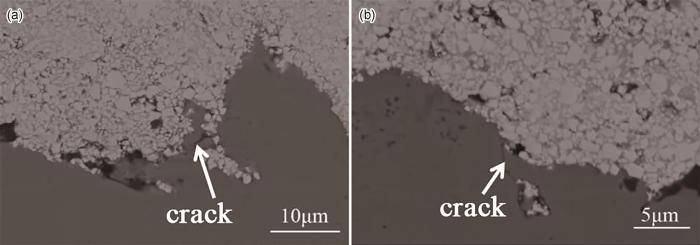
<strong>2.2</strong> 热喷涂 热喷涂是将金属或非金属颗粒加热融化或呈现熔融状态,加速撞击到母材表面,形成涂层[30 ] .根据热源不同,热喷涂技术可分为火焰喷涂、电弧喷涂、爆炸喷涂、等离子喷涂等[31 ] .液压油缸涂层的制备常用超音速火焰喷涂,并选用碳化钨、镍基合金、不锈钢等材料,使得涂层提高硬度并具有一定的防腐性能.Wu等[8 ] 使用超音速火焰喷涂(HVOF)在液压支架立柱表面制备Ni60、WC10Co4Cr、316L 3种涂层,涂层厚度在420~450 μm.在加载载荷100 g加载时间15 s的条件下,WC10Co4Cr涂层显微硬度最高,可达(1163.6 ± 12.4)HV300.在盐雾腐蚀试验中,WC10Co4Cr涂层在120 h后出现锈蚀,Ni60合金、316L不锈钢涂层耐腐蚀性更好,在720 h后出现锈蚀.张景河等[32 ] 通过超音速火焰喷涂在27SiMn材料的液压支架立柱表面制备WC-Cr3C2-M涂层,涂层显微组织致密,不存在贯穿性裂纹,WC的加入使得涂层硬具有更高的硬度,达到951.4HV0.3 ,远高于27SiMn.经过Cu加速盐雾腐蚀试验,H2 S,SO2 腐蚀试验,涂层均表现出良好的耐腐蚀性.热喷涂涂层表现出较好的耐腐蚀性能主要归因于涂层致密的组织,以及部分元素(Cr、Al等)氧化后形成保护性氧化膜,二者共同作用延缓腐蚀介质向内部扩散.尽管热喷涂涂层一定程度上能提升油缸材料的耐磨性和耐腐蚀性,但其制备过程仍存在一定短板.未完全熔融粉末在高速撞击到基体时易形成裂纹,同时涂层与基材的结合形式主要是机械结合,涂层易脱落.王勇等[33 ] 在液压支架用27SiMn钢上通过超音速火焰喷涂制备WC-10Co-4Cr涂层,并分析涂层组织及沉积机理.观察到在涂层与基体结合处有WC颗粒嵌入基体中,产生明显裂纹,但并未留下轨迹痕迹,其中必定产生了冶金结合(如图4 ).通过从基体到涂层中的扫描能谱可以看到,基体中的Fe有向涂层内部扩散的趋势,而W也有向基体扩散的现象,因此涂层与基体的结合形式为机械结合并伴随少量冶金结合和元素扩散. ...
... [
27 ]
Fig.3 ![]()
<strong>2.2</strong> 热喷涂 热喷涂是将金属或非金属颗粒加热融化或呈现熔融状态,加速撞击到母材表面,形成涂层[30 ] .根据热源不同,热喷涂技术可分为火焰喷涂、电弧喷涂、爆炸喷涂、等离子喷涂等[31 ] .液压油缸涂层的制备常用超音速火焰喷涂,并选用碳化钨、镍基合金、不锈钢等材料,使得涂层提高硬度并具有一定的防腐性能.Wu等[8 ] 使用超音速火焰喷涂(HVOF)在液压支架立柱表面制备Ni60、WC10Co4Cr、316L 3种涂层,涂层厚度在420~450 μm.在加载载荷100 g加载时间15 s的条件下,WC10Co4Cr涂层显微硬度最高,可达(1163.6 ± 12.4)HV300.在盐雾腐蚀试验中,WC10Co4Cr涂层在120 h后出现锈蚀,Ni60合金、316L不锈钢涂层耐腐蚀性更好,在720 h后出现锈蚀.张景河等[32 ] 通过超音速火焰喷涂在27SiMn材料的液压支架立柱表面制备WC-Cr3C2-M涂层,涂层显微组织致密,不存在贯穿性裂纹,WC的加入使得涂层硬具有更高的硬度,达到951.4HV0.3 ,远高于27SiMn.经过Cu加速盐雾腐蚀试验,H2 S,SO2 腐蚀试验,涂层均表现出良好的耐腐蚀性.热喷涂涂层表现出较好的耐腐蚀性能主要归因于涂层致密的组织,以及部分元素(Cr、Al等)氧化后形成保护性氧化膜,二者共同作用延缓腐蚀介质向内部扩散.尽管热喷涂涂层一定程度上能提升油缸材料的耐磨性和耐腐蚀性,但其制备过程仍存在一定短板.未完全熔融粉末在高速撞击到基体时易形成裂纹,同时涂层与基材的结合形式主要是机械结合,涂层易脱落.王勇等[33 ] 在液压支架用27SiMn钢上通过超音速火焰喷涂制备WC-10Co-4Cr涂层,并分析涂层组织及沉积机理.观察到在涂层与基体结合处有WC颗粒嵌入基体中,产生明显裂纹,但并未留下轨迹痕迹,其中必定产生了冶金结合(如图4 ).通过从基体到涂层中的扫描能谱可以看到,基体中的Fe有向涂层内部扩散的趋势,而W也有向基体扩散的现象,因此涂层与基体的结合形式为机械结合并伴随少量冶金结合和元素扩散. ...
... Application examples of protective coatings for hydraulic supports
Table 2 Substrate Coating material Thickness / μm Hardness Corrosion test method Corrosion test results Electroplating 416 stainless steel Hard chrome[27 ] 11-194 (Depends on plating time) 900HV 27SiMn Cu-Cr[28 ] 30-45 800HV Copper accelerated acetic acid salt spray (CASS) Meeting production needs Thermal 45 steel WC10Co4Cr[8 ] 420-450 (1163.6 ± 12.4)HV300 CASS Rusting after 120 h spraying 27SiMn WC-Cr3C2-M[32 ] 300-350 951.4HV0.3 CASS No visible corrosion spots after 312 h Hydrogen sulfide No visible corrosion corrosion test spots after 240 h Sulfur dioxide No visible corrosion corrosion test spots after 312 h 27SiMn WC[33 ] 1200HV[27 ] Laser cladding 27SiMn Fe-based alloy 500.1HV0.3 powder[35 ] 27SiMn 316L[36 ] 1000 400HV0.2 3.5%NaCl electrochemical E corr = 0.053 Vcorrosion R p = 22.881 Ω·cm²I corr = 1.018 A/cm²Arc melting 27SiMn Aluminum 200HV0.5 3.5%NaCl electrochemical E corr = -0.53 Vcopper bronze[43 ] corrosion Dense holes in the surface of the coating CASS Corrosion material after 100 h 27SiMn Aluminum 540HV0.5 3.5%NaCl electrochemical E corr = -0.85 Vbronze[44 ] corrosion Aluminum bronze + 550HV0.5 E corr = -0.8 VNi、Mn[44 ] Aluminum bronze + 550HV0.5 E corr = -0.6 VSi[44 ]
<strong>3</strong> 液压支架立柱涂层材料体系 液压油缸常见材料为27SiMn、30CrMo、30Cr-MnSi,目前国内外学者主要围绕27SiMn液压油缸材料表面修复展开研究.对于较为理想的激光熔覆涂层制备技术,其涂层制备材料体系如图5 所示,主要有自熔性合金粉末、铜基粉末以及复合粉末,其中自熔性合金粉末分为铁基自熔性粉末,镍基自熔性粉末.对于液压油缸不同位置的使用需求及加工条件,选择不同加工材料,油缸活塞杆外表面一般采用自熔性粉末或复合粉末,而内表面则采用铜基粉末或复合粉末. ...
... [
27 ]
Laser cladding 27SiMn Fe-based alloy 500.1HV0.3 powder[35 ] 27SiMn 316L[36 ] 1000 400HV0.2 3.5%NaCl electrochemical E corr = 0.053 Vcorrosion R p = 22.881 Ω·cm²I corr = 1.018 A/cm²Arc melting 27SiMn Aluminum 200HV0.5 3.5%NaCl electrochemical E corr = -0.53 Vcopper bronze[43 ] corrosion Dense holes in the surface of the coating CASS Corrosion material after 100 h 27SiMn Aluminum 540HV0.5 3.5%NaCl electrochemical E corr = -0.85 Vbronze[44 ] corrosion Aluminum bronze + 550HV0.5 E corr = -0.8 VNi、Mn[44 ] Aluminum bronze + 550HV0.5 E corr = -0.6 VSi[44 ] <strong>3</strong> 液压支架立柱涂层材料体系 液压油缸常见材料为27SiMn、30CrMo、30Cr-MnSi,目前国内外学者主要围绕27SiMn液压油缸材料表面修复展开研究.对于较为理想的激光熔覆涂层制备技术,其涂层制备材料体系如图5 所示,主要有自熔性合金粉末、铜基粉末以及复合粉末,其中自熔性合金粉末分为铁基自熔性粉末,镍基自熔性粉末.对于液压油缸不同位置的使用需求及加工条件,选择不同加工材料,油缸活塞杆外表面一般采用自熔性粉末或复合粉末,而内表面则采用铜基粉末或复合粉末. ...
Research about technology of corrosion treatment process of coal mine hydraulic support column (piston rod)
2
2016
... 电镀是在金属离子溶液中,不溶性合金(铅、铂等)作为阳极、待镀金属作为阴极,施加电流后从正极处的阳极溶解的金属沉积在另一极处的阴极上,从而形成涂层[24 ,25 ] .电镀镀层连续性与均匀性较好,且对试件形状无限制[26 ] .液压油缸的防腐耐磨涂层通常采用硬铬涂层,Cr的加入提高了表面的硬度和耐腐蚀性.Abdullah等[27 ] 在416不锈钢上制备不同厚度硬铬涂层,并测试其力学性能.416不锈钢的杨氏模量为(179 ± 4) MPa,所制备的涂层杨氏模量提高到(290 ± 67) MPa,同时涂层的平均硬度为基体的4.5倍,且硬度与涂层厚度无关.纪正君等[28 ] 对27SiMn材料的液压支架立柱电镀硬铬涂层进行168 h的Cu加速盐雾腐蚀试验,其耐腐蚀性能可达到9级标准,能满足井下生产需求.电镀在工艺成本上有一定的优势,同时电镀涂层硬度较高,耐腐蚀性能也能满足基本使用需求.但铬涂层存在固有的裂纹和气孔(如图3 ),很大程度上影响电镀涂层的耐腐蚀性能.此外,电镀液中的Cr6+ 对环境和人体均有不良影响[29 ] . ...
... Application examples of protective coatings for hydraulic supports
Table 2 Substrate Coating material Thickness / μm Hardness Corrosion test method Corrosion test results Electroplating 416 stainless steel Hard chrome[27 ] 11-194 (Depends on plating time) 900HV 27SiMn Cu-Cr[28 ] 30-45 800HV Copper accelerated acetic acid salt spray (CASS) Meeting production needs Thermal 45 steel WC10Co4Cr[8 ] 420-450 (1163.6 ± 12.4)HV300 CASS Rusting after 120 h spraying 27SiMn WC-Cr3C2-M[32 ] 300-350 951.4HV0.3 CASS No visible corrosion spots after 312 h Hydrogen sulfide No visible corrosion corrosion test spots after 240 h Sulfur dioxide No visible corrosion corrosion test spots after 312 h 27SiMn WC[33 ] 1200HV[27 ] Laser cladding 27SiMn Fe-based alloy 500.1HV0.3 powder[35 ] 27SiMn 316L[36 ] 1000 400HV0.2 3.5%NaCl electrochemical E corr = 0.053 Vcorrosion R p = 22.881 Ω·cm²I corr = 1.018 A/cm²Arc melting 27SiMn Aluminum 200HV0.5 3.5%NaCl electrochemical E corr = -0.53 Vcopper bronze[43 ] corrosion Dense holes in the surface of the coating CASS Corrosion material after 100 h 27SiMn Aluminum 540HV0.5 3.5%NaCl electrochemical E corr = -0.85 Vbronze[44 ] corrosion Aluminum bronze + 550HV0.5 E corr = -0.8 VNi、Mn[44 ] Aluminum bronze + 550HV0.5 E corr = -0.6 VSi[44 ]
<strong>3</strong> 液压支架立柱涂层材料体系 液压油缸常见材料为27SiMn、30CrMo、30Cr-MnSi,目前国内外学者主要围绕27SiMn液压油缸材料表面修复展开研究.对于较为理想的激光熔覆涂层制备技术,其涂层制备材料体系如图5 所示,主要有自熔性合金粉末、铜基粉末以及复合粉末,其中自熔性合金粉末分为铁基自熔性粉末,镍基自熔性粉末.对于液压油缸不同位置的使用需求及加工条件,选择不同加工材料,油缸活塞杆外表面一般采用自熔性粉末或复合粉末,而内表面则采用铜基粉末或复合粉末. ...
煤矿液压支架立柱(活塞杆)表面耐腐蚀处理工艺研究
2
2016
... 电镀是在金属离子溶液中,不溶性合金(铅、铂等)作为阳极、待镀金属作为阴极,施加电流后从正极处的阳极溶解的金属沉积在另一极处的阴极上,从而形成涂层[24 ,25 ] .电镀镀层连续性与均匀性较好,且对试件形状无限制[26 ] .液压油缸的防腐耐磨涂层通常采用硬铬涂层,Cr的加入提高了表面的硬度和耐腐蚀性.Abdullah等[27 ] 在416不锈钢上制备不同厚度硬铬涂层,并测试其力学性能.416不锈钢的杨氏模量为(179 ± 4) MPa,所制备的涂层杨氏模量提高到(290 ± 67) MPa,同时涂层的平均硬度为基体的4.5倍,且硬度与涂层厚度无关.纪正君等[28 ] 对27SiMn材料的液压支架立柱电镀硬铬涂层进行168 h的Cu加速盐雾腐蚀试验,其耐腐蚀性能可达到9级标准,能满足井下生产需求.电镀在工艺成本上有一定的优势,同时电镀涂层硬度较高,耐腐蚀性能也能满足基本使用需求.但铬涂层存在固有的裂纹和气孔(如图3 ),很大程度上影响电镀涂层的耐腐蚀性能.此外,电镀液中的Cr6+ 对环境和人体均有不良影响[29 ] . ...
... Application examples of protective coatings for hydraulic supports
Table 2 Substrate Coating material Thickness / μm Hardness Corrosion test method Corrosion test results Electroplating 416 stainless steel Hard chrome[27 ] 11-194 (Depends on plating time) 900HV 27SiMn Cu-Cr[28 ] 30-45 800HV Copper accelerated acetic acid salt spray (CASS) Meeting production needs Thermal 45 steel WC10Co4Cr[8 ] 420-450 (1163.6 ± 12.4)HV300 CASS Rusting after 120 h spraying 27SiMn WC-Cr3C2-M[32 ] 300-350 951.4HV0.3 CASS No visible corrosion spots after 312 h Hydrogen sulfide No visible corrosion corrosion test spots after 240 h Sulfur dioxide No visible corrosion corrosion test spots after 312 h 27SiMn WC[33 ] 1200HV[27 ] Laser cladding 27SiMn Fe-based alloy 500.1HV0.3 powder[35 ] 27SiMn 316L[36 ] 1000 400HV0.2 3.5%NaCl electrochemical E corr = 0.053 Vcorrosion R p = 22.881 Ω·cm²I corr = 1.018 A/cm²Arc melting 27SiMn Aluminum 200HV0.5 3.5%NaCl electrochemical E corr = -0.53 Vcopper bronze[43 ] corrosion Dense holes in the surface of the coating CASS Corrosion material after 100 h 27SiMn Aluminum 540HV0.5 3.5%NaCl electrochemical E corr = -0.85 Vbronze[44 ] corrosion Aluminum bronze + 550HV0.5 E corr = -0.8 VNi、Mn[44 ] Aluminum bronze + 550HV0.5 E corr = -0.6 VSi[44 ]
<strong>3</strong> 液压支架立柱涂层材料体系 液压油缸常见材料为27SiMn、30CrMo、30Cr-MnSi,目前国内外学者主要围绕27SiMn液压油缸材料表面修复展开研究.对于较为理想的激光熔覆涂层制备技术,其涂层制备材料体系如图5 所示,主要有自熔性合金粉末、铜基粉末以及复合粉末,其中自熔性合金粉末分为铁基自熔性粉末,镍基自熔性粉末.对于液压油缸不同位置的使用需求及加工条件,选择不同加工材料,油缸活塞杆外表面一般采用自熔性粉末或复合粉末,而内表面则采用铜基粉末或复合粉末. ...
Sliding wear behavior of electrodeposited Ni-W alloy and hard chrome coatings
1
2015
... 电镀是在金属离子溶液中,不溶性合金(铅、铂等)作为阳极、待镀金属作为阴极,施加电流后从正极处的阳极溶解的金属沉积在另一极处的阴极上,从而形成涂层[24 ,25 ] .电镀镀层连续性与均匀性较好,且对试件形状无限制[26 ] .液压油缸的防腐耐磨涂层通常采用硬铬涂层,Cr的加入提高了表面的硬度和耐腐蚀性.Abdullah等[27 ] 在416不锈钢上制备不同厚度硬铬涂层,并测试其力学性能.416不锈钢的杨氏模量为(179 ± 4) MPa,所制备的涂层杨氏模量提高到(290 ± 67) MPa,同时涂层的平均硬度为基体的4.5倍,且硬度与涂层厚度无关.纪正君等[28 ] 对27SiMn材料的液压支架立柱电镀硬铬涂层进行168 h的Cu加速盐雾腐蚀试验,其耐腐蚀性能可达到9级标准,能满足井下生产需求.电镀在工艺成本上有一定的优势,同时电镀涂层硬度较高,耐腐蚀性能也能满足基本使用需求.但铬涂层存在固有的裂纹和气孔(如图3 ),很大程度上影响电镀涂层的耐腐蚀性能.此外,电镀液中的Cr6+ 对环境和人体均有不良影响[29 ] . ...
Review of thermal spray coating applications in the steel industry: Part 1—hardware in steel making to the continuous annealing process
1
2010
... 热喷涂是将金属或非金属颗粒加热融化或呈现熔融状态,加速撞击到母材表面,形成涂层[30 ] .根据热源不同,热喷涂技术可分为火焰喷涂、电弧喷涂、爆炸喷涂、等离子喷涂等[31 ] .液压油缸涂层的制备常用超音速火焰喷涂,并选用碳化钨、镍基合金、不锈钢等材料,使得涂层提高硬度并具有一定的防腐性能.Wu等[8 ] 使用超音速火焰喷涂(HVOF)在液压支架立柱表面制备Ni60、WC10Co4Cr、316L 3种涂层,涂层厚度在420~450 μm.在加载载荷100 g加载时间15 s的条件下,WC10Co4Cr涂层显微硬度最高,可达(1163.6 ± 12.4)HV300.在盐雾腐蚀试验中,WC10Co4Cr涂层在120 h后出现锈蚀,Ni60合金、316L不锈钢涂层耐腐蚀性更好,在720 h后出现锈蚀.张景河等[32 ] 通过超音速火焰喷涂在27SiMn材料的液压支架立柱表面制备WC-Cr3C2-M涂层,涂层显微组织致密,不存在贯穿性裂纹,WC的加入使得涂层硬具有更高的硬度,达到951.4HV0.3 ,远高于27SiMn.经过Cu加速盐雾腐蚀试验,H2 S,SO2 腐蚀试验,涂层均表现出良好的耐腐蚀性.热喷涂涂层表现出较好的耐腐蚀性能主要归因于涂层致密的组织,以及部分元素(Cr、Al等)氧化后形成保护性氧化膜,二者共同作用延缓腐蚀介质向内部扩散.尽管热喷涂涂层一定程度上能提升油缸材料的耐磨性和耐腐蚀性,但其制备过程仍存在一定短板.未完全熔融粉末在高速撞击到基体时易形成裂纹,同时涂层与基材的结合形式主要是机械结合,涂层易脱落.王勇等[33 ] 在液压支架用27SiMn钢上通过超音速火焰喷涂制备WC-10Co-4Cr涂层,并分析涂层组织及沉积机理.观察到在涂层与基体结合处有WC颗粒嵌入基体中,产生明显裂纹,但并未留下轨迹痕迹,其中必定产生了冶金结合(如图4 ).通过从基体到涂层中的扫描能谱可以看到,基体中的Fe有向涂层内部扩散的趋势,而W也有向基体扩散的现象,因此涂层与基体的结合形式为机械结合并伴随少量冶金结合和元素扩散. ...
Application status and prospects of thermal spraying technology in metallurgical field under harsh service environment
1
2022
... 热喷涂是将金属或非金属颗粒加热融化或呈现熔融状态,加速撞击到母材表面,形成涂层[30 ] .根据热源不同,热喷涂技术可分为火焰喷涂、电弧喷涂、爆炸喷涂、等离子喷涂等[31 ] .液压油缸涂层的制备常用超音速火焰喷涂,并选用碳化钨、镍基合金、不锈钢等材料,使得涂层提高硬度并具有一定的防腐性能.Wu等[8 ] 使用超音速火焰喷涂(HVOF)在液压支架立柱表面制备Ni60、WC10Co4Cr、316L 3种涂层,涂层厚度在420~450 μm.在加载载荷100 g加载时间15 s的条件下,WC10Co4Cr涂层显微硬度最高,可达(1163.6 ± 12.4)HV300.在盐雾腐蚀试验中,WC10Co4Cr涂层在120 h后出现锈蚀,Ni60合金、316L不锈钢涂层耐腐蚀性更好,在720 h后出现锈蚀.张景河等[32 ] 通过超音速火焰喷涂在27SiMn材料的液压支架立柱表面制备WC-Cr3C2-M涂层,涂层显微组织致密,不存在贯穿性裂纹,WC的加入使得涂层硬具有更高的硬度,达到951.4HV0.3 ,远高于27SiMn.经过Cu加速盐雾腐蚀试验,H2 S,SO2 腐蚀试验,涂层均表现出良好的耐腐蚀性.热喷涂涂层表现出较好的耐腐蚀性能主要归因于涂层致密的组织,以及部分元素(Cr、Al等)氧化后形成保护性氧化膜,二者共同作用延缓腐蚀介质向内部扩散.尽管热喷涂涂层一定程度上能提升油缸材料的耐磨性和耐腐蚀性,但其制备过程仍存在一定短板.未完全熔融粉末在高速撞击到基体时易形成裂纹,同时涂层与基材的结合形式主要是机械结合,涂层易脱落.王勇等[33 ] 在液压支架用27SiMn钢上通过超音速火焰喷涂制备WC-10Co-4Cr涂层,并分析涂层组织及沉积机理.观察到在涂层与基体结合处有WC颗粒嵌入基体中,产生明显裂纹,但并未留下轨迹痕迹,其中必定产生了冶金结合(如图4 ).通过从基体到涂层中的扫描能谱可以看到,基体中的Fe有向涂层内部扩散的趋势,而W也有向基体扩散的现象,因此涂层与基体的结合形式为机械结合并伴随少量冶金结合和元素扩散. ...
冶金严苛服役环境中热喷涂技术的应用现状及展望
1
2022
... 热喷涂是将金属或非金属颗粒加热融化或呈现熔融状态,加速撞击到母材表面,形成涂层[30 ] .根据热源不同,热喷涂技术可分为火焰喷涂、电弧喷涂、爆炸喷涂、等离子喷涂等[31 ] .液压油缸涂层的制备常用超音速火焰喷涂,并选用碳化钨、镍基合金、不锈钢等材料,使得涂层提高硬度并具有一定的防腐性能.Wu等[8 ] 使用超音速火焰喷涂(HVOF)在液压支架立柱表面制备Ni60、WC10Co4Cr、316L 3种涂层,涂层厚度在420~450 μm.在加载载荷100 g加载时间15 s的条件下,WC10Co4Cr涂层显微硬度最高,可达(1163.6 ± 12.4)HV300.在盐雾腐蚀试验中,WC10Co4Cr涂层在120 h后出现锈蚀,Ni60合金、316L不锈钢涂层耐腐蚀性更好,在720 h后出现锈蚀.张景河等[32 ] 通过超音速火焰喷涂在27SiMn材料的液压支架立柱表面制备WC-Cr3C2-M涂层,涂层显微组织致密,不存在贯穿性裂纹,WC的加入使得涂层硬具有更高的硬度,达到951.4HV0.3 ,远高于27SiMn.经过Cu加速盐雾腐蚀试验,H2 S,SO2 腐蚀试验,涂层均表现出良好的耐腐蚀性.热喷涂涂层表现出较好的耐腐蚀性能主要归因于涂层致密的组织,以及部分元素(Cr、Al等)氧化后形成保护性氧化膜,二者共同作用延缓腐蚀介质向内部扩散.尽管热喷涂涂层一定程度上能提升油缸材料的耐磨性和耐腐蚀性,但其制备过程仍存在一定短板.未完全熔融粉末在高速撞击到基体时易形成裂纹,同时涂层与基材的结合形式主要是机械结合,涂层易脱落.王勇等[33 ] 在液压支架用27SiMn钢上通过超音速火焰喷涂制备WC-10Co-4Cr涂层,并分析涂层组织及沉积机理.观察到在涂层与基体结合处有WC颗粒嵌入基体中,产生明显裂纹,但并未留下轨迹痕迹,其中必定产生了冶金结合(如图4 ).通过从基体到涂层中的扫描能谱可以看到,基体中的Fe有向涂层内部扩散的趋势,而W也有向基体扩散的现象,因此涂层与基体的结合形式为机械结合并伴随少量冶金结合和元素扩散. ...
Properties and application on the hydraulic support plunger of WC-Cr3 C2 -M coating deposited by high velocity oxygen fuel spray process
2
2018
... 热喷涂是将金属或非金属颗粒加热融化或呈现熔融状态,加速撞击到母材表面,形成涂层[30 ] .根据热源不同,热喷涂技术可分为火焰喷涂、电弧喷涂、爆炸喷涂、等离子喷涂等[31 ] .液压油缸涂层的制备常用超音速火焰喷涂,并选用碳化钨、镍基合金、不锈钢等材料,使得涂层提高硬度并具有一定的防腐性能.Wu等[8 ] 使用超音速火焰喷涂(HVOF)在液压支架立柱表面制备Ni60、WC10Co4Cr、316L 3种涂层,涂层厚度在420~450 μm.在加载载荷100 g加载时间15 s的条件下,WC10Co4Cr涂层显微硬度最高,可达(1163.6 ± 12.4)HV300.在盐雾腐蚀试验中,WC10Co4Cr涂层在120 h后出现锈蚀,Ni60合金、316L不锈钢涂层耐腐蚀性更好,在720 h后出现锈蚀.张景河等[32 ] 通过超音速火焰喷涂在27SiMn材料的液压支架立柱表面制备WC-Cr3C2-M涂层,涂层显微组织致密,不存在贯穿性裂纹,WC的加入使得涂层硬具有更高的硬度,达到951.4HV0.3 ,远高于27SiMn.经过Cu加速盐雾腐蚀试验,H2 S,SO2 腐蚀试验,涂层均表现出良好的耐腐蚀性.热喷涂涂层表现出较好的耐腐蚀性能主要归因于涂层致密的组织,以及部分元素(Cr、Al等)氧化后形成保护性氧化膜,二者共同作用延缓腐蚀介质向内部扩散.尽管热喷涂涂层一定程度上能提升油缸材料的耐磨性和耐腐蚀性,但其制备过程仍存在一定短板.未完全熔融粉末在高速撞击到基体时易形成裂纹,同时涂层与基材的结合形式主要是机械结合,涂层易脱落.王勇等[33 ] 在液压支架用27SiMn钢上通过超音速火焰喷涂制备WC-10Co-4Cr涂层,并分析涂层组织及沉积机理.观察到在涂层与基体结合处有WC颗粒嵌入基体中,产生明显裂纹,但并未留下轨迹痕迹,其中必定产生了冶金结合(如图4 ).通过从基体到涂层中的扫描能谱可以看到,基体中的Fe有向涂层内部扩散的趋势,而W也有向基体扩散的现象,因此涂层与基体的结合形式为机械结合并伴随少量冶金结合和元素扩散. ...
... Application examples of protective coatings for hydraulic supports
Table 2 Substrate Coating material Thickness / μm Hardness Corrosion test method Corrosion test results Electroplating 416 stainless steel Hard chrome[27 ] 11-194 (Depends on plating time) 900HV 27SiMn Cu-Cr[28 ] 30-45 800HV Copper accelerated acetic acid salt spray (CASS) Meeting production needs Thermal 45 steel WC10Co4Cr[8 ] 420-450 (1163.6 ± 12.4)HV300 CASS Rusting after 120 h spraying 27SiMn WC-Cr3C2-M[32 ] 300-350 951.4HV0.3 CASS No visible corrosion spots after 312 h Hydrogen sulfide No visible corrosion corrosion test spots after 240 h Sulfur dioxide No visible corrosion corrosion test spots after 312 h 27SiMn WC[33 ] 1200HV[27 ] Laser cladding 27SiMn Fe-based alloy 500.1HV0.3 powder[35 ] 27SiMn 316L[36 ] 1000 400HV0.2 3.5%NaCl electrochemical E corr = 0.053 Vcorrosion R p = 22.881 Ω·cm²I corr = 1.018 A/cm²Arc melting 27SiMn Aluminum 200HV0.5 3.5%NaCl electrochemical E corr = -0.53 Vcopper bronze[43 ] corrosion Dense holes in the surface of the coating CASS Corrosion material after 100 h 27SiMn Aluminum 540HV0.5 3.5%NaCl electrochemical E corr = -0.85 Vbronze[44 ] corrosion Aluminum bronze + 550HV0.5 E corr = -0.8 VNi、Mn[44 ] Aluminum bronze + 550HV0.5 E corr = -0.6 VSi[44 ]
<strong>3</strong> 液压支架立柱涂层材料体系 液压油缸常见材料为27SiMn、30CrMo、30Cr-MnSi,目前国内外学者主要围绕27SiMn液压油缸材料表面修复展开研究.对于较为理想的激光熔覆涂层制备技术,其涂层制备材料体系如图5 所示,主要有自熔性合金粉末、铜基粉末以及复合粉末,其中自熔性合金粉末分为铁基自熔性粉末,镍基自熔性粉末.对于液压油缸不同位置的使用需求及加工条件,选择不同加工材料,油缸活塞杆外表面一般采用自熔性粉末或复合粉末,而内表面则采用铜基粉末或复合粉末. ...
超音速火焰喷涂WC-Cr3 C2 -M涂层性能及其在液压支架立柱上的应用研究
2
2018
... 热喷涂是将金属或非金属颗粒加热融化或呈现熔融状态,加速撞击到母材表面,形成涂层[30 ] .根据热源不同,热喷涂技术可分为火焰喷涂、电弧喷涂、爆炸喷涂、等离子喷涂等[31 ] .液压油缸涂层的制备常用超音速火焰喷涂,并选用碳化钨、镍基合金、不锈钢等材料,使得涂层提高硬度并具有一定的防腐性能.Wu等[8 ] 使用超音速火焰喷涂(HVOF)在液压支架立柱表面制备Ni60、WC10Co4Cr、316L 3种涂层,涂层厚度在420~450 μm.在加载载荷100 g加载时间15 s的条件下,WC10Co4Cr涂层显微硬度最高,可达(1163.6 ± 12.4)HV300.在盐雾腐蚀试验中,WC10Co4Cr涂层在120 h后出现锈蚀,Ni60合金、316L不锈钢涂层耐腐蚀性更好,在720 h后出现锈蚀.张景河等[32 ] 通过超音速火焰喷涂在27SiMn材料的液压支架立柱表面制备WC-Cr3C2-M涂层,涂层显微组织致密,不存在贯穿性裂纹,WC的加入使得涂层硬具有更高的硬度,达到951.4HV0.3 ,远高于27SiMn.经过Cu加速盐雾腐蚀试验,H2 S,SO2 腐蚀试验,涂层均表现出良好的耐腐蚀性.热喷涂涂层表现出较好的耐腐蚀性能主要归因于涂层致密的组织,以及部分元素(Cr、Al等)氧化后形成保护性氧化膜,二者共同作用延缓腐蚀介质向内部扩散.尽管热喷涂涂层一定程度上能提升油缸材料的耐磨性和耐腐蚀性,但其制备过程仍存在一定短板.未完全熔融粉末在高速撞击到基体时易形成裂纹,同时涂层与基材的结合形式主要是机械结合,涂层易脱落.王勇等[33 ] 在液压支架用27SiMn钢上通过超音速火焰喷涂制备WC-10Co-4Cr涂层,并分析涂层组织及沉积机理.观察到在涂层与基体结合处有WC颗粒嵌入基体中,产生明显裂纹,但并未留下轨迹痕迹,其中必定产生了冶金结合(如图4 ).通过从基体到涂层中的扫描能谱可以看到,基体中的Fe有向涂层内部扩散的趋势,而W也有向基体扩散的现象,因此涂层与基体的结合形式为机械结合并伴随少量冶金结合和元素扩散. ...
... Application examples of protective coatings for hydraulic supports
Table 2 Substrate Coating material Thickness / μm Hardness Corrosion test method Corrosion test results Electroplating 416 stainless steel Hard chrome[27 ] 11-194 (Depends on plating time) 900HV 27SiMn Cu-Cr[28 ] 30-45 800HV Copper accelerated acetic acid salt spray (CASS) Meeting production needs Thermal 45 steel WC10Co4Cr[8 ] 420-450 (1163.6 ± 12.4)HV300 CASS Rusting after 120 h spraying 27SiMn WC-Cr3C2-M[32 ] 300-350 951.4HV0.3 CASS No visible corrosion spots after 312 h Hydrogen sulfide No visible corrosion corrosion test spots after 240 h Sulfur dioxide No visible corrosion corrosion test spots after 312 h 27SiMn WC[33 ] 1200HV[27 ] Laser cladding 27SiMn Fe-based alloy 500.1HV0.3 powder[35 ] 27SiMn 316L[36 ] 1000 400HV0.2 3.5%NaCl electrochemical E corr = 0.053 Vcorrosion R p = 22.881 Ω·cm²I corr = 1.018 A/cm²Arc melting 27SiMn Aluminum 200HV0.5 3.5%NaCl electrochemical E corr = -0.53 Vcopper bronze[43 ] corrosion Dense holes in the surface of the coating CASS Corrosion material after 100 h 27SiMn Aluminum 540HV0.5 3.5%NaCl electrochemical E corr = -0.85 Vbronze[44 ] corrosion Aluminum bronze + 550HV0.5 E corr = -0.8 VNi、Mn[44 ] Aluminum bronze + 550HV0.5 E corr = -0.6 VSi[44 ]
<strong>3</strong> 液压支架立柱涂层材料体系 液压油缸常见材料为27SiMn、30CrMo、30Cr-MnSi,目前国内外学者主要围绕27SiMn液压油缸材料表面修复展开研究.对于较为理想的激光熔覆涂层制备技术,其涂层制备材料体系如图5 所示,主要有自熔性合金粉末、铜基粉末以及复合粉末,其中自熔性合金粉末分为铁基自熔性粉末,镍基自熔性粉末.对于液压油缸不同位置的使用需求及加工条件,选择不同加工材料,油缸活塞杆外表面一般采用自熔性粉末或复合粉末,而内表面则采用铜基粉末或复合粉末. ...
Study on deposition mechanism of WC coating on 27SiMn steel prepared by HVAF
4
2020
... 热喷涂是将金属或非金属颗粒加热融化或呈现熔融状态,加速撞击到母材表面,形成涂层[30 ] .根据热源不同,热喷涂技术可分为火焰喷涂、电弧喷涂、爆炸喷涂、等离子喷涂等[31 ] .液压油缸涂层的制备常用超音速火焰喷涂,并选用碳化钨、镍基合金、不锈钢等材料,使得涂层提高硬度并具有一定的防腐性能.Wu等[8 ] 使用超音速火焰喷涂(HVOF)在液压支架立柱表面制备Ni60、WC10Co4Cr、316L 3种涂层,涂层厚度在420~450 μm.在加载载荷100 g加载时间15 s的条件下,WC10Co4Cr涂层显微硬度最高,可达(1163.6 ± 12.4)HV300.在盐雾腐蚀试验中,WC10Co4Cr涂层在120 h后出现锈蚀,Ni60合金、316L不锈钢涂层耐腐蚀性更好,在720 h后出现锈蚀.张景河等[32 ] 通过超音速火焰喷涂在27SiMn材料的液压支架立柱表面制备WC-Cr3C2-M涂层,涂层显微组织致密,不存在贯穿性裂纹,WC的加入使得涂层硬具有更高的硬度,达到951.4HV0.3 ,远高于27SiMn.经过Cu加速盐雾腐蚀试验,H2 S,SO2 腐蚀试验,涂层均表现出良好的耐腐蚀性.热喷涂涂层表现出较好的耐腐蚀性能主要归因于涂层致密的组织,以及部分元素(Cr、Al等)氧化后形成保护性氧化膜,二者共同作用延缓腐蚀介质向内部扩散.尽管热喷涂涂层一定程度上能提升油缸材料的耐磨性和耐腐蚀性,但其制备过程仍存在一定短板.未完全熔融粉末在高速撞击到基体时易形成裂纹,同时涂层与基材的结合形式主要是机械结合,涂层易脱落.王勇等[33 ] 在液压支架用27SiMn钢上通过超音速火焰喷涂制备WC-10Co-4Cr涂层,并分析涂层组织及沉积机理.观察到在涂层与基体结合处有WC颗粒嵌入基体中,产生明显裂纹,但并未留下轨迹痕迹,其中必定产生了冶金结合(如图4 ).通过从基体到涂层中的扫描能谱可以看到,基体中的Fe有向涂层内部扩散的趋势,而W也有向基体扩散的现象,因此涂层与基体的结合形式为机械结合并伴随少量冶金结合和元素扩散. ...
... [
33 ]
Enlarged images of the interface between HVOF deposited WC-10Co-4Cr coating and 27SiMn steel substrate: (a) metallurgical bonded area and crack, (b) crack<sup>[<xref ref-type="bibr" rid="R33">33</xref>]</sup> Fig.4 ![]()
<strong>2.3</strong> 激光熔覆 激光熔覆是一种材料沉积技术,利用激光束融化粉末材料,在另一种材料上形成冶金结合和完全致密的熔覆层[34 ] .激光熔覆因为其冶金结合的性质,有较好的结合强度,更多元素的加入也使得涂层有较好的耐磨、耐腐蚀性能.Bai等[35 ] 通过激光熔覆在27SiMn液压支架上制备了铁基合金涂层,熔覆层尺寸相对均匀,车削后观察到熔覆层无裂纹、气泡或大颗粒凹坑.经过硬度测试,熔覆层中部和上部硬度均大于基体硬度,其中上部硬度为500.1HV0.3 达到最大值,基材摩擦系数为0.59,熔覆层最低摩擦系数降低至0.36.陈刚等[36 ] 在27SiMn液压缸立柱表面熔覆不同厚度的316L不锈钢涂层,不同厚度的涂层硬度、耐腐蚀性相对基体均有提高,此外,随着涂层厚度的增加,自腐蚀电位、极化电阻率增高,腐蚀电流密度降低,涂层更易于钝化,耐腐蚀性能更好.虽然激光熔覆加热及冷却过程中所产生的热应力可能导致萌生裂纹[37 ,38 ] ,但通过优化加工工艺,选择合适的工艺参数、基体预热或采用重熔工艺等方式仍能获得高质量的涂层[39 ,40 ] . ...
... [
33 ]
Fig.4 ![]()
<strong>2.3</strong> 激光熔覆 激光熔覆是一种材料沉积技术,利用激光束融化粉末材料,在另一种材料上形成冶金结合和完全致密的熔覆层[34 ] .激光熔覆因为其冶金结合的性质,有较好的结合强度,更多元素的加入也使得涂层有较好的耐磨、耐腐蚀性能.Bai等[35 ] 通过激光熔覆在27SiMn液压支架上制备了铁基合金涂层,熔覆层尺寸相对均匀,车削后观察到熔覆层无裂纹、气泡或大颗粒凹坑.经过硬度测试,熔覆层中部和上部硬度均大于基体硬度,其中上部硬度为500.1HV0.3 达到最大值,基材摩擦系数为0.59,熔覆层最低摩擦系数降低至0.36.陈刚等[36 ] 在27SiMn液压缸立柱表面熔覆不同厚度的316L不锈钢涂层,不同厚度的涂层硬度、耐腐蚀性相对基体均有提高,此外,随着涂层厚度的增加,自腐蚀电位、极化电阻率增高,腐蚀电流密度降低,涂层更易于钝化,耐腐蚀性能更好.虽然激光熔覆加热及冷却过程中所产生的热应力可能导致萌生裂纹[37 ,38 ] ,但通过优化加工工艺,选择合适的工艺参数、基体预热或采用重熔工艺等方式仍能获得高质量的涂层[39 ,40 ] . ...
... Application examples of protective coatings for hydraulic supports
Table 2 Substrate Coating material Thickness / μm Hardness Corrosion test method Corrosion test results Electroplating 416 stainless steel Hard chrome[27 ] 11-194 (Depends on plating time) 900HV 27SiMn Cu-Cr[28 ] 30-45 800HV Copper accelerated acetic acid salt spray (CASS) Meeting production needs Thermal 45 steel WC10Co4Cr[8 ] 420-450 (1163.6 ± 12.4)HV300 CASS Rusting after 120 h spraying 27SiMn WC-Cr3C2-M[32 ] 300-350 951.4HV0.3 CASS No visible corrosion spots after 312 h Hydrogen sulfide No visible corrosion corrosion test spots after 240 h Sulfur dioxide No visible corrosion corrosion test spots after 312 h 27SiMn WC[33 ] 1200HV[27 ] Laser cladding 27SiMn Fe-based alloy 500.1HV0.3 powder[35 ] 27SiMn 316L[36 ] 1000 400HV0.2 3.5%NaCl electrochemical E corr = 0.053 Vcorrosion R p = 22.881 Ω·cm²I corr = 1.018 A/cm²Arc melting 27SiMn Aluminum 200HV0.5 3.5%NaCl electrochemical E corr = -0.53 Vcopper bronze[43 ] corrosion Dense holes in the surface of the coating CASS Corrosion material after 100 h 27SiMn Aluminum 540HV0.5 3.5%NaCl electrochemical E corr = -0.85 Vbronze[44 ] corrosion Aluminum bronze + 550HV0.5 E corr = -0.8 VNi、Mn[44 ] Aluminum bronze + 550HV0.5 E corr = -0.6 VSi[44 ]
<strong>3</strong> 液压支架立柱涂层材料体系 液压油缸常见材料为27SiMn、30CrMo、30Cr-MnSi,目前国内外学者主要围绕27SiMn液压油缸材料表面修复展开研究.对于较为理想的激光熔覆涂层制备技术,其涂层制备材料体系如图5 所示,主要有自熔性合金粉末、铜基粉末以及复合粉末,其中自熔性合金粉末分为铁基自熔性粉末,镍基自熔性粉末.对于液压油缸不同位置的使用需求及加工条件,选择不同加工材料,油缸活塞杆外表面一般采用自熔性粉末或复合粉末,而内表面则采用铜基粉末或复合粉末. ...
HVAF制备27SiMn钢WC涂层沉积机理研究
4
2020
... 热喷涂是将金属或非金属颗粒加热融化或呈现熔融状态,加速撞击到母材表面,形成涂层[30 ] .根据热源不同,热喷涂技术可分为火焰喷涂、电弧喷涂、爆炸喷涂、等离子喷涂等[31 ] .液压油缸涂层的制备常用超音速火焰喷涂,并选用碳化钨、镍基合金、不锈钢等材料,使得涂层提高硬度并具有一定的防腐性能.Wu等[8 ] 使用超音速火焰喷涂(HVOF)在液压支架立柱表面制备Ni60、WC10Co4Cr、316L 3种涂层,涂层厚度在420~450 μm.在加载载荷100 g加载时间15 s的条件下,WC10Co4Cr涂层显微硬度最高,可达(1163.6 ± 12.4)HV300.在盐雾腐蚀试验中,WC10Co4Cr涂层在120 h后出现锈蚀,Ni60合金、316L不锈钢涂层耐腐蚀性更好,在720 h后出现锈蚀.张景河等[32 ] 通过超音速火焰喷涂在27SiMn材料的液压支架立柱表面制备WC-Cr3C2-M涂层,涂层显微组织致密,不存在贯穿性裂纹,WC的加入使得涂层硬具有更高的硬度,达到951.4HV0.3 ,远高于27SiMn.经过Cu加速盐雾腐蚀试验,H2 S,SO2 腐蚀试验,涂层均表现出良好的耐腐蚀性.热喷涂涂层表现出较好的耐腐蚀性能主要归因于涂层致密的组织,以及部分元素(Cr、Al等)氧化后形成保护性氧化膜,二者共同作用延缓腐蚀介质向内部扩散.尽管热喷涂涂层一定程度上能提升油缸材料的耐磨性和耐腐蚀性,但其制备过程仍存在一定短板.未完全熔融粉末在高速撞击到基体时易形成裂纹,同时涂层与基材的结合形式主要是机械结合,涂层易脱落.王勇等[33 ] 在液压支架用27SiMn钢上通过超音速火焰喷涂制备WC-10Co-4Cr涂层,并分析涂层组织及沉积机理.观察到在涂层与基体结合处有WC颗粒嵌入基体中,产生明显裂纹,但并未留下轨迹痕迹,其中必定产生了冶金结合(如图4 ).通过从基体到涂层中的扫描能谱可以看到,基体中的Fe有向涂层内部扩散的趋势,而W也有向基体扩散的现象,因此涂层与基体的结合形式为机械结合并伴随少量冶金结合和元素扩散. ...
... [
33 ]
Enlarged images of the interface between HVOF deposited WC-10Co-4Cr coating and 27SiMn steel substrate: (a) metallurgical bonded area and crack, (b) crack<sup>[<xref ref-type="bibr" rid="R33">33</xref>]</sup> Fig.4 ![]()
<strong>2.3</strong> 激光熔覆 激光熔覆是一种材料沉积技术,利用激光束融化粉末材料,在另一种材料上形成冶金结合和完全致密的熔覆层[34 ] .激光熔覆因为其冶金结合的性质,有较好的结合强度,更多元素的加入也使得涂层有较好的耐磨、耐腐蚀性能.Bai等[35 ] 通过激光熔覆在27SiMn液压支架上制备了铁基合金涂层,熔覆层尺寸相对均匀,车削后观察到熔覆层无裂纹、气泡或大颗粒凹坑.经过硬度测试,熔覆层中部和上部硬度均大于基体硬度,其中上部硬度为500.1HV0.3 达到最大值,基材摩擦系数为0.59,熔覆层最低摩擦系数降低至0.36.陈刚等[36 ] 在27SiMn液压缸立柱表面熔覆不同厚度的316L不锈钢涂层,不同厚度的涂层硬度、耐腐蚀性相对基体均有提高,此外,随着涂层厚度的增加,自腐蚀电位、极化电阻率增高,腐蚀电流密度降低,涂层更易于钝化,耐腐蚀性能更好.虽然激光熔覆加热及冷却过程中所产生的热应力可能导致萌生裂纹[37 ,38 ] ,但通过优化加工工艺,选择合适的工艺参数、基体预热或采用重熔工艺等方式仍能获得高质量的涂层[39 ,40 ] . ...
... [
33 ]
Fig.4 ![]()
<strong>2.3</strong> 激光熔覆 激光熔覆是一种材料沉积技术,利用激光束融化粉末材料,在另一种材料上形成冶金结合和完全致密的熔覆层[34 ] .激光熔覆因为其冶金结合的性质,有较好的结合强度,更多元素的加入也使得涂层有较好的耐磨、耐腐蚀性能.Bai等[35 ] 通过激光熔覆在27SiMn液压支架上制备了铁基合金涂层,熔覆层尺寸相对均匀,车削后观察到熔覆层无裂纹、气泡或大颗粒凹坑.经过硬度测试,熔覆层中部和上部硬度均大于基体硬度,其中上部硬度为500.1HV0.3 达到最大值,基材摩擦系数为0.59,熔覆层最低摩擦系数降低至0.36.陈刚等[36 ] 在27SiMn液压缸立柱表面熔覆不同厚度的316L不锈钢涂层,不同厚度的涂层硬度、耐腐蚀性相对基体均有提高,此外,随着涂层厚度的增加,自腐蚀电位、极化电阻率增高,腐蚀电流密度降低,涂层更易于钝化,耐腐蚀性能更好.虽然激光熔覆加热及冷却过程中所产生的热应力可能导致萌生裂纹[37 ,38 ] ,但通过优化加工工艺,选择合适的工艺参数、基体预热或采用重熔工艺等方式仍能获得高质量的涂层[39 ,40 ] . ...
... Application examples of protective coatings for hydraulic supports
Table 2 Substrate Coating material Thickness / μm Hardness Corrosion test method Corrosion test results Electroplating 416 stainless steel Hard chrome[27 ] 11-194 (Depends on plating time) 900HV 27SiMn Cu-Cr[28 ] 30-45 800HV Copper accelerated acetic acid salt spray (CASS) Meeting production needs Thermal 45 steel WC10Co4Cr[8 ] 420-450 (1163.6 ± 12.4)HV300 CASS Rusting after 120 h spraying 27SiMn WC-Cr3C2-M[32 ] 300-350 951.4HV0.3 CASS No visible corrosion spots after 312 h Hydrogen sulfide No visible corrosion corrosion test spots after 240 h Sulfur dioxide No visible corrosion corrosion test spots after 312 h 27SiMn WC[33 ] 1200HV[27 ] Laser cladding 27SiMn Fe-based alloy 500.1HV0.3 powder[35 ] 27SiMn 316L[36 ] 1000 400HV0.2 3.5%NaCl electrochemical E corr = 0.053 Vcorrosion R p = 22.881 Ω·cm²I corr = 1.018 A/cm²Arc melting 27SiMn Aluminum 200HV0.5 3.5%NaCl electrochemical E corr = -0.53 Vcopper bronze[43 ] corrosion Dense holes in the surface of the coating CASS Corrosion material after 100 h 27SiMn Aluminum 540HV0.5 3.5%NaCl electrochemical E corr = -0.85 Vbronze[44 ] corrosion Aluminum bronze + 550HV0.5 E corr = -0.8 VNi、Mn[44 ] Aluminum bronze + 550HV0.5 E corr = -0.6 VSi[44 ]
<strong>3</strong> 液压支架立柱涂层材料体系 液压油缸常见材料为27SiMn、30CrMo、30Cr-MnSi,目前国内外学者主要围绕27SiMn液压油缸材料表面修复展开研究.对于较为理想的激光熔覆涂层制备技术,其涂层制备材料体系如图5 所示,主要有自熔性合金粉末、铜基粉末以及复合粉末,其中自熔性合金粉末分为铁基自熔性粉末,镍基自熔性粉末.对于液压油缸不同位置的使用需求及加工条件,选择不同加工材料,油缸活塞杆外表面一般采用自熔性粉末或复合粉末,而内表面则采用铜基粉末或复合粉末. ...
State-of-the-art review on laser cladding process as an in-situ repair technique
1
2021
... 激光熔覆是一种材料沉积技术,利用激光束融化粉末材料,在另一种材料上形成冶金结合和完全致密的熔覆层[34 ] .激光熔覆因为其冶金结合的性质,有较好的结合强度,更多元素的加入也使得涂层有较好的耐磨、耐腐蚀性能.Bai等[35 ] 通过激光熔覆在27SiMn液压支架上制备了铁基合金涂层,熔覆层尺寸相对均匀,车削后观察到熔覆层无裂纹、气泡或大颗粒凹坑.经过硬度测试,熔覆层中部和上部硬度均大于基体硬度,其中上部硬度为500.1HV0.3 达到最大值,基材摩擦系数为0.59,熔覆层最低摩擦系数降低至0.36.陈刚等[36 ] 在27SiMn液压缸立柱表面熔覆不同厚度的316L不锈钢涂层,不同厚度的涂层硬度、耐腐蚀性相对基体均有提高,此外,随着涂层厚度的增加,自腐蚀电位、极化电阻率增高,腐蚀电流密度降低,涂层更易于钝化,耐腐蚀性能更好.虽然激光熔覆加热及冷却过程中所产生的热应力可能导致萌生裂纹[37 ,38 ] ,但通过优化加工工艺,选择合适的工艺参数、基体预热或采用重熔工艺等方式仍能获得高质量的涂层[39 ,40 ] . ...
Microstructure and wear resistance of laser cladding of Fe-based alloy coatings in different areas of cladding layer
2
2021
... 激光熔覆是一种材料沉积技术,利用激光束融化粉末材料,在另一种材料上形成冶金结合和完全致密的熔覆层[34 ] .激光熔覆因为其冶金结合的性质,有较好的结合强度,更多元素的加入也使得涂层有较好的耐磨、耐腐蚀性能.Bai等[35 ] 通过激光熔覆在27SiMn液压支架上制备了铁基合金涂层,熔覆层尺寸相对均匀,车削后观察到熔覆层无裂纹、气泡或大颗粒凹坑.经过硬度测试,熔覆层中部和上部硬度均大于基体硬度,其中上部硬度为500.1HV0.3 达到最大值,基材摩擦系数为0.59,熔覆层最低摩擦系数降低至0.36.陈刚等[36 ] 在27SiMn液压缸立柱表面熔覆不同厚度的316L不锈钢涂层,不同厚度的涂层硬度、耐腐蚀性相对基体均有提高,此外,随着涂层厚度的增加,自腐蚀电位、极化电阻率增高,腐蚀电流密度降低,涂层更易于钝化,耐腐蚀性能更好.虽然激光熔覆加热及冷却过程中所产生的热应力可能导致萌生裂纹[37 ,38 ] ,但通过优化加工工艺,选择合适的工艺参数、基体预热或采用重熔工艺等方式仍能获得高质量的涂层[39 ,40 ] . ...
... Application examples of protective coatings for hydraulic supports
Table 2 Substrate Coating material Thickness / μm Hardness Corrosion test method Corrosion test results Electroplating 416 stainless steel Hard chrome[27 ] 11-194 (Depends on plating time) 900HV 27SiMn Cu-Cr[28 ] 30-45 800HV Copper accelerated acetic acid salt spray (CASS) Meeting production needs Thermal 45 steel WC10Co4Cr[8 ] 420-450 (1163.6 ± 12.4)HV300 CASS Rusting after 120 h spraying 27SiMn WC-Cr3C2-M[32 ] 300-350 951.4HV0.3 CASS No visible corrosion spots after 312 h Hydrogen sulfide No visible corrosion corrosion test spots after 240 h Sulfur dioxide No visible corrosion corrosion test spots after 312 h 27SiMn WC[33 ] 1200HV[27 ] Laser cladding 27SiMn Fe-based alloy 500.1HV0.3 powder[35 ] 27SiMn 316L[36 ] 1000 400HV0.2 3.5%NaCl electrochemical E corr = 0.053 Vcorrosion R p = 22.881 Ω·cm²I corr = 1.018 A/cm²Arc melting 27SiMn Aluminum 200HV0.5 3.5%NaCl electrochemical E corr = -0.53 Vcopper bronze[43 ] corrosion Dense holes in the surface of the coating CASS Corrosion material after 100 h 27SiMn Aluminum 540HV0.5 3.5%NaCl electrochemical E corr = -0.85 Vbronze[44 ] corrosion Aluminum bronze + 550HV0.5 E corr = -0.8 VNi、Mn[44 ] Aluminum bronze + 550HV0.5 E corr = -0.6 VSi[44 ]
<strong>3</strong> 液压支架立柱涂层材料体系 液压油缸常见材料为27SiMn、30CrMo、30Cr-MnSi,目前国内外学者主要围绕27SiMn液压油缸材料表面修复展开研究.对于较为理想的激光熔覆涂层制备技术,其涂层制备材料体系如图5 所示,主要有自熔性合金粉末、铜基粉末以及复合粉末,其中自熔性合金粉末分为铁基自熔性粉末,镍基自熔性粉末.对于液压油缸不同位置的使用需求及加工条件,选择不同加工材料,油缸活塞杆外表面一般采用自熔性粉末或复合粉末,而内表面则采用铜基粉末或复合粉末. ...
Influence of cladding layer thickness on structure and properties of laser cladding 316L coating
2
2018
... 激光熔覆是一种材料沉积技术,利用激光束融化粉末材料,在另一种材料上形成冶金结合和完全致密的熔覆层[34 ] .激光熔覆因为其冶金结合的性质,有较好的结合强度,更多元素的加入也使得涂层有较好的耐磨、耐腐蚀性能.Bai等[35 ] 通过激光熔覆在27SiMn液压支架上制备了铁基合金涂层,熔覆层尺寸相对均匀,车削后观察到熔覆层无裂纹、气泡或大颗粒凹坑.经过硬度测试,熔覆层中部和上部硬度均大于基体硬度,其中上部硬度为500.1HV0.3 达到最大值,基材摩擦系数为0.59,熔覆层最低摩擦系数降低至0.36.陈刚等[36 ] 在27SiMn液压缸立柱表面熔覆不同厚度的316L不锈钢涂层,不同厚度的涂层硬度、耐腐蚀性相对基体均有提高,此外,随着涂层厚度的增加,自腐蚀电位、极化电阻率增高,腐蚀电流密度降低,涂层更易于钝化,耐腐蚀性能更好.虽然激光熔覆加热及冷却过程中所产生的热应力可能导致萌生裂纹[37 ,38 ] ,但通过优化加工工艺,选择合适的工艺参数、基体预热或采用重熔工艺等方式仍能获得高质量的涂层[39 ,40 ] . ...
... Application examples of protective coatings for hydraulic supports
Table 2 Substrate Coating material Thickness / μm Hardness Corrosion test method Corrosion test results Electroplating 416 stainless steel Hard chrome[27 ] 11-194 (Depends on plating time) 900HV 27SiMn Cu-Cr[28 ] 30-45 800HV Copper accelerated acetic acid salt spray (CASS) Meeting production needs Thermal 45 steel WC10Co4Cr[8 ] 420-450 (1163.6 ± 12.4)HV300 CASS Rusting after 120 h spraying 27SiMn WC-Cr3C2-M[32 ] 300-350 951.4HV0.3 CASS No visible corrosion spots after 312 h Hydrogen sulfide No visible corrosion corrosion test spots after 240 h Sulfur dioxide No visible corrosion corrosion test spots after 312 h 27SiMn WC[33 ] 1200HV[27 ] Laser cladding 27SiMn Fe-based alloy 500.1HV0.3 powder[35 ] 27SiMn 316L[36 ] 1000 400HV0.2 3.5%NaCl electrochemical E corr = 0.053 Vcorrosion R p = 22.881 Ω·cm²I corr = 1.018 A/cm²Arc melting 27SiMn Aluminum 200HV0.5 3.5%NaCl electrochemical E corr = -0.53 Vcopper bronze[43 ] corrosion Dense holes in the surface of the coating CASS Corrosion material after 100 h 27SiMn Aluminum 540HV0.5 3.5%NaCl electrochemical E corr = -0.85 Vbronze[44 ] corrosion Aluminum bronze + 550HV0.5 E corr = -0.8 VNi、Mn[44 ] Aluminum bronze + 550HV0.5 E corr = -0.6 VSi[44 ]
<strong>3</strong> 液压支架立柱涂层材料体系 液压油缸常见材料为27SiMn、30CrMo、30Cr-MnSi,目前国内外学者主要围绕27SiMn液压油缸材料表面修复展开研究.对于较为理想的激光熔覆涂层制备技术,其涂层制备材料体系如图5 所示,主要有自熔性合金粉末、铜基粉末以及复合粉末,其中自熔性合金粉末分为铁基自熔性粉末,镍基自熔性粉末.对于液压油缸不同位置的使用需求及加工条件,选择不同加工材料,油缸活塞杆外表面一般采用自熔性粉末或复合粉末,而内表面则采用铜基粉末或复合粉末. ...
熔覆层厚度对激光熔覆316L涂层组织及性能的影响
2
2018
... 激光熔覆是一种材料沉积技术,利用激光束融化粉末材料,在另一种材料上形成冶金结合和完全致密的熔覆层[34 ] .激光熔覆因为其冶金结合的性质,有较好的结合强度,更多元素的加入也使得涂层有较好的耐磨、耐腐蚀性能.Bai等[35 ] 通过激光熔覆在27SiMn液压支架上制备了铁基合金涂层,熔覆层尺寸相对均匀,车削后观察到熔覆层无裂纹、气泡或大颗粒凹坑.经过硬度测试,熔覆层中部和上部硬度均大于基体硬度,其中上部硬度为500.1HV0.3 达到最大值,基材摩擦系数为0.59,熔覆层最低摩擦系数降低至0.36.陈刚等[36 ] 在27SiMn液压缸立柱表面熔覆不同厚度的316L不锈钢涂层,不同厚度的涂层硬度、耐腐蚀性相对基体均有提高,此外,随着涂层厚度的增加,自腐蚀电位、极化电阻率增高,腐蚀电流密度降低,涂层更易于钝化,耐腐蚀性能更好.虽然激光熔覆加热及冷却过程中所产生的热应力可能导致萌生裂纹[37 ,38 ] ,但通过优化加工工艺,选择合适的工艺参数、基体预热或采用重熔工艺等方式仍能获得高质量的涂层[39 ,40 ] . ...
... Application examples of protective coatings for hydraulic supports
Table 2 Substrate Coating material Thickness / μm Hardness Corrosion test method Corrosion test results Electroplating 416 stainless steel Hard chrome[27 ] 11-194 (Depends on plating time) 900HV 27SiMn Cu-Cr[28 ] 30-45 800HV Copper accelerated acetic acid salt spray (CASS) Meeting production needs Thermal 45 steel WC10Co4Cr[8 ] 420-450 (1163.6 ± 12.4)HV300 CASS Rusting after 120 h spraying 27SiMn WC-Cr3C2-M[32 ] 300-350 951.4HV0.3 CASS No visible corrosion spots after 312 h Hydrogen sulfide No visible corrosion corrosion test spots after 240 h Sulfur dioxide No visible corrosion corrosion test spots after 312 h 27SiMn WC[33 ] 1200HV[27 ] Laser cladding 27SiMn Fe-based alloy 500.1HV0.3 powder[35 ] 27SiMn 316L[36 ] 1000 400HV0.2 3.5%NaCl electrochemical E corr = 0.053 Vcorrosion R p = 22.881 Ω·cm²I corr = 1.018 A/cm²Arc melting 27SiMn Aluminum 200HV0.5 3.5%NaCl electrochemical E corr = -0.53 Vcopper bronze[43 ] corrosion Dense holes in the surface of the coating CASS Corrosion material after 100 h 27SiMn Aluminum 540HV0.5 3.5%NaCl electrochemical E corr = -0.85 Vbronze[44 ] corrosion Aluminum bronze + 550HV0.5 E corr = -0.8 VNi、Mn[44 ] Aluminum bronze + 550HV0.5 E corr = -0.6 VSi[44 ]
<strong>3</strong> 液压支架立柱涂层材料体系 液压油缸常见材料为27SiMn、30CrMo、30Cr-MnSi,目前国内外学者主要围绕27SiMn液压油缸材料表面修复展开研究.对于较为理想的激光熔覆涂层制备技术,其涂层制备材料体系如图5 所示,主要有自熔性合金粉末、铜基粉末以及复合粉末,其中自熔性合金粉末分为铁基自熔性粉末,镍基自熔性粉末.对于液压油缸不同位置的使用需求及加工条件,选择不同加工材料,油缸活塞杆外表面一般采用自熔性粉末或复合粉末,而内表面则采用铜基粉末或复合粉末. ...
Analysis on the physical mechanism of laser cladding crack and its influence factors
1
2016
... 激光熔覆是一种材料沉积技术,利用激光束融化粉末材料,在另一种材料上形成冶金结合和完全致密的熔覆层[34 ] .激光熔覆因为其冶金结合的性质,有较好的结合强度,更多元素的加入也使得涂层有较好的耐磨、耐腐蚀性能.Bai等[35 ] 通过激光熔覆在27SiMn液压支架上制备了铁基合金涂层,熔覆层尺寸相对均匀,车削后观察到熔覆层无裂纹、气泡或大颗粒凹坑.经过硬度测试,熔覆层中部和上部硬度均大于基体硬度,其中上部硬度为500.1HV0.3 达到最大值,基材摩擦系数为0.59,熔覆层最低摩擦系数降低至0.36.陈刚等[36 ] 在27SiMn液压缸立柱表面熔覆不同厚度的316L不锈钢涂层,不同厚度的涂层硬度、耐腐蚀性相对基体均有提高,此外,随着涂层厚度的增加,自腐蚀电位、极化电阻率增高,腐蚀电流密度降低,涂层更易于钝化,耐腐蚀性能更好.虽然激光熔覆加热及冷却过程中所产生的热应力可能导致萌生裂纹[37 ,38 ] ,但通过优化加工工艺,选择合适的工艺参数、基体预热或采用重熔工艺等方式仍能获得高质量的涂层[39 ,40 ] . ...
Cladding crack in laser cladding: A review
1
2021
... 激光熔覆是一种材料沉积技术,利用激光束融化粉末材料,在另一种材料上形成冶金结合和完全致密的熔覆层[34 ] .激光熔覆因为其冶金结合的性质,有较好的结合强度,更多元素的加入也使得涂层有较好的耐磨、耐腐蚀性能.Bai等[35 ] 通过激光熔覆在27SiMn液压支架上制备了铁基合金涂层,熔覆层尺寸相对均匀,车削后观察到熔覆层无裂纹、气泡或大颗粒凹坑.经过硬度测试,熔覆层中部和上部硬度均大于基体硬度,其中上部硬度为500.1HV0.3 达到最大值,基材摩擦系数为0.59,熔覆层最低摩擦系数降低至0.36.陈刚等[36 ] 在27SiMn液压缸立柱表面熔覆不同厚度的316L不锈钢涂层,不同厚度的涂层硬度、耐腐蚀性相对基体均有提高,此外,随着涂层厚度的增加,自腐蚀电位、极化电阻率增高,腐蚀电流密度降低,涂层更易于钝化,耐腐蚀性能更好.虽然激光熔覆加热及冷却过程中所产生的热应力可能导致萌生裂纹[37 ,38 ] ,但通过优化加工工艺,选择合适的工艺参数、基体预热或采用重熔工艺等方式仍能获得高质量的涂层[39 ,40 ] . ...
激光熔覆裂纹研究现状
1
2021
... 激光熔覆是一种材料沉积技术,利用激光束融化粉末材料,在另一种材料上形成冶金结合和完全致密的熔覆层[34 ] .激光熔覆因为其冶金结合的性质,有较好的结合强度,更多元素的加入也使得涂层有较好的耐磨、耐腐蚀性能.Bai等[35 ] 通过激光熔覆在27SiMn液压支架上制备了铁基合金涂层,熔覆层尺寸相对均匀,车削后观察到熔覆层无裂纹、气泡或大颗粒凹坑.经过硬度测试,熔覆层中部和上部硬度均大于基体硬度,其中上部硬度为500.1HV0.3 达到最大值,基材摩擦系数为0.59,熔覆层最低摩擦系数降低至0.36.陈刚等[36 ] 在27SiMn液压缸立柱表面熔覆不同厚度的316L不锈钢涂层,不同厚度的涂层硬度、耐腐蚀性相对基体均有提高,此外,随着涂层厚度的增加,自腐蚀电位、极化电阻率增高,腐蚀电流密度降低,涂层更易于钝化,耐腐蚀性能更好.虽然激光熔覆加热及冷却过程中所产生的热应力可能导致萌生裂纹[37 ,38 ] ,但通过优化加工工艺,选择合适的工艺参数、基体预热或采用重熔工艺等方式仍能获得高质量的涂层[39 ,40 ] . ...
Crack analysis and control of laser cladding Inconel718 alloy
1
2020
... 激光熔覆是一种材料沉积技术,利用激光束融化粉末材料,在另一种材料上形成冶金结合和完全致密的熔覆层[34 ] .激光熔覆因为其冶金结合的性质,有较好的结合强度,更多元素的加入也使得涂层有较好的耐磨、耐腐蚀性能.Bai等[35 ] 通过激光熔覆在27SiMn液压支架上制备了铁基合金涂层,熔覆层尺寸相对均匀,车削后观察到熔覆层无裂纹、气泡或大颗粒凹坑.经过硬度测试,熔覆层中部和上部硬度均大于基体硬度,其中上部硬度为500.1HV0.3 达到最大值,基材摩擦系数为0.59,熔覆层最低摩擦系数降低至0.36.陈刚等[36 ] 在27SiMn液压缸立柱表面熔覆不同厚度的316L不锈钢涂层,不同厚度的涂层硬度、耐腐蚀性相对基体均有提高,此外,随着涂层厚度的增加,自腐蚀电位、极化电阻率增高,腐蚀电流密度降低,涂层更易于钝化,耐腐蚀性能更好.虽然激光熔覆加热及冷却过程中所产生的热应力可能导致萌生裂纹[37 ,38 ] ,但通过优化加工工艺,选择合适的工艺参数、基体预热或采用重熔工艺等方式仍能获得高质量的涂层[39 ,40 ] . ...
激光熔覆Inconel718合金裂纹分析及裂纹控制研究
1
2020
... 激光熔覆是一种材料沉积技术,利用激光束融化粉末材料,在另一种材料上形成冶金结合和完全致密的熔覆层[34 ] .激光熔覆因为其冶金结合的性质,有较好的结合强度,更多元素的加入也使得涂层有较好的耐磨、耐腐蚀性能.Bai等[35 ] 通过激光熔覆在27SiMn液压支架上制备了铁基合金涂层,熔覆层尺寸相对均匀,车削后观察到熔覆层无裂纹、气泡或大颗粒凹坑.经过硬度测试,熔覆层中部和上部硬度均大于基体硬度,其中上部硬度为500.1HV0.3 达到最大值,基材摩擦系数为0.59,熔覆层最低摩擦系数降低至0.36.陈刚等[36 ] 在27SiMn液压缸立柱表面熔覆不同厚度的316L不锈钢涂层,不同厚度的涂层硬度、耐腐蚀性相对基体均有提高,此外,随着涂层厚度的增加,自腐蚀电位、极化电阻率增高,腐蚀电流密度降低,涂层更易于钝化,耐腐蚀性能更好.虽然激光熔覆加热及冷却过程中所产生的热应力可能导致萌生裂纹[37 ,38 ] ,但通过优化加工工艺,选择合适的工艺参数、基体预热或采用重熔工艺等方式仍能获得高质量的涂层[39 ,40 ] . ...
Effect of substrate preheating on crack sensitivity of Al2 O3 -ZrO2 ceramic coating prepared by laser cladding
1
2022
... 激光熔覆是一种材料沉积技术,利用激光束融化粉末材料,在另一种材料上形成冶金结合和完全致密的熔覆层[34 ] .激光熔覆因为其冶金结合的性质,有较好的结合强度,更多元素的加入也使得涂层有较好的耐磨、耐腐蚀性能.Bai等[35 ] 通过激光熔覆在27SiMn液压支架上制备了铁基合金涂层,熔覆层尺寸相对均匀,车削后观察到熔覆层无裂纹、气泡或大颗粒凹坑.经过硬度测试,熔覆层中部和上部硬度均大于基体硬度,其中上部硬度为500.1HV0.3 达到最大值,基材摩擦系数为0.59,熔覆层最低摩擦系数降低至0.36.陈刚等[36 ] 在27SiMn液压缸立柱表面熔覆不同厚度的316L不锈钢涂层,不同厚度的涂层硬度、耐腐蚀性相对基体均有提高,此外,随着涂层厚度的增加,自腐蚀电位、极化电阻率增高,腐蚀电流密度降低,涂层更易于钝化,耐腐蚀性能更好.虽然激光熔覆加热及冷却过程中所产生的热应力可能导致萌生裂纹[37 ,38 ] ,但通过优化加工工艺,选择合适的工艺参数、基体预热或采用重熔工艺等方式仍能获得高质量的涂层[39 ,40 ] . ...
基体预热对激光熔覆制备Al2 O3 -ZrO2 陶瓷涂层裂纹敏感性的影响
1
2022
... 激光熔覆是一种材料沉积技术,利用激光束融化粉末材料,在另一种材料上形成冶金结合和完全致密的熔覆层[34 ] .激光熔覆因为其冶金结合的性质,有较好的结合强度,更多元素的加入也使得涂层有较好的耐磨、耐腐蚀性能.Bai等[35 ] 通过激光熔覆在27SiMn液压支架上制备了铁基合金涂层,熔覆层尺寸相对均匀,车削后观察到熔覆层无裂纹、气泡或大颗粒凹坑.经过硬度测试,熔覆层中部和上部硬度均大于基体硬度,其中上部硬度为500.1HV0.3 达到最大值,基材摩擦系数为0.59,熔覆层最低摩擦系数降低至0.36.陈刚等[36 ] 在27SiMn液压缸立柱表面熔覆不同厚度的316L不锈钢涂层,不同厚度的涂层硬度、耐腐蚀性相对基体均有提高,此外,随着涂层厚度的增加,自腐蚀电位、极化电阻率增高,腐蚀电流密度降低,涂层更易于钝化,耐腐蚀性能更好.虽然激光熔覆加热及冷却过程中所产生的热应力可能导致萌生裂纹[37 ,38 ] ,但通过优化加工工艺,选择合适的工艺参数、基体预热或采用重熔工艺等方式仍能获得高质量的涂层[39 ,40 ] . ...
Application of laser cladding and inner wall copper melting technology on hydraulic support
1
2018
... 电弧熔铜是电弧熔丝增材制造在液压液压支架涂层中的一项具体应用,技术通过电子控制焊接电流和电压,结合铜合金焊材的特点,完成熔滴短路过渡,在基材表面形成铜层熔覆[41 ] .电弧熔铜呈冶金结合,结合力强.Cu本身具有较好的导热性导电性以及自润滑性,但硬度和耐腐蚀性不佳,通过在熔覆材料中加入合金材料,能有效改善熔覆材料的耐腐蚀性、耐磨性[42 ] .陶小松等[43 ] 以27SiMn为基材,在其内壁熔铜涂层.熔铜层微观组织主要是α 相铜基固溶体、γ 相Fe、AlFe3 等,硬度仅为200HV0.5 .经过电化学腐蚀,涂层中的Cu和Al、Fe电位不同,形成腐蚀微电池,使得铜涂层耐腐蚀性能略差.焦阳等[44 ] 在27SiMn液压油缸内表面通过电弧熔铜制备了加入不同合金的铜涂层,表征其微观组织,并通过浸泡腐蚀、电化学腐蚀、摩擦磨损实验研究其服役行为.涂层主要由α -Cu相以及K相组成,且K相以球形和枝晶形态为主.通过浸泡腐蚀和电化学腐蚀,合金元素(Ni、Si、Zn等)的加入使得涂层具有更好的耐腐蚀性和耐磨性.虽然电弧熔铜的工艺有研究已经取得一定进展,在一些煤矿机械企业中使用,但该工艺复杂,工艺成本高,耐磨性能仍需优化. ...
激光熔覆和内壁熔铜技术在液压支架上的应用
1
2018
... 电弧熔铜是电弧熔丝增材制造在液压液压支架涂层中的一项具体应用,技术通过电子控制焊接电流和电压,结合铜合金焊材的特点,完成熔滴短路过渡,在基材表面形成铜层熔覆[41 ] .电弧熔铜呈冶金结合,结合力强.Cu本身具有较好的导热性导电性以及自润滑性,但硬度和耐腐蚀性不佳,通过在熔覆材料中加入合金材料,能有效改善熔覆材料的耐腐蚀性、耐磨性[42 ] .陶小松等[43 ] 以27SiMn为基材,在其内壁熔铜涂层.熔铜层微观组织主要是α 相铜基固溶体、γ 相Fe、AlFe3 等,硬度仅为200HV0.5 .经过电化学腐蚀,涂层中的Cu和Al、Fe电位不同,形成腐蚀微电池,使得铜涂层耐腐蚀性能略差.焦阳等[44 ] 在27SiMn液压油缸内表面通过电弧熔铜制备了加入不同合金的铜涂层,表征其微观组织,并通过浸泡腐蚀、电化学腐蚀、摩擦磨损实验研究其服役行为.涂层主要由α -Cu相以及K相组成,且K相以球形和枝晶形态为主.通过浸泡腐蚀和电化学腐蚀,合金元素(Ni、Si、Zn等)的加入使得涂层具有更好的耐腐蚀性和耐磨性.虽然电弧熔铜的工艺有研究已经取得一定进展,在一些煤矿机械企业中使用,但该工艺复杂,工艺成本高,耐磨性能仍需优化. ...
Research status and development trend of wear-resistant copper alloy
1
2021
... 电弧熔铜是电弧熔丝增材制造在液压液压支架涂层中的一项具体应用,技术通过电子控制焊接电流和电压,结合铜合金焊材的特点,完成熔滴短路过渡,在基材表面形成铜层熔覆[41 ] .电弧熔铜呈冶金结合,结合力强.Cu本身具有较好的导热性导电性以及自润滑性,但硬度和耐腐蚀性不佳,通过在熔覆材料中加入合金材料,能有效改善熔覆材料的耐腐蚀性、耐磨性[42 ] .陶小松等[43 ] 以27SiMn为基材,在其内壁熔铜涂层.熔铜层微观组织主要是α 相铜基固溶体、γ 相Fe、AlFe3 等,硬度仅为200HV0.5 .经过电化学腐蚀,涂层中的Cu和Al、Fe电位不同,形成腐蚀微电池,使得铜涂层耐腐蚀性能略差.焦阳等[44 ] 在27SiMn液压油缸内表面通过电弧熔铜制备了加入不同合金的铜涂层,表征其微观组织,并通过浸泡腐蚀、电化学腐蚀、摩擦磨损实验研究其服役行为.涂层主要由α -Cu相以及K相组成,且K相以球形和枝晶形态为主.通过浸泡腐蚀和电化学腐蚀,合金元素(Ni、Si、Zn等)的加入使得涂层具有更好的耐腐蚀性和耐磨性.虽然电弧熔铜的工艺有研究已经取得一定进展,在一些煤矿机械企业中使用,但该工艺复杂,工艺成本高,耐磨性能仍需优化. ...
耐磨铜合金的研究现状与发展趋势
1
2021
... 电弧熔铜是电弧熔丝增材制造在液压液压支架涂层中的一项具体应用,技术通过电子控制焊接电流和电压,结合铜合金焊材的特点,完成熔滴短路过渡,在基材表面形成铜层熔覆[41 ] .电弧熔铜呈冶金结合,结合力强.Cu本身具有较好的导热性导电性以及自润滑性,但硬度和耐腐蚀性不佳,通过在熔覆材料中加入合金材料,能有效改善熔覆材料的耐腐蚀性、耐磨性[42 ] .陶小松等[43 ] 以27SiMn为基材,在其内壁熔铜涂层.熔铜层微观组织主要是α 相铜基固溶体、γ 相Fe、AlFe3 等,硬度仅为200HV0.5 .经过电化学腐蚀,涂层中的Cu和Al、Fe电位不同,形成腐蚀微电池,使得铜涂层耐腐蚀性能略差.焦阳等[44 ] 在27SiMn液压油缸内表面通过电弧熔铜制备了加入不同合金的铜涂层,表征其微观组织,并通过浸泡腐蚀、电化学腐蚀、摩擦磨损实验研究其服役行为.涂层主要由α -Cu相以及K相组成,且K相以球形和枝晶形态为主.通过浸泡腐蚀和电化学腐蚀,合金元素(Ni、Si、Zn等)的加入使得涂层具有更好的耐腐蚀性和耐磨性.虽然电弧熔铜的工艺有研究已经取得一定进展,在一些煤矿机械企业中使用,但该工艺复杂,工艺成本高,耐磨性能仍需优化. ...
Study on microstructure and corrosion behavior of laser cladding coating/inner copper melting coating on hydraulic cylinder
2
2022
... 电弧熔铜是电弧熔丝增材制造在液压液压支架涂层中的一项具体应用,技术通过电子控制焊接电流和电压,结合铜合金焊材的特点,完成熔滴短路过渡,在基材表面形成铜层熔覆[41 ] .电弧熔铜呈冶金结合,结合力强.Cu本身具有较好的导热性导电性以及自润滑性,但硬度和耐腐蚀性不佳,通过在熔覆材料中加入合金材料,能有效改善熔覆材料的耐腐蚀性、耐磨性[42 ] .陶小松等[43 ] 以27SiMn为基材,在其内壁熔铜涂层.熔铜层微观组织主要是α 相铜基固溶体、γ 相Fe、AlFe3 等,硬度仅为200HV0.5 .经过电化学腐蚀,涂层中的Cu和Al、Fe电位不同,形成腐蚀微电池,使得铜涂层耐腐蚀性能略差.焦阳等[44 ] 在27SiMn液压油缸内表面通过电弧熔铜制备了加入不同合金的铜涂层,表征其微观组织,并通过浸泡腐蚀、电化学腐蚀、摩擦磨损实验研究其服役行为.涂层主要由α -Cu相以及K相组成,且K相以球形和枝晶形态为主.通过浸泡腐蚀和电化学腐蚀,合金元素(Ni、Si、Zn等)的加入使得涂层具有更好的耐腐蚀性和耐磨性.虽然电弧熔铜的工艺有研究已经取得一定进展,在一些煤矿机械企业中使用,但该工艺复杂,工艺成本高,耐磨性能仍需优化. ...
... Application examples of protective coatings for hydraulic supports
Table 2 Substrate Coating material Thickness / μm Hardness Corrosion test method Corrosion test results Electroplating 416 stainless steel Hard chrome[27 ] 11-194 (Depends on plating time) 900HV 27SiMn Cu-Cr[28 ] 30-45 800HV Copper accelerated acetic acid salt spray (CASS) Meeting production needs Thermal 45 steel WC10Co4Cr[8 ] 420-450 (1163.6 ± 12.4)HV300 CASS Rusting after 120 h spraying 27SiMn WC-Cr3C2-M[32 ] 300-350 951.4HV0.3 CASS No visible corrosion spots after 312 h Hydrogen sulfide No visible corrosion corrosion test spots after 240 h Sulfur dioxide No visible corrosion corrosion test spots after 312 h 27SiMn WC[33 ] 1200HV[27 ] Laser cladding 27SiMn Fe-based alloy 500.1HV0.3 powder[35 ] 27SiMn 316L[36 ] 1000 400HV0.2 3.5%NaCl electrochemical E corr = 0.053 Vcorrosion R p = 22.881 Ω·cm²I corr = 1.018 A/cm²Arc melting 27SiMn Aluminum 200HV0.5 3.5%NaCl electrochemical E corr = -0.53 Vcopper bronze[43 ] corrosion Dense holes in the surface of the coating CASS Corrosion material after 100 h 27SiMn Aluminum 540HV0.5 3.5%NaCl electrochemical E corr = -0.85 Vbronze[44 ] corrosion Aluminum bronze + 550HV0.5 E corr = -0.8 VNi、Mn[44 ] Aluminum bronze + 550HV0.5 E corr = -0.6 VSi[44 ]
<strong>3</strong> 液压支架立柱涂层材料体系 液压油缸常见材料为27SiMn、30CrMo、30Cr-MnSi,目前国内外学者主要围绕27SiMn液压油缸材料表面修复展开研究.对于较为理想的激光熔覆涂层制备技术,其涂层制备材料体系如图5 所示,主要有自熔性合金粉末、铜基粉末以及复合粉末,其中自熔性合金粉末分为铁基自熔性粉末,镍基自熔性粉末.对于液压油缸不同位置的使用需求及加工条件,选择不同加工材料,油缸活塞杆外表面一般采用自熔性粉末或复合粉末,而内表面则采用铜基粉末或复合粉末. ...
液压油缸内壁激光熔覆层/内壁熔铜层的微观组织及腐蚀行为研究
2
2022
... 电弧熔铜是电弧熔丝增材制造在液压液压支架涂层中的一项具体应用,技术通过电子控制焊接电流和电压,结合铜合金焊材的特点,完成熔滴短路过渡,在基材表面形成铜层熔覆[41 ] .电弧熔铜呈冶金结合,结合力强.Cu本身具有较好的导热性导电性以及自润滑性,但硬度和耐腐蚀性不佳,通过在熔覆材料中加入合金材料,能有效改善熔覆材料的耐腐蚀性、耐磨性[42 ] .陶小松等[43 ] 以27SiMn为基材,在其内壁熔铜涂层.熔铜层微观组织主要是α 相铜基固溶体、γ 相Fe、AlFe3 等,硬度仅为200HV0.5 .经过电化学腐蚀,涂层中的Cu和Al、Fe电位不同,形成腐蚀微电池,使得铜涂层耐腐蚀性能略差.焦阳等[44 ] 在27SiMn液压油缸内表面通过电弧熔铜制备了加入不同合金的铜涂层,表征其微观组织,并通过浸泡腐蚀、电化学腐蚀、摩擦磨损实验研究其服役行为.涂层主要由α -Cu相以及K相组成,且K相以球形和枝晶形态为主.通过浸泡腐蚀和电化学腐蚀,合金元素(Ni、Si、Zn等)的加入使得涂层具有更好的耐腐蚀性和耐磨性.虽然电弧熔铜的工艺有研究已经取得一定进展,在一些煤矿机械企业中使用,但该工艺复杂,工艺成本高,耐磨性能仍需优化. ...
... Application examples of protective coatings for hydraulic supports
Table 2 Substrate Coating material Thickness / μm Hardness Corrosion test method Corrosion test results Electroplating 416 stainless steel Hard chrome[27 ] 11-194 (Depends on plating time) 900HV 27SiMn Cu-Cr[28 ] 30-45 800HV Copper accelerated acetic acid salt spray (CASS) Meeting production needs Thermal 45 steel WC10Co4Cr[8 ] 420-450 (1163.6 ± 12.4)HV300 CASS Rusting after 120 h spraying 27SiMn WC-Cr3C2-M[32 ] 300-350 951.4HV0.3 CASS No visible corrosion spots after 312 h Hydrogen sulfide No visible corrosion corrosion test spots after 240 h Sulfur dioxide No visible corrosion corrosion test spots after 312 h 27SiMn WC[33 ] 1200HV[27 ] Laser cladding 27SiMn Fe-based alloy 500.1HV0.3 powder[35 ] 27SiMn 316L[36 ] 1000 400HV0.2 3.5%NaCl electrochemical E corr = 0.053 Vcorrosion R p = 22.881 Ω·cm²I corr = 1.018 A/cm²Arc melting 27SiMn Aluminum 200HV0.5 3.5%NaCl electrochemical E corr = -0.53 Vcopper bronze[43 ] corrosion Dense holes in the surface of the coating CASS Corrosion material after 100 h 27SiMn Aluminum 540HV0.5 3.5%NaCl electrochemical E corr = -0.85 Vbronze[44 ] corrosion Aluminum bronze + 550HV0.5 E corr = -0.8 VNi、Mn[44 ] Aluminum bronze + 550HV0.5 E corr = -0.6 VSi[44 ]
<strong>3</strong> 液压支架立柱涂层材料体系 液压油缸常见材料为27SiMn、30CrMo、30Cr-MnSi,目前国内外学者主要围绕27SiMn液压油缸材料表面修复展开研究.对于较为理想的激光熔覆涂层制备技术,其涂层制备材料体系如图5 所示,主要有自熔性合金粉末、铜基粉末以及复合粉末,其中自熔性合金粉末分为铁基自熔性粉末,镍基自熔性粉末.对于液压油缸不同位置的使用需求及加工条件,选择不同加工材料,油缸活塞杆外表面一般采用自熔性粉末或复合粉末,而内表面则采用铜基粉末或复合粉末. ...
Study on microstructure and service behavior of inner copper melting coating on hydraulic cylinder
4
2022
... 电弧熔铜是电弧熔丝增材制造在液压液压支架涂层中的一项具体应用,技术通过电子控制焊接电流和电压,结合铜合金焊材的特点,完成熔滴短路过渡,在基材表面形成铜层熔覆[41 ] .电弧熔铜呈冶金结合,结合力强.Cu本身具有较好的导热性导电性以及自润滑性,但硬度和耐腐蚀性不佳,通过在熔覆材料中加入合金材料,能有效改善熔覆材料的耐腐蚀性、耐磨性[42 ] .陶小松等[43 ] 以27SiMn为基材,在其内壁熔铜涂层.熔铜层微观组织主要是α 相铜基固溶体、γ 相Fe、AlFe3 等,硬度仅为200HV0.5 .经过电化学腐蚀,涂层中的Cu和Al、Fe电位不同,形成腐蚀微电池,使得铜涂层耐腐蚀性能略差.焦阳等[44 ] 在27SiMn液压油缸内表面通过电弧熔铜制备了加入不同合金的铜涂层,表征其微观组织,并通过浸泡腐蚀、电化学腐蚀、摩擦磨损实验研究其服役行为.涂层主要由α -Cu相以及K相组成,且K相以球形和枝晶形态为主.通过浸泡腐蚀和电化学腐蚀,合金元素(Ni、Si、Zn等)的加入使得涂层具有更好的耐腐蚀性和耐磨性.虽然电弧熔铜的工艺有研究已经取得一定进展,在一些煤矿机械企业中使用,但该工艺复杂,工艺成本高,耐磨性能仍需优化. ...
... Application examples of protective coatings for hydraulic supports
Table 2 Substrate Coating material Thickness / μm Hardness Corrosion test method Corrosion test results Electroplating 416 stainless steel Hard chrome[27 ] 11-194 (Depends on plating time) 900HV 27SiMn Cu-Cr[28 ] 30-45 800HV Copper accelerated acetic acid salt spray (CASS) Meeting production needs Thermal 45 steel WC10Co4Cr[8 ] 420-450 (1163.6 ± 12.4)HV300 CASS Rusting after 120 h spraying 27SiMn WC-Cr3C2-M[32 ] 300-350 951.4HV0.3 CASS No visible corrosion spots after 312 h Hydrogen sulfide No visible corrosion corrosion test spots after 240 h Sulfur dioxide No visible corrosion corrosion test spots after 312 h 27SiMn WC[33 ] 1200HV[27 ] Laser cladding 27SiMn Fe-based alloy 500.1HV0.3 powder[35 ] 27SiMn 316L[36 ] 1000 400HV0.2 3.5%NaCl electrochemical E corr = 0.053 Vcorrosion R p = 22.881 Ω·cm²I corr = 1.018 A/cm²Arc melting 27SiMn Aluminum 200HV0.5 3.5%NaCl electrochemical E corr = -0.53 Vcopper bronze[43 ] corrosion Dense holes in the surface of the coating CASS Corrosion material after 100 h 27SiMn Aluminum 540HV0.5 3.5%NaCl electrochemical E corr = -0.85 Vbronze[44 ] corrosion Aluminum bronze + 550HV0.5 E corr = -0.8 VNi、Mn[44 ] Aluminum bronze + 550HV0.5 E corr = -0.6 VSi[44 ]
<strong>3</strong> 液压支架立柱涂层材料体系 液压油缸常见材料为27SiMn、30CrMo、30Cr-MnSi,目前国内外学者主要围绕27SiMn液压油缸材料表面修复展开研究.对于较为理想的激光熔覆涂层制备技术,其涂层制备材料体系如图5 所示,主要有自熔性合金粉末、铜基粉末以及复合粉末,其中自熔性合金粉末分为铁基自熔性粉末,镍基自熔性粉末.对于液压油缸不同位置的使用需求及加工条件,选择不同加工材料,油缸活塞杆外表面一般采用自熔性粉末或复合粉末,而内表面则采用铜基粉末或复合粉末. ...
... [
44 ]
Aluminum bronze + 550HV0.5 E corr = -0.6 VSi[44 ] <strong>3</strong> 液压支架立柱涂层材料体系 液压油缸常见材料为27SiMn、30CrMo、30Cr-MnSi,目前国内外学者主要围绕27SiMn液压油缸材料表面修复展开研究.对于较为理想的激光熔覆涂层制备技术,其涂层制备材料体系如图5 所示,主要有自熔性合金粉末、铜基粉末以及复合粉末,其中自熔性合金粉末分为铁基自熔性粉末,镍基自熔性粉末.对于液压油缸不同位置的使用需求及加工条件,选择不同加工材料,油缸活塞杆外表面一般采用自熔性粉末或复合粉末,而内表面则采用铜基粉末或复合粉末. ...
... [
44 ]
<strong>3</strong> 液压支架立柱涂层材料体系 液压油缸常见材料为27SiMn、30CrMo、30Cr-MnSi,目前国内外学者主要围绕27SiMn液压油缸材料表面修复展开研究.对于较为理想的激光熔覆涂层制备技术,其涂层制备材料体系如图5 所示,主要有自熔性合金粉末、铜基粉末以及复合粉末,其中自熔性合金粉末分为铁基自熔性粉末,镍基自熔性粉末.对于液压油缸不同位置的使用需求及加工条件,选择不同加工材料,油缸活塞杆外表面一般采用自熔性粉末或复合粉末,而内表面则采用铜基粉末或复合粉末. ...
液压油缸内壁熔铜的微观组织及服役行为研究
4
2022
... 电弧熔铜是电弧熔丝增材制造在液压液压支架涂层中的一项具体应用,技术通过电子控制焊接电流和电压,结合铜合金焊材的特点,完成熔滴短路过渡,在基材表面形成铜层熔覆[41 ] .电弧熔铜呈冶金结合,结合力强.Cu本身具有较好的导热性导电性以及自润滑性,但硬度和耐腐蚀性不佳,通过在熔覆材料中加入合金材料,能有效改善熔覆材料的耐腐蚀性、耐磨性[42 ] .陶小松等[43 ] 以27SiMn为基材,在其内壁熔铜涂层.熔铜层微观组织主要是α 相铜基固溶体、γ 相Fe、AlFe3 等,硬度仅为200HV0.5 .经过电化学腐蚀,涂层中的Cu和Al、Fe电位不同,形成腐蚀微电池,使得铜涂层耐腐蚀性能略差.焦阳等[44 ] 在27SiMn液压油缸内表面通过电弧熔铜制备了加入不同合金的铜涂层,表征其微观组织,并通过浸泡腐蚀、电化学腐蚀、摩擦磨损实验研究其服役行为.涂层主要由α -Cu相以及K相组成,且K相以球形和枝晶形态为主.通过浸泡腐蚀和电化学腐蚀,合金元素(Ni、Si、Zn等)的加入使得涂层具有更好的耐腐蚀性和耐磨性.虽然电弧熔铜的工艺有研究已经取得一定进展,在一些煤矿机械企业中使用,但该工艺复杂,工艺成本高,耐磨性能仍需优化. ...
... Application examples of protective coatings for hydraulic supports
Table 2 Substrate Coating material Thickness / μm Hardness Corrosion test method Corrosion test results Electroplating 416 stainless steel Hard chrome[27 ] 11-194 (Depends on plating time) 900HV 27SiMn Cu-Cr[28 ] 30-45 800HV Copper accelerated acetic acid salt spray (CASS) Meeting production needs Thermal 45 steel WC10Co4Cr[8 ] 420-450 (1163.6 ± 12.4)HV300 CASS Rusting after 120 h spraying 27SiMn WC-Cr3C2-M[32 ] 300-350 951.4HV0.3 CASS No visible corrosion spots after 312 h Hydrogen sulfide No visible corrosion corrosion test spots after 240 h Sulfur dioxide No visible corrosion corrosion test spots after 312 h 27SiMn WC[33 ] 1200HV[27 ] Laser cladding 27SiMn Fe-based alloy 500.1HV0.3 powder[35 ] 27SiMn 316L[36 ] 1000 400HV0.2 3.5%NaCl electrochemical E corr = 0.053 Vcorrosion R p = 22.881 Ω·cm²I corr = 1.018 A/cm²Arc melting 27SiMn Aluminum 200HV0.5 3.5%NaCl electrochemical E corr = -0.53 Vcopper bronze[43 ] corrosion Dense holes in the surface of the coating CASS Corrosion material after 100 h 27SiMn Aluminum 540HV0.5 3.5%NaCl electrochemical E corr = -0.85 Vbronze[44 ] corrosion Aluminum bronze + 550HV0.5 E corr = -0.8 VNi、Mn[44 ] Aluminum bronze + 550HV0.5 E corr = -0.6 VSi[44 ]
<strong>3</strong> 液压支架立柱涂层材料体系 液压油缸常见材料为27SiMn、30CrMo、30Cr-MnSi,目前国内外学者主要围绕27SiMn液压油缸材料表面修复展开研究.对于较为理想的激光熔覆涂层制备技术,其涂层制备材料体系如图5 所示,主要有自熔性合金粉末、铜基粉末以及复合粉末,其中自熔性合金粉末分为铁基自熔性粉末,镍基自熔性粉末.对于液压油缸不同位置的使用需求及加工条件,选择不同加工材料,油缸活塞杆外表面一般采用自熔性粉末或复合粉末,而内表面则采用铜基粉末或复合粉末. ...
... [
44 ]
Aluminum bronze + 550HV0.5 E corr = -0.6 VSi[44 ] <strong>3</strong> 液压支架立柱涂层材料体系 液压油缸常见材料为27SiMn、30CrMo、30Cr-MnSi,目前国内外学者主要围绕27SiMn液压油缸材料表面修复展开研究.对于较为理想的激光熔覆涂层制备技术,其涂层制备材料体系如图5 所示,主要有自熔性合金粉末、铜基粉末以及复合粉末,其中自熔性合金粉末分为铁基自熔性粉末,镍基自熔性粉末.对于液压油缸不同位置的使用需求及加工条件,选择不同加工材料,油缸活塞杆外表面一般采用自熔性粉末或复合粉末,而内表面则采用铜基粉末或复合粉末. ...
... [
44 ]
<strong>3</strong> 液压支架立柱涂层材料体系 液压油缸常见材料为27SiMn、30CrMo、30Cr-MnSi,目前国内外学者主要围绕27SiMn液压油缸材料表面修复展开研究.对于较为理想的激光熔覆涂层制备技术,其涂层制备材料体系如图5 所示,主要有自熔性合金粉末、铜基粉末以及复合粉末,其中自熔性合金粉末分为铁基自熔性粉末,镍基自熔性粉末.对于液压油缸不同位置的使用需求及加工条件,选择不同加工材料,油缸活塞杆外表面一般采用自熔性粉末或复合粉末,而内表面则采用铜基粉末或复合粉末. ...
Current status of material for laser cladding
1
2006
... 自熔性合金粉末指在合金粉末中加入具有强烈脱氧和自熔作用的元素,如Si、B元素等.Si和B等元素具有造渣功能,在激光熔覆过程中,其与涂层材料以及基体表面的氧化物可熔融生成低熔点的硼硅酸盐等覆盖在熔池表面,防止液态金属过度氧化,从而改善熔体对金属的润湿能力,减少熔融层中的夹杂和含氧量,提高熔覆层的工艺性能[45 ] .目前所采用的自熔性合金粉末根据其主要成分的不同可划分为镍基自熔性粉末、铁基自熔性粉末、钴基自熔性粉末3大类,这几类自熔性合金粉末对碳钢、不锈钢、合金钢、铸钢等多种基材均有较好的适应性.其中,钴基粉自熔性粉末主要用于高温场合,且成本较高,因此其在液压油缸中研究较少. ...
激光熔覆材料研究现状
1
2006
... 自熔性合金粉末指在合金粉末中加入具有强烈脱氧和自熔作用的元素,如Si、B元素等.Si和B等元素具有造渣功能,在激光熔覆过程中,其与涂层材料以及基体表面的氧化物可熔融生成低熔点的硼硅酸盐等覆盖在熔池表面,防止液态金属过度氧化,从而改善熔体对金属的润湿能力,减少熔融层中的夹杂和含氧量,提高熔覆层的工艺性能[45 ] .目前所采用的自熔性合金粉末根据其主要成分的不同可划分为镍基自熔性粉末、铁基自熔性粉末、钴基自熔性粉末3大类,这几类自熔性合金粉末对碳钢、不锈钢、合金钢、铸钢等多种基材均有较好的适应性.其中,钴基粉自熔性粉末主要用于高温场合,且成本较高,因此其在液压油缸中研究较少. ...
Experimental study of laser cladding on 27SiMn steel surface of hydraulic support column
1
2017
... 铁基自熔性粉末涂层硬度高、耐磨性能好,涂层中的Cr易于氧化生成保护性氧化膜,使其有一定的耐腐蚀性,可用于局部易磨损的零件,因此其常见于液压油缸立柱的修复中.菅含含[46 ] 在27SiMn上通过激光熔覆JG-3铁基粉末制备涂层,通过改变工艺参数获得不同的组织结构分析其拉伸性能和耐磨性能.结果表明,在选择合适的激光工艺参数的条件下,抗拉强度能达到820.03 MPa,最高显微硬度达到601.4HV.对比基体与涂层的金相组织,合金粉末中的C、Cr、B形成金属碳化物,有效提高了涂层的强度与硬度,进而提高耐磨性.Ouyang等[47 ] 通过激光熔覆在27SiMn上制备铁基涂层,在涂层顶部形成了较细的树枝晶结构(如图6a ).涂层主要由α -Fe固溶体和金属间化合物M 7 C3 、M2 B、Cr3 Si组成.涂层中的Ni、Mo相对Fe有更高的还原电位,尽管Cr平衡电位低于Fe,但其易钝化提高了涂层腐蚀电位,最终涂层材料耐腐蚀性提升.在盐雾实验中,Cr所形成的钝化膜,涂层中的碳化物、硼化物,Ce3 Si共同作用下,可以有效阻止O2 及Cl- 穿过涂层向基体渗透. ...
液压支架立柱材料27SiMn钢表面激光熔覆实验研究
1
2017
... 铁基自熔性粉末涂层硬度高、耐磨性能好,涂层中的Cr易于氧化生成保护性氧化膜,使其有一定的耐腐蚀性,可用于局部易磨损的零件,因此其常见于液压油缸立柱的修复中.菅含含[46 ] 在27SiMn上通过激光熔覆JG-3铁基粉末制备涂层,通过改变工艺参数获得不同的组织结构分析其拉伸性能和耐磨性能.结果表明,在选择合适的激光工艺参数的条件下,抗拉强度能达到820.03 MPa,最高显微硬度达到601.4HV.对比基体与涂层的金相组织,合金粉末中的C、Cr、B形成金属碳化物,有效提高了涂层的强度与硬度,进而提高耐磨性.Ouyang等[47 ] 通过激光熔覆在27SiMn上制备铁基涂层,在涂层顶部形成了较细的树枝晶结构(如图6a ).涂层主要由α -Fe固溶体和金属间化合物M 7 C3 、M2 B、Cr3 Si组成.涂层中的Ni、Mo相对Fe有更高的还原电位,尽管Cr平衡电位低于Fe,但其易钝化提高了涂层腐蚀电位,最终涂层材料耐腐蚀性提升.在盐雾实验中,Cr所形成的钝化膜,涂层中的碳化物、硼化物,Ce3 Si共同作用下,可以有效阻止O2 及Cl- 穿过涂层向基体渗透. ...
Microstructure and corrosion properties of laser cladding Fe-based alloy coating on 27SiMn steel surface
3
2021
... 铁基自熔性粉末涂层硬度高、耐磨性能好,涂层中的Cr易于氧化生成保护性氧化膜,使其有一定的耐腐蚀性,可用于局部易磨损的零件,因此其常见于液压油缸立柱的修复中.菅含含[46 ] 在27SiMn上通过激光熔覆JG-3铁基粉末制备涂层,通过改变工艺参数获得不同的组织结构分析其拉伸性能和耐磨性能.结果表明,在选择合适的激光工艺参数的条件下,抗拉强度能达到820.03 MPa,最高显微硬度达到601.4HV.对比基体与涂层的金相组织,合金粉末中的C、Cr、B形成金属碳化物,有效提高了涂层的强度与硬度,进而提高耐磨性.Ouyang等[47 ] 通过激光熔覆在27SiMn上制备铁基涂层,在涂层顶部形成了较细的树枝晶结构(如图6a ).涂层主要由α -Fe固溶体和金属间化合物M 7 C3 、M2 B、Cr3 Si组成.涂层中的Ni、Mo相对Fe有更高的还原电位,尽管Cr平衡电位低于Fe,但其易钝化提高了涂层腐蚀电位,最终涂层材料耐腐蚀性提升.在盐雾实验中,Cr所形成的钝化膜,涂层中的碳化物、硼化物,Ce3 Si共同作用下,可以有效阻止O2 及Cl- 穿过涂层向基体渗透. ...
... [
47 ],镍基涂层
[52 ] ,铜基涂层
[56 ] 和Ni25/CeO
2 复合涂层
[60 ] 微观形貌
Microscopic morphologies of several coatings: (a) Fe-based coating<sup>[<xref ref-type="bibr" rid="R47">47</xref>]</sup>; (b) Ni-based coating<sup>[<xref ref-type="bibr" rid="R52">52</xref>]</sup>; (c) Cu-based coating<sup>[<xref ref-type="bibr" rid="R56">56</xref>]</sup>;(d) Ni25/CeO<sub>2</sub> composite coating<sup>[<xref ref-type="bibr" rid="R60">60</xref>]</sup> Fig.6 ![]()
3.1.2 镍基自熔性粉末 镍基自熔性粉末具有良好的力学性能和耐蚀性,以及一定的耐热腐蚀性,适用于局部要求耐磨、耐腐蚀的场合[48 ,49 ] .de Sousa等[50 ] 开展了镍基涂层的耐磨性的研究,在低碳钢基体上熔覆Ni-Cr-B-Si涂层.通过对微观组织的分析,不同熔覆参数的涂层中均有不同含量,不同大小的树枝状CrC晶粒(图7 ),在后续的硬度及摩擦测试中,CrC的含量与尺寸对涂层的显微硬度和耐磨性有积极的影响.CrC硬度较高,受到磨料的影响较小,其在涂层基质中可以有效减少涂层在摩擦时的损失.Naghiyan等[51 ] 在Inconel738基板上熔覆Inconel625涂层,并涂覆腐蚀盐置于通过管式炉中进行热腐蚀试验.经过高温腐蚀,涂层顶部与内部均产生腐蚀,顶部直接与腐蚀盐接触,而涂层内部则由腐蚀离子及氧的扩散导致.高温下,涂层中的Ni、Cr形成NiO,Cr2 O3 及尖晶石NiCr2 O4 相,这些相作为保护性氧化层,有效阻止氧扩散到涂层中,降低腐蚀速率.Ding等[52 ] 使用超高速激光熔覆在液压支架材料27SiMn钢表面熔覆Inconel625粉末.高冷却速率使得晶粒进一步细化(图6b ),高速熔覆过程中的动态再结晶怎强涂层的耐磨性,涂层表面平均显微硬度为324.4HV0.5 ,摩擦系数在0.5~0.8间波动.经过三电极电化学腐蚀,涂层有较好的耐腐蚀性.尽管超高速激光熔覆涂层性能得到改善,但在离心作用和冷却速度过快的条件下,易导致涂层元素分布不均匀,要避免元素偏析的问题,需要进行高速激光重熔处理[53 ] . ...
... [
47 ]; (b) Ni-based coating
[52 ] ; (c) Cu-based coating
[56 ] ;(d) Ni25/CeO
2 composite coating
[60 ] Fig.6 ![]()
3.1.2 镍基自熔性粉末 镍基自熔性粉末具有良好的力学性能和耐蚀性,以及一定的耐热腐蚀性,适用于局部要求耐磨、耐腐蚀的场合[48 ,49 ] .de Sousa等[50 ] 开展了镍基涂层的耐磨性的研究,在低碳钢基体上熔覆Ni-Cr-B-Si涂层.通过对微观组织的分析,不同熔覆参数的涂层中均有不同含量,不同大小的树枝状CrC晶粒(图7 ),在后续的硬度及摩擦测试中,CrC的含量与尺寸对涂层的显微硬度和耐磨性有积极的影响.CrC硬度较高,受到磨料的影响较小,其在涂层基质中可以有效减少涂层在摩擦时的损失.Naghiyan等[51 ] 在Inconel738基板上熔覆Inconel625涂层,并涂覆腐蚀盐置于通过管式炉中进行热腐蚀试验.经过高温腐蚀,涂层顶部与内部均产生腐蚀,顶部直接与腐蚀盐接触,而涂层内部则由腐蚀离子及氧的扩散导致.高温下,涂层中的Ni、Cr形成NiO,Cr2 O3 及尖晶石NiCr2 O4 相,这些相作为保护性氧化层,有效阻止氧扩散到涂层中,降低腐蚀速率.Ding等[52 ] 使用超高速激光熔覆在液压支架材料27SiMn钢表面熔覆Inconel625粉末.高冷却速率使得晶粒进一步细化(图6b ),高速熔覆过程中的动态再结晶怎强涂层的耐磨性,涂层表面平均显微硬度为324.4HV0.5 ,摩擦系数在0.5~0.8间波动.经过三电极电化学腐蚀,涂层有较好的耐腐蚀性.尽管超高速激光熔覆涂层性能得到改善,但在离心作用和冷却速度过快的条件下,易导致涂层元素分布不均匀,要避免元素偏析的问题,需要进行高速激光重熔处理[53 ] . ...
Research on wear and electrochemical corrosion properties of laser cladding nickel base alloy
1
2021
... 镍基自熔性粉末具有良好的力学性能和耐蚀性,以及一定的耐热腐蚀性,适用于局部要求耐磨、耐腐蚀的场合[48 ,49 ] .de Sousa等[50 ] 开展了镍基涂层的耐磨性的研究,在低碳钢基体上熔覆Ni-Cr-B-Si涂层.通过对微观组织的分析,不同熔覆参数的涂层中均有不同含量,不同大小的树枝状CrC晶粒(图7 ),在后续的硬度及摩擦测试中,CrC的含量与尺寸对涂层的显微硬度和耐磨性有积极的影响.CrC硬度较高,受到磨料的影响较小,其在涂层基质中可以有效减少涂层在摩擦时的损失.Naghiyan等[51 ] 在Inconel738基板上熔覆Inconel625涂层,并涂覆腐蚀盐置于通过管式炉中进行热腐蚀试验.经过高温腐蚀,涂层顶部与内部均产生腐蚀,顶部直接与腐蚀盐接触,而涂层内部则由腐蚀离子及氧的扩散导致.高温下,涂层中的Ni、Cr形成NiO,Cr2 O3 及尖晶石NiCr2 O4 相,这些相作为保护性氧化层,有效阻止氧扩散到涂层中,降低腐蚀速率.Ding等[52 ] 使用超高速激光熔覆在液压支架材料27SiMn钢表面熔覆Inconel625粉末.高冷却速率使得晶粒进一步细化(图6b ),高速熔覆过程中的动态再结晶怎强涂层的耐磨性,涂层表面平均显微硬度为324.4HV0.5 ,摩擦系数在0.5~0.8间波动.经过三电极电化学腐蚀,涂层有较好的耐腐蚀性.尽管超高速激光熔覆涂层性能得到改善,但在离心作用和冷却速度过快的条件下,易导致涂层元素分布不均匀,要避免元素偏析的问题,需要进行高速激光重熔处理[53 ] . ...
激光熔覆镍基合金磨损及电化学腐蚀性能研究
1
2021
... 镍基自熔性粉末具有良好的力学性能和耐蚀性,以及一定的耐热腐蚀性,适用于局部要求耐磨、耐腐蚀的场合[48 ,49 ] .de Sousa等[50 ] 开展了镍基涂层的耐磨性的研究,在低碳钢基体上熔覆Ni-Cr-B-Si涂层.通过对微观组织的分析,不同熔覆参数的涂层中均有不同含量,不同大小的树枝状CrC晶粒(图7 ),在后续的硬度及摩擦测试中,CrC的含量与尺寸对涂层的显微硬度和耐磨性有积极的影响.CrC硬度较高,受到磨料的影响较小,其在涂层基质中可以有效减少涂层在摩擦时的损失.Naghiyan等[51 ] 在Inconel738基板上熔覆Inconel625涂层,并涂覆腐蚀盐置于通过管式炉中进行热腐蚀试验.经过高温腐蚀,涂层顶部与内部均产生腐蚀,顶部直接与腐蚀盐接触,而涂层内部则由腐蚀离子及氧的扩散导致.高温下,涂层中的Ni、Cr形成NiO,Cr2 O3 及尖晶石NiCr2 O4 相,这些相作为保护性氧化层,有效阻止氧扩散到涂层中,降低腐蚀速率.Ding等[52 ] 使用超高速激光熔覆在液压支架材料27SiMn钢表面熔覆Inconel625粉末.高冷却速率使得晶粒进一步细化(图6b ),高速熔覆过程中的动态再结晶怎强涂层的耐磨性,涂层表面平均显微硬度为324.4HV0.5 ,摩擦系数在0.5~0.8间波动.经过三电极电化学腐蚀,涂层有较好的耐腐蚀性.尽管超高速激光熔覆涂层性能得到改善,但在离心作用和冷却速度过快的条件下,易导致涂层元素分布不均匀,要避免元素偏析的问题,需要进行高速激光重熔处理[53 ] . ...
Stripping and refurbishment of (Ni, Pt) Al coating after service for different oxidation durations
1
2025
... 镍基自熔性粉末具有良好的力学性能和耐蚀性,以及一定的耐热腐蚀性,适用于局部要求耐磨、耐腐蚀的场合[48 ,49 ] .de Sousa等[50 ] 开展了镍基涂层的耐磨性的研究,在低碳钢基体上熔覆Ni-Cr-B-Si涂层.通过对微观组织的分析,不同熔覆参数的涂层中均有不同含量,不同大小的树枝状CrC晶粒(图7 ),在后续的硬度及摩擦测试中,CrC的含量与尺寸对涂层的显微硬度和耐磨性有积极的影响.CrC硬度较高,受到磨料的影响较小,其在涂层基质中可以有效减少涂层在摩擦时的损失.Naghiyan等[51 ] 在Inconel738基板上熔覆Inconel625涂层,并涂覆腐蚀盐置于通过管式炉中进行热腐蚀试验.经过高温腐蚀,涂层顶部与内部均产生腐蚀,顶部直接与腐蚀盐接触,而涂层内部则由腐蚀离子及氧的扩散导致.高温下,涂层中的Ni、Cr形成NiO,Cr2 O3 及尖晶石NiCr2 O4 相,这些相作为保护性氧化层,有效阻止氧扩散到涂层中,降低腐蚀速率.Ding等[52 ] 使用超高速激光熔覆在液压支架材料27SiMn钢表面熔覆Inconel625粉末.高冷却速率使得晶粒进一步细化(图6b ),高速熔覆过程中的动态再结晶怎强涂层的耐磨性,涂层表面平均显微硬度为324.4HV0.5 ,摩擦系数在0.5~0.8间波动.经过三电极电化学腐蚀,涂层有较好的耐腐蚀性.尽管超高速激光熔覆涂层性能得到改善,但在离心作用和冷却速度过快的条件下,易导致涂层元素分布不均匀,要避免元素偏析的问题,需要进行高速激光重熔处理[53 ] . ...
氧化不同时间(Ni, Pt)Al涂层的退除及再涂覆行为研究
1
2025
... 镍基自熔性粉末具有良好的力学性能和耐蚀性,以及一定的耐热腐蚀性,适用于局部要求耐磨、耐腐蚀的场合[48 ,49 ] .de Sousa等[50 ] 开展了镍基涂层的耐磨性的研究,在低碳钢基体上熔覆Ni-Cr-B-Si涂层.通过对微观组织的分析,不同熔覆参数的涂层中均有不同含量,不同大小的树枝状CrC晶粒(图7 ),在后续的硬度及摩擦测试中,CrC的含量与尺寸对涂层的显微硬度和耐磨性有积极的影响.CrC硬度较高,受到磨料的影响较小,其在涂层基质中可以有效减少涂层在摩擦时的损失.Naghiyan等[51 ] 在Inconel738基板上熔覆Inconel625涂层,并涂覆腐蚀盐置于通过管式炉中进行热腐蚀试验.经过高温腐蚀,涂层顶部与内部均产生腐蚀,顶部直接与腐蚀盐接触,而涂层内部则由腐蚀离子及氧的扩散导致.高温下,涂层中的Ni、Cr形成NiO,Cr2 O3 及尖晶石NiCr2 O4 相,这些相作为保护性氧化层,有效阻止氧扩散到涂层中,降低腐蚀速率.Ding等[52 ] 使用超高速激光熔覆在液压支架材料27SiMn钢表面熔覆Inconel625粉末.高冷却速率使得晶粒进一步细化(图6b ),高速熔覆过程中的动态再结晶怎强涂层的耐磨性,涂层表面平均显微硬度为324.4HV0.5 ,摩擦系数在0.5~0.8间波动.经过三电极电化学腐蚀,涂层有较好的耐腐蚀性.尽管超高速激光熔覆涂层性能得到改善,但在离心作用和冷却速度过快的条件下,易导致涂层元素分布不均匀,要避免元素偏析的问题,需要进行高速激光重熔处理[53 ] . ...
Abrasion resistance of Ni-Cr-B-Si coating deposited by laser cladding process
3
2020
... 镍基自熔性粉末具有良好的力学性能和耐蚀性,以及一定的耐热腐蚀性,适用于局部要求耐磨、耐腐蚀的场合[48 ,49 ] .de Sousa等[50 ] 开展了镍基涂层的耐磨性的研究,在低碳钢基体上熔覆Ni-Cr-B-Si涂层.通过对微观组织的分析,不同熔覆参数的涂层中均有不同含量,不同大小的树枝状CrC晶粒(图7 ),在后续的硬度及摩擦测试中,CrC的含量与尺寸对涂层的显微硬度和耐磨性有积极的影响.CrC硬度较高,受到磨料的影响较小,其在涂层基质中可以有效减少涂层在摩擦时的损失.Naghiyan等[51 ] 在Inconel738基板上熔覆Inconel625涂层,并涂覆腐蚀盐置于通过管式炉中进行热腐蚀试验.经过高温腐蚀,涂层顶部与内部均产生腐蚀,顶部直接与腐蚀盐接触,而涂层内部则由腐蚀离子及氧的扩散导致.高温下,涂层中的Ni、Cr形成NiO,Cr2 O3 及尖晶石NiCr2 O4 相,这些相作为保护性氧化层,有效阻止氧扩散到涂层中,降低腐蚀速率.Ding等[52 ] 使用超高速激光熔覆在液压支架材料27SiMn钢表面熔覆Inconel625粉末.高冷却速率使得晶粒进一步细化(图6b ),高速熔覆过程中的动态再结晶怎强涂层的耐磨性,涂层表面平均显微硬度为324.4HV0.5 ,摩擦系数在0.5~0.8间波动.经过三电极电化学腐蚀,涂层有较好的耐腐蚀性.尽管超高速激光熔覆涂层性能得到改善,但在离心作用和冷却速度过快的条件下,易导致涂层元素分布不均匀,要避免元素偏析的问题,需要进行高速激光重熔处理[53 ] . ...
... [
50 ]
Microstructures of the central regions of Ni-Cr-B-Si coatings<sup>[<xref ref-type="bibr" rid="R50">50</xref>]</sup> Fig.7 ![]()
<strong>3.2</strong> 铜基粉末 在电弧熔丝增材制造技术应用后,不少学者及机构探索通过激光熔覆在内壁制备铜熔覆层.铜导热性优良有较好的自润滑性[54 ] ,但其对激光的吸收率较低,纯铜对激光的高反射使得其在成形过程中极易损坏激光器[55 ] ,并且纯铜硬度较低.因此以Cu为基体粉末,加入一定量其他元素粉末(Mo、Si、Zn等)提高熔覆材料对激光的吸收率成为一种有效解决方案.Zhang等[56 ] 将Cu与Mo、Si混合,在AISI 4140钢表面制备Cu-Mo-Si涂层.涂层具有致密的微观结构(如图6c ),涂层相主要由Mo-Si金属硅酸盐和Cu固溶体组成.此时Mo-Si金属硅酸盐成为影响涂层硬度的主要因素,其中Mo5 Si3 相显著提高了涂层的硬度和耐磨性.许金宝[57 ] 在液压支架油缸母材27SiMn上通过激光熔覆制备铜基优化粉末涂层.以传统的CuAl系列青铜焊丝为基础,优化Fe、Al质量分数比例,并加入Zn、Ni等元素.涂层自润滑性好,成形后易加工.此外,Zn、Ni的加入有效提高耐磨和耐腐蚀性能. ...
... [
50 ]
Fig.7 ![]()
<strong>3.2</strong> 铜基粉末 在电弧熔丝增材制造技术应用后,不少学者及机构探索通过激光熔覆在内壁制备铜熔覆层.铜导热性优良有较好的自润滑性[54 ] ,但其对激光的吸收率较低,纯铜对激光的高反射使得其在成形过程中极易损坏激光器[55 ] ,并且纯铜硬度较低.因此以Cu为基体粉末,加入一定量其他元素粉末(Mo、Si、Zn等)提高熔覆材料对激光的吸收率成为一种有效解决方案.Zhang等[56 ] 将Cu与Mo、Si混合,在AISI 4140钢表面制备Cu-Mo-Si涂层.涂层具有致密的微观结构(如图6c ),涂层相主要由Mo-Si金属硅酸盐和Cu固溶体组成.此时Mo-Si金属硅酸盐成为影响涂层硬度的主要因素,其中Mo5 Si3 相显著提高了涂层的硬度和耐磨性.许金宝[57 ] 在液压支架油缸母材27SiMn上通过激光熔覆制备铜基优化粉末涂层.以传统的CuAl系列青铜焊丝为基础,优化Fe、Al质量分数比例,并加入Zn、Ni等元素.涂层自润滑性好,成形后易加工.此外,Zn、Ni的加入有效提高耐磨和耐腐蚀性能. ...
Evaluation of the hot corrosion behavior of Inconel 625 coatings on the Inconel 738 substrate by laser and TIG cladding techniques
1
2019
... 镍基自熔性粉末具有良好的力学性能和耐蚀性,以及一定的耐热腐蚀性,适用于局部要求耐磨、耐腐蚀的场合[48 ,49 ] .de Sousa等[50 ] 开展了镍基涂层的耐磨性的研究,在低碳钢基体上熔覆Ni-Cr-B-Si涂层.通过对微观组织的分析,不同熔覆参数的涂层中均有不同含量,不同大小的树枝状CrC晶粒(图7 ),在后续的硬度及摩擦测试中,CrC的含量与尺寸对涂层的显微硬度和耐磨性有积极的影响.CrC硬度较高,受到磨料的影响较小,其在涂层基质中可以有效减少涂层在摩擦时的损失.Naghiyan等[51 ] 在Inconel738基板上熔覆Inconel625涂层,并涂覆腐蚀盐置于通过管式炉中进行热腐蚀试验.经过高温腐蚀,涂层顶部与内部均产生腐蚀,顶部直接与腐蚀盐接触,而涂层内部则由腐蚀离子及氧的扩散导致.高温下,涂层中的Ni、Cr形成NiO,Cr2 O3 及尖晶石NiCr2 O4 相,这些相作为保护性氧化层,有效阻止氧扩散到涂层中,降低腐蚀速率.Ding等[52 ] 使用超高速激光熔覆在液压支架材料27SiMn钢表面熔覆Inconel625粉末.高冷却速率使得晶粒进一步细化(图6b ),高速熔覆过程中的动态再结晶怎强涂层的耐磨性,涂层表面平均显微硬度为324.4HV0.5 ,摩擦系数在0.5~0.8间波动.经过三电极电化学腐蚀,涂层有较好的耐腐蚀性.尽管超高速激光熔覆涂层性能得到改善,但在离心作用和冷却速度过快的条件下,易导致涂层元素分布不均匀,要避免元素偏析的问题,需要进行高速激光重熔处理[53 ] . ...
A comparative study on microstructure and properties of ultra-high-speed laser cladding and traditional laser cladding of Inconel625 coatings
3
2022
... 铁基自熔性粉末涂层硬度高、耐磨性能好,涂层中的Cr易于氧化生成保护性氧化膜,使其有一定的耐腐蚀性,可用于局部易磨损的零件,因此其常见于液压油缸立柱的修复中.菅含含
[46 ] 在27SiMn上通过激光熔覆JG-3铁基粉末制备涂层,通过改变工艺参数获得不同的组织结构分析其拉伸性能和耐磨性能.结果表明,在选择合适的激光工艺参数的条件下,抗拉强度能达到820.03 MPa,最高显微硬度达到601.4HV.对比基体与涂层的金相组织,合金粉末中的C、Cr、B形成金属碳化物,有效提高了涂层的强度与硬度,进而提高耐磨性.Ouyang等
[47 ] 通过激光熔覆在27SiMn上制备铁基涂层,在涂层顶部形成了较细的树枝晶结构(如
图6a ).涂层主要由
α -Fe固溶体和金属间化合物
M 7 C
3 、M
2 B、Cr
3 Si组成.涂层中的Ni、Mo相对Fe有更高的还原电位,尽管Cr平衡电位低于Fe,但其易钝化提高了涂层腐蚀电位,最终涂层材料耐腐蚀性提升.在盐雾实验中,Cr所形成的钝化膜,涂层中的碳化物、硼化物,Ce
3 Si共同作用下,可以有效阻止O
2 及Cl
- 穿过涂层向基体渗透.
图6 铁基涂层<sup>[<xref ref-type="bibr" rid="R47">47</xref>]</sup>,镍基涂层<sup>[<xref ref-type="bibr" rid="R52">52</xref>]</sup>,铜基涂层<sup>[<xref ref-type="bibr" rid="R56">56</xref>]</sup>和Ni25/CeO<sub>2</sub>复合涂层<sup>[<xref ref-type="bibr" rid="R60">60</xref>]</sup>微观形貌 Microscopic morphologies of several coatings: (a) Fe-based coating<sup>[<xref ref-type="bibr" rid="R47">47</xref>]</sup>; (b) Ni-based coating<sup>[<xref ref-type="bibr" rid="R52">52</xref>]</sup>; (c) Cu-based coating<sup>[<xref ref-type="bibr" rid="R56">56</xref>]</sup>;(d) Ni25/CeO<sub>2</sub> composite coating<sup>[<xref ref-type="bibr" rid="R60">60</xref>]</sup> Fig.6 ![]()
3.1.2 镍基自熔性粉末 镍基自熔性粉末具有良好的力学性能和耐蚀性,以及一定的耐热腐蚀性,适用于局部要求耐磨、耐腐蚀的场合[48 ,49 ] .de Sousa等[50 ] 开展了镍基涂层的耐磨性的研究,在低碳钢基体上熔覆Ni-Cr-B-Si涂层.通过对微观组织的分析,不同熔覆参数的涂层中均有不同含量,不同大小的树枝状CrC晶粒(图7 ),在后续的硬度及摩擦测试中,CrC的含量与尺寸对涂层的显微硬度和耐磨性有积极的影响.CrC硬度较高,受到磨料的影响较小,其在涂层基质中可以有效减少涂层在摩擦时的损失.Naghiyan等[51 ] 在Inconel738基板上熔覆Inconel625涂层,并涂覆腐蚀盐置于通过管式炉中进行热腐蚀试验.经过高温腐蚀,涂层顶部与内部均产生腐蚀,顶部直接与腐蚀盐接触,而涂层内部则由腐蚀离子及氧的扩散导致.高温下,涂层中的Ni、Cr形成NiO,Cr2 O3 及尖晶石NiCr2 O4 相,这些相作为保护性氧化层,有效阻止氧扩散到涂层中,降低腐蚀速率.Ding等[52 ] 使用超高速激光熔覆在液压支架材料27SiMn钢表面熔覆Inconel625粉末.高冷却速率使得晶粒进一步细化(图6b ),高速熔覆过程中的动态再结晶怎强涂层的耐磨性,涂层表面平均显微硬度为324.4HV0.5 ,摩擦系数在0.5~0.8间波动.经过三电极电化学腐蚀,涂层有较好的耐腐蚀性.尽管超高速激光熔覆涂层性能得到改善,但在离心作用和冷却速度过快的条件下,易导致涂层元素分布不均匀,要避免元素偏析的问题,需要进行高速激光重熔处理[53 ] . ...
... [
52 ]; (c) Cu-based coating
[56 ] ;(d) Ni25/CeO
2 composite coating
[60 ] Fig.6 ![]()
3.1.2 镍基自熔性粉末 镍基自熔性粉末具有良好的力学性能和耐蚀性,以及一定的耐热腐蚀性,适用于局部要求耐磨、耐腐蚀的场合[48 ,49 ] .de Sousa等[50 ] 开展了镍基涂层的耐磨性的研究,在低碳钢基体上熔覆Ni-Cr-B-Si涂层.通过对微观组织的分析,不同熔覆参数的涂层中均有不同含量,不同大小的树枝状CrC晶粒(图7 ),在后续的硬度及摩擦测试中,CrC的含量与尺寸对涂层的显微硬度和耐磨性有积极的影响.CrC硬度较高,受到磨料的影响较小,其在涂层基质中可以有效减少涂层在摩擦时的损失.Naghiyan等[51 ] 在Inconel738基板上熔覆Inconel625涂层,并涂覆腐蚀盐置于通过管式炉中进行热腐蚀试验.经过高温腐蚀,涂层顶部与内部均产生腐蚀,顶部直接与腐蚀盐接触,而涂层内部则由腐蚀离子及氧的扩散导致.高温下,涂层中的Ni、Cr形成NiO,Cr2 O3 及尖晶石NiCr2 O4 相,这些相作为保护性氧化层,有效阻止氧扩散到涂层中,降低腐蚀速率.Ding等[52 ] 使用超高速激光熔覆在液压支架材料27SiMn钢表面熔覆Inconel625粉末.高冷却速率使得晶粒进一步细化(图6b ),高速熔覆过程中的动态再结晶怎强涂层的耐磨性,涂层表面平均显微硬度为324.4HV0.5 ,摩擦系数在0.5~0.8间波动.经过三电极电化学腐蚀,涂层有较好的耐腐蚀性.尽管超高速激光熔覆涂层性能得到改善,但在离心作用和冷却速度过快的条件下,易导致涂层元素分布不均匀,要避免元素偏析的问题,需要进行高速激光重熔处理[53 ] . ...
... 镍基自熔性粉末具有良好的力学性能和耐蚀性,以及一定的耐热腐蚀性,适用于局部要求耐磨、耐腐蚀的场合[48 ,49 ] .de Sousa等[50 ] 开展了镍基涂层的耐磨性的研究,在低碳钢基体上熔覆Ni-Cr-B-Si涂层.通过对微观组织的分析,不同熔覆参数的涂层中均有不同含量,不同大小的树枝状CrC晶粒(图7 ),在后续的硬度及摩擦测试中,CrC的含量与尺寸对涂层的显微硬度和耐磨性有积极的影响.CrC硬度较高,受到磨料的影响较小,其在涂层基质中可以有效减少涂层在摩擦时的损失.Naghiyan等[51 ] 在Inconel738基板上熔覆Inconel625涂层,并涂覆腐蚀盐置于通过管式炉中进行热腐蚀试验.经过高温腐蚀,涂层顶部与内部均产生腐蚀,顶部直接与腐蚀盐接触,而涂层内部则由腐蚀离子及氧的扩散导致.高温下,涂层中的Ni、Cr形成NiO,Cr2 O3 及尖晶石NiCr2 O4 相,这些相作为保护性氧化层,有效阻止氧扩散到涂层中,降低腐蚀速率.Ding等[52 ] 使用超高速激光熔覆在液压支架材料27SiMn钢表面熔覆Inconel625粉末.高冷却速率使得晶粒进一步细化(图6b ),高速熔覆过程中的动态再结晶怎强涂层的耐磨性,涂层表面平均显微硬度为324.4HV0.5 ,摩擦系数在0.5~0.8间波动.经过三电极电化学腐蚀,涂层有较好的耐腐蚀性.尽管超高速激光熔覆涂层性能得到改善,但在离心作用和冷却速度过快的条件下,易导致涂层元素分布不均匀,要避免元素偏析的问题,需要进行高速激光重熔处理[53 ] . ...
Elimination of elemental segregation by high-speed laser remelting for ultra-high-speed laser cladding Inconel 625 coatings
1
2023
... 镍基自熔性粉末具有良好的力学性能和耐蚀性,以及一定的耐热腐蚀性,适用于局部要求耐磨、耐腐蚀的场合[48 ,49 ] .de Sousa等[50 ] 开展了镍基涂层的耐磨性的研究,在低碳钢基体上熔覆Ni-Cr-B-Si涂层.通过对微观组织的分析,不同熔覆参数的涂层中均有不同含量,不同大小的树枝状CrC晶粒(图7 ),在后续的硬度及摩擦测试中,CrC的含量与尺寸对涂层的显微硬度和耐磨性有积极的影响.CrC硬度较高,受到磨料的影响较小,其在涂层基质中可以有效减少涂层在摩擦时的损失.Naghiyan等[51 ] 在Inconel738基板上熔覆Inconel625涂层,并涂覆腐蚀盐置于通过管式炉中进行热腐蚀试验.经过高温腐蚀,涂层顶部与内部均产生腐蚀,顶部直接与腐蚀盐接触,而涂层内部则由腐蚀离子及氧的扩散导致.高温下,涂层中的Ni、Cr形成NiO,Cr2 O3 及尖晶石NiCr2 O4 相,这些相作为保护性氧化层,有效阻止氧扩散到涂层中,降低腐蚀速率.Ding等[52 ] 使用超高速激光熔覆在液压支架材料27SiMn钢表面熔覆Inconel625粉末.高冷却速率使得晶粒进一步细化(图6b ),高速熔覆过程中的动态再结晶怎强涂层的耐磨性,涂层表面平均显微硬度为324.4HV0.5 ,摩擦系数在0.5~0.8间波动.经过三电极电化学腐蚀,涂层有较好的耐腐蚀性.尽管超高速激光熔覆涂层性能得到改善,但在离心作用和冷却速度过快的条件下,易导致涂层元素分布不均匀,要避免元素偏析的问题,需要进行高速激光重熔处理[53 ] . ...
Advance on copper-based self-lubricating coatings
1
2021
... 在电弧熔丝增材制造技术应用后,不少学者及机构探索通过激光熔覆在内壁制备铜熔覆层.铜导热性优良有较好的自润滑性[54 ] ,但其对激光的吸收率较低,纯铜对激光的高反射使得其在成形过程中极易损坏激光器[55 ] ,并且纯铜硬度较低.因此以Cu为基体粉末,加入一定量其他元素粉末(Mo、Si、Zn等)提高熔覆材料对激光的吸收率成为一种有效解决方案.Zhang等[56 ] 将Cu与Mo、Si混合,在AISI 4140钢表面制备Cu-Mo-Si涂层.涂层具有致密的微观结构(如图6c ),涂层相主要由Mo-Si金属硅酸盐和Cu固溶体组成.此时Mo-Si金属硅酸盐成为影响涂层硬度的主要因素,其中Mo5 Si3 相显著提高了涂层的硬度和耐磨性.许金宝[57 ] 在液压支架油缸母材27SiMn上通过激光熔覆制备铜基优化粉末涂层.以传统的CuAl系列青铜焊丝为基础,优化Fe、Al质量分数比例,并加入Zn、Ni等元素.涂层自润滑性好,成形后易加工.此外,Zn、Ni的加入有效提高耐磨和耐腐蚀性能. ...
铜基自润滑涂层的研究进展
1
2021
... 在电弧熔丝增材制造技术应用后,不少学者及机构探索通过激光熔覆在内壁制备铜熔覆层.铜导热性优良有较好的自润滑性[54 ] ,但其对激光的吸收率较低,纯铜对激光的高反射使得其在成形过程中极易损坏激光器[55 ] ,并且纯铜硬度较低.因此以Cu为基体粉末,加入一定量其他元素粉末(Mo、Si、Zn等)提高熔覆材料对激光的吸收率成为一种有效解决方案.Zhang等[56 ] 将Cu与Mo、Si混合,在AISI 4140钢表面制备Cu-Mo-Si涂层.涂层具有致密的微观结构(如图6c ),涂层相主要由Mo-Si金属硅酸盐和Cu固溶体组成.此时Mo-Si金属硅酸盐成为影响涂层硬度的主要因素,其中Mo5 Si3 相显著提高了涂层的硬度和耐磨性.许金宝[57 ] 在液压支架油缸母材27SiMn上通过激光熔覆制备铜基优化粉末涂层.以传统的CuAl系列青铜焊丝为基础,优化Fe、Al质量分数比例,并加入Zn、Ni等元素.涂层自润滑性好,成形后易加工.此外,Zn、Ni的加入有效提高耐磨和耐腐蚀性能. ...
Influence of selective laser melting process parameters on texture evolution in pure copper
1
2019
... 在电弧熔丝增材制造技术应用后,不少学者及机构探索通过激光熔覆在内壁制备铜熔覆层.铜导热性优良有较好的自润滑性[54 ] ,但其对激光的吸收率较低,纯铜对激光的高反射使得其在成形过程中极易损坏激光器[55 ] ,并且纯铜硬度较低.因此以Cu为基体粉末,加入一定量其他元素粉末(Mo、Si、Zn等)提高熔覆材料对激光的吸收率成为一种有效解决方案.Zhang等[56 ] 将Cu与Mo、Si混合,在AISI 4140钢表面制备Cu-Mo-Si涂层.涂层具有致密的微观结构(如图6c ),涂层相主要由Mo-Si金属硅酸盐和Cu固溶体组成.此时Mo-Si金属硅酸盐成为影响涂层硬度的主要因素,其中Mo5 Si3 相显著提高了涂层的硬度和耐磨性.许金宝[57 ] 在液压支架油缸母材27SiMn上通过激光熔覆制备铜基优化粉末涂层.以传统的CuAl系列青铜焊丝为基础,优化Fe、Al质量分数比例,并加入Zn、Ni等元素.涂层自润滑性好,成形后易加工.此外,Zn、Ni的加入有效提高耐磨和耐腐蚀性能. ...
Microstructure and wear behavior of Cu-Mo-Si coatings by laser cladding
3
2014
... 铁基自熔性粉末涂层硬度高、耐磨性能好,涂层中的Cr易于氧化生成保护性氧化膜,使其有一定的耐腐蚀性,可用于局部易磨损的零件,因此其常见于液压油缸立柱的修复中.菅含含
[46 ] 在27SiMn上通过激光熔覆JG-3铁基粉末制备涂层,通过改变工艺参数获得不同的组织结构分析其拉伸性能和耐磨性能.结果表明,在选择合适的激光工艺参数的条件下,抗拉强度能达到820.03 MPa,最高显微硬度达到601.4HV.对比基体与涂层的金相组织,合金粉末中的C、Cr、B形成金属碳化物,有效提高了涂层的强度与硬度,进而提高耐磨性.Ouyang等
[47 ] 通过激光熔覆在27SiMn上制备铁基涂层,在涂层顶部形成了较细的树枝晶结构(如
图6a ).涂层主要由
α -Fe固溶体和金属间化合物
M 7 C
3 、M
2 B、Cr
3 Si组成.涂层中的Ni、Mo相对Fe有更高的还原电位,尽管Cr平衡电位低于Fe,但其易钝化提高了涂层腐蚀电位,最终涂层材料耐腐蚀性提升.在盐雾实验中,Cr所形成的钝化膜,涂层中的碳化物、硼化物,Ce
3 Si共同作用下,可以有效阻止O
2 及Cl
- 穿过涂层向基体渗透.
图6 铁基涂层<sup>[<xref ref-type="bibr" rid="R47">47</xref>]</sup>,镍基涂层<sup>[<xref ref-type="bibr" rid="R52">52</xref>]</sup>,铜基涂层<sup>[<xref ref-type="bibr" rid="R56">56</xref>]</sup>和Ni25/CeO<sub>2</sub>复合涂层<sup>[<xref ref-type="bibr" rid="R60">60</xref>]</sup>微观形貌 Microscopic morphologies of several coatings: (a) Fe-based coating<sup>[<xref ref-type="bibr" rid="R47">47</xref>]</sup>; (b) Ni-based coating<sup>[<xref ref-type="bibr" rid="R52">52</xref>]</sup>; (c) Cu-based coating<sup>[<xref ref-type="bibr" rid="R56">56</xref>]</sup>;(d) Ni25/CeO<sub>2</sub> composite coating<sup>[<xref ref-type="bibr" rid="R60">60</xref>]</sup> Fig.6 ![]()
3.1.2 镍基自熔性粉末 镍基自熔性粉末具有良好的力学性能和耐蚀性,以及一定的耐热腐蚀性,适用于局部要求耐磨、耐腐蚀的场合[48 ,49 ] .de Sousa等[50 ] 开展了镍基涂层的耐磨性的研究,在低碳钢基体上熔覆Ni-Cr-B-Si涂层.通过对微观组织的分析,不同熔覆参数的涂层中均有不同含量,不同大小的树枝状CrC晶粒(图7 ),在后续的硬度及摩擦测试中,CrC的含量与尺寸对涂层的显微硬度和耐磨性有积极的影响.CrC硬度较高,受到磨料的影响较小,其在涂层基质中可以有效减少涂层在摩擦时的损失.Naghiyan等[51 ] 在Inconel738基板上熔覆Inconel625涂层,并涂覆腐蚀盐置于通过管式炉中进行热腐蚀试验.经过高温腐蚀,涂层顶部与内部均产生腐蚀,顶部直接与腐蚀盐接触,而涂层内部则由腐蚀离子及氧的扩散导致.高温下,涂层中的Ni、Cr形成NiO,Cr2 O3 及尖晶石NiCr2 O4 相,这些相作为保护性氧化层,有效阻止氧扩散到涂层中,降低腐蚀速率.Ding等[52 ] 使用超高速激光熔覆在液压支架材料27SiMn钢表面熔覆Inconel625粉末.高冷却速率使得晶粒进一步细化(图6b ),高速熔覆过程中的动态再结晶怎强涂层的耐磨性,涂层表面平均显微硬度为324.4HV0.5 ,摩擦系数在0.5~0.8间波动.经过三电极电化学腐蚀,涂层有较好的耐腐蚀性.尽管超高速激光熔覆涂层性能得到改善,但在离心作用和冷却速度过快的条件下,易导致涂层元素分布不均匀,要避免元素偏析的问题,需要进行高速激光重熔处理[53 ] . ...
... [
56 ];(d) Ni25/CeO
2 composite coating
[60 ] Fig.6 ![]()
3.1.2 镍基自熔性粉末 镍基自熔性粉末具有良好的力学性能和耐蚀性,以及一定的耐热腐蚀性,适用于局部要求耐磨、耐腐蚀的场合[48 ,49 ] .de Sousa等[50 ] 开展了镍基涂层的耐磨性的研究,在低碳钢基体上熔覆Ni-Cr-B-Si涂层.通过对微观组织的分析,不同熔覆参数的涂层中均有不同含量,不同大小的树枝状CrC晶粒(图7 ),在后续的硬度及摩擦测试中,CrC的含量与尺寸对涂层的显微硬度和耐磨性有积极的影响.CrC硬度较高,受到磨料的影响较小,其在涂层基质中可以有效减少涂层在摩擦时的损失.Naghiyan等[51 ] 在Inconel738基板上熔覆Inconel625涂层,并涂覆腐蚀盐置于通过管式炉中进行热腐蚀试验.经过高温腐蚀,涂层顶部与内部均产生腐蚀,顶部直接与腐蚀盐接触,而涂层内部则由腐蚀离子及氧的扩散导致.高温下,涂层中的Ni、Cr形成NiO,Cr2 O3 及尖晶石NiCr2 O4 相,这些相作为保护性氧化层,有效阻止氧扩散到涂层中,降低腐蚀速率.Ding等[52 ] 使用超高速激光熔覆在液压支架材料27SiMn钢表面熔覆Inconel625粉末.高冷却速率使得晶粒进一步细化(图6b ),高速熔覆过程中的动态再结晶怎强涂层的耐磨性,涂层表面平均显微硬度为324.4HV0.5 ,摩擦系数在0.5~0.8间波动.经过三电极电化学腐蚀,涂层有较好的耐腐蚀性.尽管超高速激光熔覆涂层性能得到改善,但在离心作用和冷却速度过快的条件下,易导致涂层元素分布不均匀,要避免元素偏析的问题,需要进行高速激光重熔处理[53 ] . ...
... 在电弧熔丝增材制造技术应用后,不少学者及机构探索通过激光熔覆在内壁制备铜熔覆层.铜导热性优良有较好的自润滑性[54 ] ,但其对激光的吸收率较低,纯铜对激光的高反射使得其在成形过程中极易损坏激光器[55 ] ,并且纯铜硬度较低.因此以Cu为基体粉末,加入一定量其他元素粉末(Mo、Si、Zn等)提高熔覆材料对激光的吸收率成为一种有效解决方案.Zhang等[56 ] 将Cu与Mo、Si混合,在AISI 4140钢表面制备Cu-Mo-Si涂层.涂层具有致密的微观结构(如图6c ),涂层相主要由Mo-Si金属硅酸盐和Cu固溶体组成.此时Mo-Si金属硅酸盐成为影响涂层硬度的主要因素,其中Mo5 Si3 相显著提高了涂层的硬度和耐磨性.许金宝[57 ] 在液压支架油缸母材27SiMn上通过激光熔覆制备铜基优化粉末涂层.以传统的CuAl系列青铜焊丝为基础,优化Fe、Al质量分数比例,并加入Zn、Ni等元素.涂层自润滑性好,成形后易加工.此外,Zn、Ni的加入有效提高耐磨和耐腐蚀性能. ...
Performance optimization of copper base alloy powder for laser cladding of hydraulic support cylinder holes
1
2023
... 在电弧熔丝增材制造技术应用后,不少学者及机构探索通过激光熔覆在内壁制备铜熔覆层.铜导热性优良有较好的自润滑性[54 ] ,但其对激光的吸收率较低,纯铜对激光的高反射使得其在成形过程中极易损坏激光器[55 ] ,并且纯铜硬度较低.因此以Cu为基体粉末,加入一定量其他元素粉末(Mo、Si、Zn等)提高熔覆材料对激光的吸收率成为一种有效解决方案.Zhang等[56 ] 将Cu与Mo、Si混合,在AISI 4140钢表面制备Cu-Mo-Si涂层.涂层具有致密的微观结构(如图6c ),涂层相主要由Mo-Si金属硅酸盐和Cu固溶体组成.此时Mo-Si金属硅酸盐成为影响涂层硬度的主要因素,其中Mo5 Si3 相显著提高了涂层的硬度和耐磨性.许金宝[57 ] 在液压支架油缸母材27SiMn上通过激光熔覆制备铜基优化粉末涂层.以传统的CuAl系列青铜焊丝为基础,优化Fe、Al质量分数比例,并加入Zn、Ni等元素.涂层自润滑性好,成形后易加工.此外,Zn、Ni的加入有效提高耐磨和耐腐蚀性能. ...
液压支架油缸内孔激光熔覆用铜基合金粉末性能优化
1
2023
... 在电弧熔丝增材制造技术应用后,不少学者及机构探索通过激光熔覆在内壁制备铜熔覆层.铜导热性优良有较好的自润滑性[54 ] ,但其对激光的吸收率较低,纯铜对激光的高反射使得其在成形过程中极易损坏激光器[55 ] ,并且纯铜硬度较低.因此以Cu为基体粉末,加入一定量其他元素粉末(Mo、Si、Zn等)提高熔覆材料对激光的吸收率成为一种有效解决方案.Zhang等[56 ] 将Cu与Mo、Si混合,在AISI 4140钢表面制备Cu-Mo-Si涂层.涂层具有致密的微观结构(如图6c ),涂层相主要由Mo-Si金属硅酸盐和Cu固溶体组成.此时Mo-Si金属硅酸盐成为影响涂层硬度的主要因素,其中Mo5 Si3 相显著提高了涂层的硬度和耐磨性.许金宝[57 ] 在液压支架油缸母材27SiMn上通过激光熔覆制备铜基优化粉末涂层.以传统的CuAl系列青铜焊丝为基础,优化Fe、Al质量分数比例,并加入Zn、Ni等元素.涂层自润滑性好,成形后易加工.此外,Zn、Ni的加入有效提高耐磨和耐腐蚀性能. ...
Research progress of laser-cladding WC reinforced Ni-based composite coating
1
2022
... 复合粉末通过在自熔性粉末中加入硬质相粉末、陶瓷粉末或稀土元素,粉末中杂质可以作为反应稀释剂,控制反应动力学及反应产物,有效改善涂层性能.镍基粉末有较好的耐腐蚀性,但其抗磨损性能有限,在其中加入硬质相粉末或陶瓷粉末能有效增强涂层耐磨性能[58 ] .李刚等[59 ] 通过激光熔覆在27SiMn钢表面制备Ni35掺杂高碳铬铁粉复合涂层.未掺杂高碳铬铁粉,熔覆层显微组织呈短棒状有方向性树枝晶组织,而掺入高碳铬铁粉后开始有细小板条状组织析出,并随着掺杂量在提高而增多,在掺杂量不断提高至75%后,显微组织开始变得粗大且尖端出现交叉.由于掺杂后Cr的增加,复合涂层的硬度也相应增加,且掺杂量过高并不会影响硬度提升,但硬度分布均匀性会受到影响.经过电化学腐蚀,复合涂层的耐腐蚀性能随掺杂量增加先提高后降低.Ye等[60 ] 在镍基粉末中掺杂CeO2 陶瓷粉末,通过激光熔覆在钛合金表面制备复合涂层.Ce原子有很强的化学活性,在液态金属中容易填充合金相的表面缺陷,使两相界面上的表面张力较低,增加有效成核数量,在Ce偏析在晶界时,也可以阻碍晶粒的生长,减小晶界,最终细化显微组织(图6d ).此外,稀土氧化物溶于固溶体中,起固溶强化剂的作用,在激光熔覆后获得稀土元素的过饱和固溶体,进而提高涂层的硬度、耐腐蚀性.铁基粉末虽然成本较低,在工业领域有着广泛的应用,但其综合性能仍有较大的提升空间.王强等[61 ] 通过在铁基粉末中添加稀土氧化物颗粒改善材料的力学性能.其通过激光熔覆在27SiMn上制备La2 O3 /JG-8复合粉末涂层,稀土元素的加入使得形核率增加、晶粒细化、组织均匀.随着La2 O3 含量的改变,涂层表面硬度先增大后减小,最高可达27SiMn基体硬度的3.1倍,相对于未添加稀土提升了19.4%. ...
激光熔覆WC增强Ni基复合涂层的研究进展
1
2022
... 复合粉末通过在自熔性粉末中加入硬质相粉末、陶瓷粉末或稀土元素,粉末中杂质可以作为反应稀释剂,控制反应动力学及反应产物,有效改善涂层性能.镍基粉末有较好的耐腐蚀性,但其抗磨损性能有限,在其中加入硬质相粉末或陶瓷粉末能有效增强涂层耐磨性能[58 ] .李刚等[59 ] 通过激光熔覆在27SiMn钢表面制备Ni35掺杂高碳铬铁粉复合涂层.未掺杂高碳铬铁粉,熔覆层显微组织呈短棒状有方向性树枝晶组织,而掺入高碳铬铁粉后开始有细小板条状组织析出,并随着掺杂量在提高而增多,在掺杂量不断提高至75%后,显微组织开始变得粗大且尖端出现交叉.由于掺杂后Cr的增加,复合涂层的硬度也相应增加,且掺杂量过高并不会影响硬度提升,但硬度分布均匀性会受到影响.经过电化学腐蚀,复合涂层的耐腐蚀性能随掺杂量增加先提高后降低.Ye等[60 ] 在镍基粉末中掺杂CeO2 陶瓷粉末,通过激光熔覆在钛合金表面制备复合涂层.Ce原子有很强的化学活性,在液态金属中容易填充合金相的表面缺陷,使两相界面上的表面张力较低,增加有效成核数量,在Ce偏析在晶界时,也可以阻碍晶粒的生长,减小晶界,最终细化显微组织(图6d ).此外,稀土氧化物溶于固溶体中,起固溶强化剂的作用,在激光熔覆后获得稀土元素的过饱和固溶体,进而提高涂层的硬度、耐腐蚀性.铁基粉末虽然成本较低,在工业领域有着广泛的应用,但其综合性能仍有较大的提升空间.王强等[61 ] 通过在铁基粉末中添加稀土氧化物颗粒改善材料的力学性能.其通过激光熔覆在27SiMn上制备La2 O3 /JG-8复合粉末涂层,稀土元素的加入使得形核率增加、晶粒细化、组织均匀.随着La2 O3 含量的改变,涂层表面硬度先增大后减小,最高可达27SiMn基体硬度的3.1倍,相对于未添加稀土提升了19.4%. ...
Microstructure and properties of coating of Ni35 powder doped with high carbon ferrochrome powder by laser cladding
1
2018
... 复合粉末通过在自熔性粉末中加入硬质相粉末、陶瓷粉末或稀土元素,粉末中杂质可以作为反应稀释剂,控制反应动力学及反应产物,有效改善涂层性能.镍基粉末有较好的耐腐蚀性,但其抗磨损性能有限,在其中加入硬质相粉末或陶瓷粉末能有效增强涂层耐磨性能[58 ] .李刚等[59 ] 通过激光熔覆在27SiMn钢表面制备Ni35掺杂高碳铬铁粉复合涂层.未掺杂高碳铬铁粉,熔覆层显微组织呈短棒状有方向性树枝晶组织,而掺入高碳铬铁粉后开始有细小板条状组织析出,并随着掺杂量在提高而增多,在掺杂量不断提高至75%后,显微组织开始变得粗大且尖端出现交叉.由于掺杂后Cr的增加,复合涂层的硬度也相应增加,且掺杂量过高并不会影响硬度提升,但硬度分布均匀性会受到影响.经过电化学腐蚀,复合涂层的耐腐蚀性能随掺杂量增加先提高后降低.Ye等[60 ] 在镍基粉末中掺杂CeO2 陶瓷粉末,通过激光熔覆在钛合金表面制备复合涂层.Ce原子有很强的化学活性,在液态金属中容易填充合金相的表面缺陷,使两相界面上的表面张力较低,增加有效成核数量,在Ce偏析在晶界时,也可以阻碍晶粒的生长,减小晶界,最终细化显微组织(图6d ).此外,稀土氧化物溶于固溶体中,起固溶强化剂的作用,在激光熔覆后获得稀土元素的过饱和固溶体,进而提高涂层的硬度、耐腐蚀性.铁基粉末虽然成本较低,在工业领域有着广泛的应用,但其综合性能仍有较大的提升空间.王强等[61 ] 通过在铁基粉末中添加稀土氧化物颗粒改善材料的力学性能.其通过激光熔覆在27SiMn上制备La2 O3 /JG-8复合粉末涂层,稀土元素的加入使得形核率增加、晶粒细化、组织均匀.随着La2 O3 含量的改变,涂层表面硬度先增大后减小,最高可达27SiMn基体硬度的3.1倍,相对于未添加稀土提升了19.4%. ...
Ni35掺杂高碳铬铁粉激光熔覆涂层的组织和性能
1
2018
... 复合粉末通过在自熔性粉末中加入硬质相粉末、陶瓷粉末或稀土元素,粉末中杂质可以作为反应稀释剂,控制反应动力学及反应产物,有效改善涂层性能.镍基粉末有较好的耐腐蚀性,但其抗磨损性能有限,在其中加入硬质相粉末或陶瓷粉末能有效增强涂层耐磨性能[58 ] .李刚等[59 ] 通过激光熔覆在27SiMn钢表面制备Ni35掺杂高碳铬铁粉复合涂层.未掺杂高碳铬铁粉,熔覆层显微组织呈短棒状有方向性树枝晶组织,而掺入高碳铬铁粉后开始有细小板条状组织析出,并随着掺杂量在提高而增多,在掺杂量不断提高至75%后,显微组织开始变得粗大且尖端出现交叉.由于掺杂后Cr的增加,复合涂层的硬度也相应增加,且掺杂量过高并不会影响硬度提升,但硬度分布均匀性会受到影响.经过电化学腐蚀,复合涂层的耐腐蚀性能随掺杂量增加先提高后降低.Ye等[60 ] 在镍基粉末中掺杂CeO2 陶瓷粉末,通过激光熔覆在钛合金表面制备复合涂层.Ce原子有很强的化学活性,在液态金属中容易填充合金相的表面缺陷,使两相界面上的表面张力较低,增加有效成核数量,在Ce偏析在晶界时,也可以阻碍晶粒的生长,减小晶界,最终细化显微组织(图6d ).此外,稀土氧化物溶于固溶体中,起固溶强化剂的作用,在激光熔覆后获得稀土元素的过饱和固溶体,进而提高涂层的硬度、耐腐蚀性.铁基粉末虽然成本较低,在工业领域有着广泛的应用,但其综合性能仍有较大的提升空间.王强等[61 ] 通过在铁基粉末中添加稀土氧化物颗粒改善材料的力学性能.其通过激光熔覆在27SiMn上制备La2 O3 /JG-8复合粉末涂层,稀土元素的加入使得形核率增加、晶粒细化、组织均匀.随着La2 O3 含量的改变,涂层表面硬度先增大后减小,最高可达27SiMn基体硬度的3.1倍,相对于未添加稀土提升了19.4%. ...
Microstructure and corrosion behavior of laser-cladding CeO2 -doped Ni-based composite coatings on TC4
3
2020
... 铁基自熔性粉末涂层硬度高、耐磨性能好,涂层中的Cr易于氧化生成保护性氧化膜,使其有一定的耐腐蚀性,可用于局部易磨损的零件,因此其常见于液压油缸立柱的修复中.菅含含
[46 ] 在27SiMn上通过激光熔覆JG-3铁基粉末制备涂层,通过改变工艺参数获得不同的组织结构分析其拉伸性能和耐磨性能.结果表明,在选择合适的激光工艺参数的条件下,抗拉强度能达到820.03 MPa,最高显微硬度达到601.4HV.对比基体与涂层的金相组织,合金粉末中的C、Cr、B形成金属碳化物,有效提高了涂层的强度与硬度,进而提高耐磨性.Ouyang等
[47 ] 通过激光熔覆在27SiMn上制备铁基涂层,在涂层顶部形成了较细的树枝晶结构(如
图6a ).涂层主要由
α -Fe固溶体和金属间化合物
M 7 C
3 、M
2 B、Cr
3 Si组成.涂层中的Ni、Mo相对Fe有更高的还原电位,尽管Cr平衡电位低于Fe,但其易钝化提高了涂层腐蚀电位,最终涂层材料耐腐蚀性提升.在盐雾实验中,Cr所形成的钝化膜,涂层中的碳化物、硼化物,Ce
3 Si共同作用下,可以有效阻止O
2 及Cl
- 穿过涂层向基体渗透.
图6 铁基涂层<sup>[<xref ref-type="bibr" rid="R47">47</xref>]</sup>,镍基涂层<sup>[<xref ref-type="bibr" rid="R52">52</xref>]</sup>,铜基涂层<sup>[<xref ref-type="bibr" rid="R56">56</xref>]</sup>和Ni25/CeO<sub>2</sub>复合涂层<sup>[<xref ref-type="bibr" rid="R60">60</xref>]</sup>微观形貌 Microscopic morphologies of several coatings: (a) Fe-based coating<sup>[<xref ref-type="bibr" rid="R47">47</xref>]</sup>; (b) Ni-based coating<sup>[<xref ref-type="bibr" rid="R52">52</xref>]</sup>; (c) Cu-based coating<sup>[<xref ref-type="bibr" rid="R56">56</xref>]</sup>;(d) Ni25/CeO<sub>2</sub> composite coating<sup>[<xref ref-type="bibr" rid="R60">60</xref>]</sup> Fig.6 ![]()
3.1.2 镍基自熔性粉末 镍基自熔性粉末具有良好的力学性能和耐蚀性,以及一定的耐热腐蚀性,适用于局部要求耐磨、耐腐蚀的场合[48 ,49 ] .de Sousa等[50 ] 开展了镍基涂层的耐磨性的研究,在低碳钢基体上熔覆Ni-Cr-B-Si涂层.通过对微观组织的分析,不同熔覆参数的涂层中均有不同含量,不同大小的树枝状CrC晶粒(图7 ),在后续的硬度及摩擦测试中,CrC的含量与尺寸对涂层的显微硬度和耐磨性有积极的影响.CrC硬度较高,受到磨料的影响较小,其在涂层基质中可以有效减少涂层在摩擦时的损失.Naghiyan等[51 ] 在Inconel738基板上熔覆Inconel625涂层,并涂覆腐蚀盐置于通过管式炉中进行热腐蚀试验.经过高温腐蚀,涂层顶部与内部均产生腐蚀,顶部直接与腐蚀盐接触,而涂层内部则由腐蚀离子及氧的扩散导致.高温下,涂层中的Ni、Cr形成NiO,Cr2 O3 及尖晶石NiCr2 O4 相,这些相作为保护性氧化层,有效阻止氧扩散到涂层中,降低腐蚀速率.Ding等[52 ] 使用超高速激光熔覆在液压支架材料27SiMn钢表面熔覆Inconel625粉末.高冷却速率使得晶粒进一步细化(图6b ),高速熔覆过程中的动态再结晶怎强涂层的耐磨性,涂层表面平均显微硬度为324.4HV0.5 ,摩擦系数在0.5~0.8间波动.经过三电极电化学腐蚀,涂层有较好的耐腐蚀性.尽管超高速激光熔覆涂层性能得到改善,但在离心作用和冷却速度过快的条件下,易导致涂层元素分布不均匀,要避免元素偏析的问题,需要进行高速激光重熔处理[53 ] . ...
... [
60 ]
Fig.6 ![]()
3.1.2 镍基自熔性粉末 镍基自熔性粉末具有良好的力学性能和耐蚀性,以及一定的耐热腐蚀性,适用于局部要求耐磨、耐腐蚀的场合[48 ,49 ] .de Sousa等[50 ] 开展了镍基涂层的耐磨性的研究,在低碳钢基体上熔覆Ni-Cr-B-Si涂层.通过对微观组织的分析,不同熔覆参数的涂层中均有不同含量,不同大小的树枝状CrC晶粒(图7 ),在后续的硬度及摩擦测试中,CrC的含量与尺寸对涂层的显微硬度和耐磨性有积极的影响.CrC硬度较高,受到磨料的影响较小,其在涂层基质中可以有效减少涂层在摩擦时的损失.Naghiyan等[51 ] 在Inconel738基板上熔覆Inconel625涂层,并涂覆腐蚀盐置于通过管式炉中进行热腐蚀试验.经过高温腐蚀,涂层顶部与内部均产生腐蚀,顶部直接与腐蚀盐接触,而涂层内部则由腐蚀离子及氧的扩散导致.高温下,涂层中的Ni、Cr形成NiO,Cr2 O3 及尖晶石NiCr2 O4 相,这些相作为保护性氧化层,有效阻止氧扩散到涂层中,降低腐蚀速率.Ding等[52 ] 使用超高速激光熔覆在液压支架材料27SiMn钢表面熔覆Inconel625粉末.高冷却速率使得晶粒进一步细化(图6b ),高速熔覆过程中的动态再结晶怎强涂层的耐磨性,涂层表面平均显微硬度为324.4HV0.5 ,摩擦系数在0.5~0.8间波动.经过三电极电化学腐蚀,涂层有较好的耐腐蚀性.尽管超高速激光熔覆涂层性能得到改善,但在离心作用和冷却速度过快的条件下,易导致涂层元素分布不均匀,要避免元素偏析的问题,需要进行高速激光重熔处理[53 ] . ...
... 复合粉末通过在自熔性粉末中加入硬质相粉末、陶瓷粉末或稀土元素,粉末中杂质可以作为反应稀释剂,控制反应动力学及反应产物,有效改善涂层性能.镍基粉末有较好的耐腐蚀性,但其抗磨损性能有限,在其中加入硬质相粉末或陶瓷粉末能有效增强涂层耐磨性能[58 ] .李刚等[59 ] 通过激光熔覆在27SiMn钢表面制备Ni35掺杂高碳铬铁粉复合涂层.未掺杂高碳铬铁粉,熔覆层显微组织呈短棒状有方向性树枝晶组织,而掺入高碳铬铁粉后开始有细小板条状组织析出,并随着掺杂量在提高而增多,在掺杂量不断提高至75%后,显微组织开始变得粗大且尖端出现交叉.由于掺杂后Cr的增加,复合涂层的硬度也相应增加,且掺杂量过高并不会影响硬度提升,但硬度分布均匀性会受到影响.经过电化学腐蚀,复合涂层的耐腐蚀性能随掺杂量增加先提高后降低.Ye等[60 ] 在镍基粉末中掺杂CeO2 陶瓷粉末,通过激光熔覆在钛合金表面制备复合涂层.Ce原子有很强的化学活性,在液态金属中容易填充合金相的表面缺陷,使两相界面上的表面张力较低,增加有效成核数量,在Ce偏析在晶界时,也可以阻碍晶粒的生长,减小晶界,最终细化显微组织(图6d ).此外,稀土氧化物溶于固溶体中,起固溶强化剂的作用,在激光熔覆后获得稀土元素的过饱和固溶体,进而提高涂层的硬度、耐腐蚀性.铁基粉末虽然成本较低,在工业领域有着广泛的应用,但其综合性能仍有较大的提升空间.王强等[61 ] 通过在铁基粉末中添加稀土氧化物颗粒改善材料的力学性能.其通过激光熔覆在27SiMn上制备La2 O3 /JG-8复合粉末涂层,稀土元素的加入使得形核率增加、晶粒细化、组织均匀.随着La2 O3 含量的改变,涂层表面硬度先增大后减小,最高可达27SiMn基体硬度的3.1倍,相对于未添加稀土提升了19.4%. ...
Effect of La2 O3 on the microstructure and properties of laser cladding Fe-based JG-8 alloy
1
2021
... 复合粉末通过在自熔性粉末中加入硬质相粉末、陶瓷粉末或稀土元素,粉末中杂质可以作为反应稀释剂,控制反应动力学及反应产物,有效改善涂层性能.镍基粉末有较好的耐腐蚀性,但其抗磨损性能有限,在其中加入硬质相粉末或陶瓷粉末能有效增强涂层耐磨性能[58 ] .李刚等[59 ] 通过激光熔覆在27SiMn钢表面制备Ni35掺杂高碳铬铁粉复合涂层.未掺杂高碳铬铁粉,熔覆层显微组织呈短棒状有方向性树枝晶组织,而掺入高碳铬铁粉后开始有细小板条状组织析出,并随着掺杂量在提高而增多,在掺杂量不断提高至75%后,显微组织开始变得粗大且尖端出现交叉.由于掺杂后Cr的增加,复合涂层的硬度也相应增加,且掺杂量过高并不会影响硬度提升,但硬度分布均匀性会受到影响.经过电化学腐蚀,复合涂层的耐腐蚀性能随掺杂量增加先提高后降低.Ye等[60 ] 在镍基粉末中掺杂CeO2 陶瓷粉末,通过激光熔覆在钛合金表面制备复合涂层.Ce原子有很强的化学活性,在液态金属中容易填充合金相的表面缺陷,使两相界面上的表面张力较低,增加有效成核数量,在Ce偏析在晶界时,也可以阻碍晶粒的生长,减小晶界,最终细化显微组织(图6d ).此外,稀土氧化物溶于固溶体中,起固溶强化剂的作用,在激光熔覆后获得稀土元素的过饱和固溶体,进而提高涂层的硬度、耐腐蚀性.铁基粉末虽然成本较低,在工业领域有着广泛的应用,但其综合性能仍有较大的提升空间.王强等[61 ] 通过在铁基粉末中添加稀土氧化物颗粒改善材料的力学性能.其通过激光熔覆在27SiMn上制备La2 O3 /JG-8复合粉末涂层,稀土元素的加入使得形核率增加、晶粒细化、组织均匀.随着La2 O3 含量的改变,涂层表面硬度先增大后减小,最高可达27SiMn基体硬度的3.1倍,相对于未添加稀土提升了19.4%. ...
La2 O3 对激光熔覆铁基JG-8合金组织与性能的影响
1
2021
... 复合粉末通过在自熔性粉末中加入硬质相粉末、陶瓷粉末或稀土元素,粉末中杂质可以作为反应稀释剂,控制反应动力学及反应产物,有效改善涂层性能.镍基粉末有较好的耐腐蚀性,但其抗磨损性能有限,在其中加入硬质相粉末或陶瓷粉末能有效增强涂层耐磨性能[58 ] .李刚等[59 ] 通过激光熔覆在27SiMn钢表面制备Ni35掺杂高碳铬铁粉复合涂层.未掺杂高碳铬铁粉,熔覆层显微组织呈短棒状有方向性树枝晶组织,而掺入高碳铬铁粉后开始有细小板条状组织析出,并随着掺杂量在提高而增多,在掺杂量不断提高至75%后,显微组织开始变得粗大且尖端出现交叉.由于掺杂后Cr的增加,复合涂层的硬度也相应增加,且掺杂量过高并不会影响硬度提升,但硬度分布均匀性会受到影响.经过电化学腐蚀,复合涂层的耐腐蚀性能随掺杂量增加先提高后降低.Ye等[60 ] 在镍基粉末中掺杂CeO2 陶瓷粉末,通过激光熔覆在钛合金表面制备复合涂层.Ce原子有很强的化学活性,在液态金属中容易填充合金相的表面缺陷,使两相界面上的表面张力较低,增加有效成核数量,在Ce偏析在晶界时,也可以阻碍晶粒的生长,减小晶界,最终细化显微组织(图6d ).此外,稀土氧化物溶于固溶体中,起固溶强化剂的作用,在激光熔覆后获得稀土元素的过饱和固溶体,进而提高涂层的硬度、耐腐蚀性.铁基粉末虽然成本较低,在工业领域有着广泛的应用,但其综合性能仍有较大的提升空间.王强等[61 ] 通过在铁基粉末中添加稀土氧化物颗粒改善材料的力学性能.其通过激光熔覆在27SiMn上制备La2 O3 /JG-8复合粉末涂层,稀土元素的加入使得形核率增加、晶粒细化、组织均匀.随着La2 O3 含量的改变,涂层表面硬度先增大后减小,最高可达27SiMn基体硬度的3.1倍,相对于未添加稀土提升了19.4%. ...
Research status and prospect of extreme high-speed laser cladding technology
1
2024
... 液压支架的涂层制备技术很大程度上受到所加工零件尺寸影响,对于直径较大的零件,采用传统的激光熔覆方法能够有效地实现预期的涂层效果.然而,对于直径较小的零件,由于其散热速度较慢和热堆积现象的严重性,受热应力的影响更加显著,从而导致涂层缺陷的产生.因此,中小尺寸液压支架的表面涂层制备仍然是一个亟待解决的技术难题.超高速激光熔覆技术作为新兴的表面涂层技术,熔覆速度比传统激光熔覆快100~250倍,这一技术通过缩短激光能量作用于基体的时间,显著降低了基体所受的热影响,从而提高了生产效率.此外超高速激光熔覆技术改变粉末熔化位置,降低稀释率,提高结合强度[62 ,63 ] .目前超快激光熔覆技术在部分煤矿机械中已经投入使用[64 ] .该技术有很大潜力解决中小型液压支架因热堆积而难以加工的难题,同时也是未来液压支架涂层制备的技术发展方向之一. ...
Research progress on preparation of corrosion-resistant coatings by extreme high-speed laser material deposition
1
2024
... 液压支架的涂层制备技术很大程度上受到所加工零件尺寸影响,对于直径较大的零件,采用传统的激光熔覆方法能够有效地实现预期的涂层效果.然而,对于直径较小的零件,由于其散热速度较慢和热堆积现象的严重性,受热应力的影响更加显著,从而导致涂层缺陷的产生.因此,中小尺寸液压支架的表面涂层制备仍然是一个亟待解决的技术难题.超高速激光熔覆技术作为新兴的表面涂层技术,熔覆速度比传统激光熔覆快100~250倍,这一技术通过缩短激光能量作用于基体的时间,显著降低了基体所受的热影响,从而提高了生产效率.此外超高速激光熔覆技术改变粉末熔化位置,降低稀释率,提高结合强度[62 ,63 ] .目前超快激光熔覆技术在部分煤矿机械中已经投入使用[64 ] .该技术有很大潜力解决中小型液压支架因热堆积而难以加工的难题,同时也是未来液压支架涂层制备的技术发展方向之一. ...
超高速激光熔覆制备耐腐蚀涂层研究进展
1
2024
... 液压支架的涂层制备技术很大程度上受到所加工零件尺寸影响,对于直径较大的零件,采用传统的激光熔覆方法能够有效地实现预期的涂层效果.然而,对于直径较小的零件,由于其散热速度较慢和热堆积现象的严重性,受热应力的影响更加显著,从而导致涂层缺陷的产生.因此,中小尺寸液压支架的表面涂层制备仍然是一个亟待解决的技术难题.超高速激光熔覆技术作为新兴的表面涂层技术,熔覆速度比传统激光熔覆快100~250倍,这一技术通过缩短激光能量作用于基体的时间,显著降低了基体所受的热影响,从而提高了生产效率.此外超高速激光熔覆技术改变粉末熔化位置,降低稀释率,提高结合强度[62 ,63 ] .目前超快激光熔覆技术在部分煤矿机械中已经投入使用[64 ] .该技术有很大潜力解决中小型液压支架因热堆积而难以加工的难题,同时也是未来液压支架涂层制备的技术发展方向之一. ...
Application research on ultra-high speed laser cladding on shearer gear
1
2020
... 液压支架的涂层制备技术很大程度上受到所加工零件尺寸影响,对于直径较大的零件,采用传统的激光熔覆方法能够有效地实现预期的涂层效果.然而,对于直径较小的零件,由于其散热速度较慢和热堆积现象的严重性,受热应力的影响更加显著,从而导致涂层缺陷的产生.因此,中小尺寸液压支架的表面涂层制备仍然是一个亟待解决的技术难题.超高速激光熔覆技术作为新兴的表面涂层技术,熔覆速度比传统激光熔覆快100~250倍,这一技术通过缩短激光能量作用于基体的时间,显著降低了基体所受的热影响,从而提高了生产效率.此外超高速激光熔覆技术改变粉末熔化位置,降低稀释率,提高结合强度[62 ,63 ] .目前超快激光熔覆技术在部分煤矿机械中已经投入使用[64 ] .该技术有很大潜力解决中小型液压支架因热堆积而难以加工的难题,同时也是未来液压支架涂层制备的技术发展方向之一. ...
超高速激光熔覆在采煤机齿轮上应用研究
1
2020
... 液压支架的涂层制备技术很大程度上受到所加工零件尺寸影响,对于直径较大的零件,采用传统的激光熔覆方法能够有效地实现预期的涂层效果.然而,对于直径较小的零件,由于其散热速度较慢和热堆积现象的严重性,受热应力的影响更加显著,从而导致涂层缺陷的产生.因此,中小尺寸液压支架的表面涂层制备仍然是一个亟待解决的技术难题.超高速激光熔覆技术作为新兴的表面涂层技术,熔覆速度比传统激光熔覆快100~250倍,这一技术通过缩短激光能量作用于基体的时间,显著降低了基体所受的热影响,从而提高了生产效率.此外超高速激光熔覆技术改变粉末熔化位置,降低稀释率,提高结合强度[62 ,63 ] .目前超快激光熔覆技术在部分煤矿机械中已经投入使用[64 ] .该技术有很大潜力解决中小型液压支架因热堆积而难以加工的难题,同时也是未来液压支架涂层制备的技术发展方向之一. ...
Effect of solution aging treatment on microstructure and properties of Fe‐0.5C‐11Cr corrosion resistant alloy by laser cladding
1
2022
... 目前,液压支架立柱油缸外表面熔覆材料已初步形成系统化的体系.大多数企业采用常规的铁基材料,并基于FeCrBSi粉末,根据设备条件及加工过程中涂层缺陷的情况,适当调整各元素的配比,以实现理想的涂层性能.这一方法旨在优化涂层的结构和性能,从而提高液压支架的耐磨性和使用寿命.然而,油缸内表面材料体系研究较为薄弱,为了达到良好配合效果,采用具有良好自润滑作用的铜基材料,尽管性能满足预期需求,但铜成本较高并不利于工业的可持续发展.未来内壁熔覆材料的发展要从铜基向铁基转型,主要围绕FeCrBSi系列粉末展开研究,在其中加入Cu、Zn、Sn等元素,增加涂层的自润滑作用.通过优化工艺,对涂层进行重熔或固溶强化热处理[65 ,66 ] ,改善涂层微观组织,从而有效弥补传统铁基涂层的耐腐蚀性和耐磨性的不足.最终目标是建立专用材料体系,以满足液压支架立柱油缸内壁使用需求. ...
Microstructures and properties of Fe-based coating prepared by high-speed laser cladding and remelting
1
2021
... 目前,液压支架立柱油缸外表面熔覆材料已初步形成系统化的体系.大多数企业采用常规的铁基材料,并基于FeCrBSi粉末,根据设备条件及加工过程中涂层缺陷的情况,适当调整各元素的配比,以实现理想的涂层性能.这一方法旨在优化涂层的结构和性能,从而提高液压支架的耐磨性和使用寿命.然而,油缸内表面材料体系研究较为薄弱,为了达到良好配合效果,采用具有良好自润滑作用的铜基材料,尽管性能满足预期需求,但铜成本较高并不利于工业的可持续发展.未来内壁熔覆材料的发展要从铜基向铁基转型,主要围绕FeCrBSi系列粉末展开研究,在其中加入Cu、Zn、Sn等元素,增加涂层的自润滑作用.通过优化工艺,对涂层进行重熔或固溶强化热处理[65 ,66 ] ,改善涂层微观组织,从而有效弥补传统铁基涂层的耐腐蚀性和耐磨性的不足.最终目标是建立专用材料体系,以满足液压支架立柱油缸内壁使用需求. ...
高速激光熔覆和重熔复合技术制备铁基涂层的组织性能研究
1
2021
... 目前,液压支架立柱油缸外表面熔覆材料已初步形成系统化的体系.大多数企业采用常规的铁基材料,并基于FeCrBSi粉末,根据设备条件及加工过程中涂层缺陷的情况,适当调整各元素的配比,以实现理想的涂层性能.这一方法旨在优化涂层的结构和性能,从而提高液压支架的耐磨性和使用寿命.然而,油缸内表面材料体系研究较为薄弱,为了达到良好配合效果,采用具有良好自润滑作用的铜基材料,尽管性能满足预期需求,但铜成本较高并不利于工业的可持续发展.未来内壁熔覆材料的发展要从铜基向铁基转型,主要围绕FeCrBSi系列粉末展开研究,在其中加入Cu、Zn、Sn等元素,增加涂层的自润滑作用.通过优化工艺,对涂层进行重熔或固溶强化热处理[65 ,66 ] ,改善涂层微观组织,从而有效弥补传统铁基涂层的耐腐蚀性和耐磨性的不足.最终目标是建立专用材料体系,以满足液压支架立柱油缸内壁使用需求. ...