



随着全球油气能源需求的持续攀升,油气输送系统在贯通生产端与消费端的枢纽作用愈发显著,管线因其大容量、节能、环保、可控性强的特点被视为远距离油气输送的首选方式,管网规模也不断扩大。截至2020年末我国已建成油气管道6.9 × 10⁴ km,预计2025年全国油气管网规模将达到21 × 104 km[1]。随着管网建设规模的持续扩大和服役时间的不断延长,埋地油气管线不可避免地受到多重因素的综合影响,涵盖环境因素、介质因素、生物因素和管道因素等[2~6]。据统计,国内外油气管道事故中腐蚀约占19%~39%[7],诸滔等[8]介绍了2013~2023年期间国内管道运行状况的严峻态势,全国范围内共记录的近800起管道失效事故呈高发趋势且波动明显。2022年哈萨克斯坦里海石油管道因腐蚀引发的事故,造成约2.2亿~2.3亿美元的直接经济损失[9]。腐蚀事故中,由腐蚀性微生物造成的金属材料破坏占比为20%,油井腐蚀中75%以上以及埋地管道和线缆中50%的故障均来自微生物腐蚀[10]。微生物腐蚀(MIC)是指附着于金属表面的微生物(涵盖细菌、腐生菌、真菌等)及其代谢产物,通过直接或间接作用引发的金属腐蚀过程[11~13]。该腐蚀广泛存在于管道系统、水处理系统、电力传输系统、化工工业领域和海洋工程领域等,导致高昂的维修成本与安全风险[14~16]。因此,明确油气集输管线微生物腐蚀机理对形成微生物腐蚀防护策略、保障油气管线安全运输具有重要意义。
本文综述了国内外微生物腐蚀机理的研究进展,分别从外表面微生物腐蚀、沉积物垢下微生物腐蚀及混合微生物腐蚀3个维度,阐述了腐蚀性微生物的作用机理,并指出当前研究中存在的不足。随后探讨了土壤类型、交流电流、阴极保护电位、磁场等关键因素对微生物腐蚀的影响。最后结合当前微生物腐蚀相关技术的发展,对未来研究方向进行了展望。
1 油气集输管线微生物腐蚀机理
由于管道所处土壤环境复杂及油井注水水质不达标,管道除外表面腐蚀外,常引发内部严重垢下腐蚀,微生物既存在于管道外表面介质,也存在于内部垢层中。据此,微生物腐蚀机理按活动区域分为外表面微生物腐蚀与内表面垢下微生物腐蚀。当前研究人员对MIC的研究主要集中于关键酶的活性、腐蚀性代谢产物、胞外聚合物和局部微区域环境变化等方面[17]。
1.1 外表面微生物的腐蚀机理
1.1.1 阴极去极化理论
图1

腐蚀过程中,阳极溶解形成腐蚀产物的过程反应式如下[23]:
阳极反应:
水解反应:
阴极反应:
阴极去极化:
腐蚀产物:
总反应:
1.1.2 代谢产物理论
学者们进一步研究表明,除了分泌氢化酶的SRB会影响极化过程外,无法分泌氢化酶的SRB也能对金属造成腐蚀,腐蚀产物FeS以及挥发性磷化物等在去极化过程中会加速管道局部腐蚀[27]。De Romero等[28]认为SRB的代谢产物(硫化物)及腐蚀产物(主要为FeS)会对金属的腐蚀速率产生影响。Iverson[29]研究表明,SRB在代谢过程中能分泌一种高活性磷化物,该物质能与金属基体发生反应进而引发金属腐蚀。King和Miller[30]研究表明,SRB代谢产物与Fe2+结合生成FeS,其致密性受Fe2+浓度调控:低浓度时生成致密层保护金属,高浓度时形成疏松多孔层,与金属构成电偶对加速阳极溶解(图2)。此外,SRB腐蚀过程中生成的FeS和Fe(OH)2附着于金属表面与金属基体构成腐蚀微电池,金属基体为阳极发生氧化反应,进而加速金属腐蚀[31]。
图2

1.1.3 生物阴极催化还原理论
图3
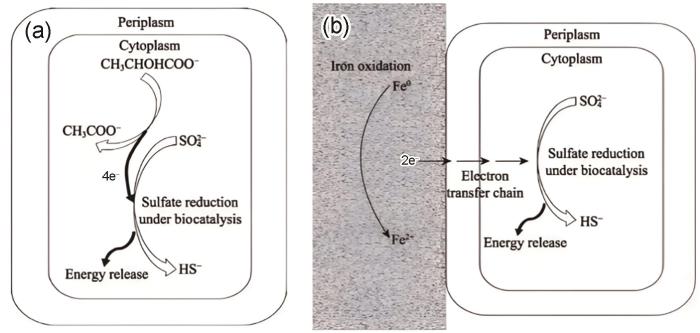
图4
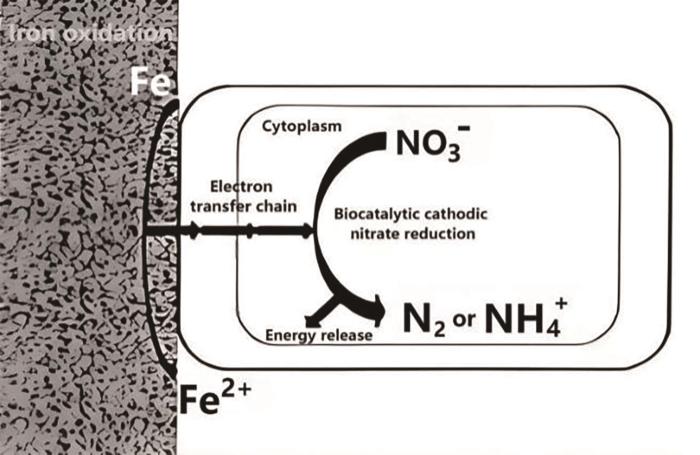
1.1.4 浓差电池机理
20世纪中叶,一些学者研究表明,当金属表面部分区域被污垢、腐蚀产物(如Fe的水化物)覆盖时,会出现独特的腐蚀情况。1958年,Starkey[39]首次提出了浓差电池机理,指出金属电极表面浓差电池的形成归因于腐蚀产物或污垢覆盖,这种覆盖会致使金属表面不同区域所接触的介质浓度产生差异,进而形成浓差电池。Booth和Tiller[40]指出金属电极腐蚀是硫化物引起浓差电池所造成的。Ringas和Robinson[41]进一步研究表明,碳钢完全浸泡于含SRB介质中时表面形成光亮蚀坑;生物膜与腐蚀产物的不规则分布或局部堆积阻碍含氧水扩散,使微生物附着密度不同区域形成氧浓差,引发氧浓差电池腐蚀[42]。在海洋环境中,海洋微生物在金属表面形成的生物膜阻碍氧扩散:生物膜较厚或沉积物覆盖处氧浓度低(阳极,金属溶解),边缘或曝露区氧浓度高(阴极,氧还原),形成氧浓差电池,导致金属点蚀,如图5所示[43]。
图5
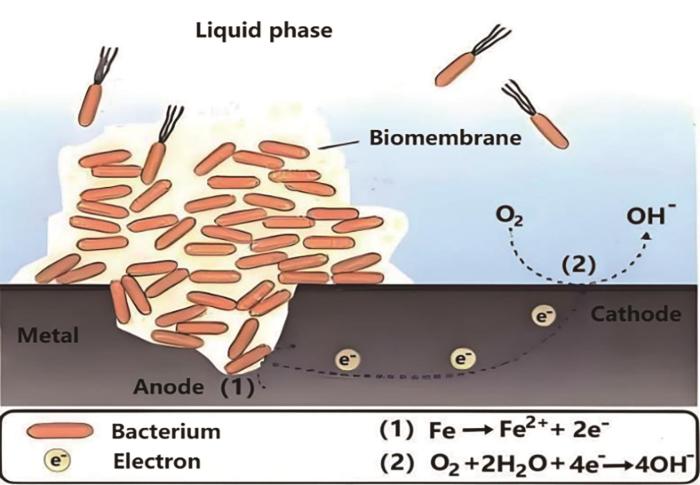
1.1.5 胞外电子传递理论
图6
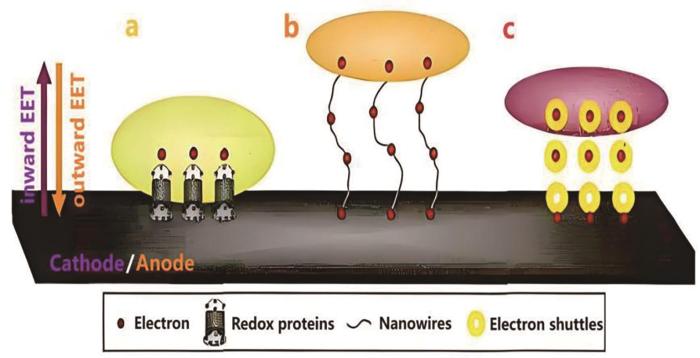
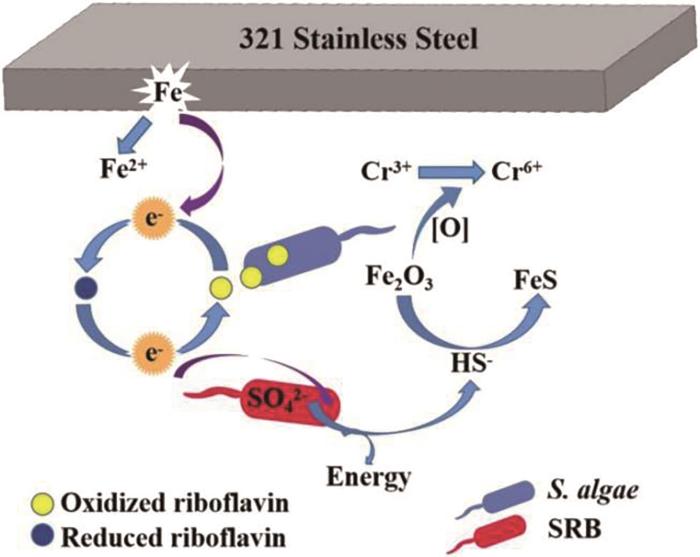
(3) 通过电子载体(如氢气)或活性电子转移介质(如核黄素)实现电子转移。Thirumurthy和Jones[50]研究表明,G. sulfurreducens借核黄素完成电子转移:OmcZ与核黄素为EET终末氧化还原活性物质且相互作用,异源表达OmcZ的大肠杆菌可开展EET,核黄素可提升其生电化学细胞产电流,OmcZ通过瞬时结合核黄素,推动核黄素将电子从外膜传至胞外底物。Liu等[51]研究表明,C饥饿时MIC率升高,提示存在EET机制,实验证实核黄素介导(以辅酶形式参与)该过程;Enterococcus faecalis生物膜通过核黄素介导的EET恶化316L不锈钢表面保护性氧化层,核黄素还可加速腐蚀,明确其在细菌电子转移及腐蚀过程中的介导作用。Zhao等[52]研究表明,SRB和希瓦氏藻(S. algae)对不锈钢腐蚀行为存在协同作用:藻类分泌的核黄素获取表面Fe溶解产生的电子并转移给SRB,促进二者间电子传递,加速腐蚀,如图7所示。
图7
1.1.6 产物酸腐蚀机理
1973年,Evans等[53]认为碳钢腐蚀现象源于醋酸等微生物腐蚀产物浓缩后的侵蚀作用。在含氧环境中,酸腐蚀机理主要为水解生成的H⁺会降低金属阳极区和阴极区的pH值,进而引发酸腐蚀。
1.1.7 阳极区固定机理
1.2 垢下微生物腐蚀机理
1.2.1 垢下SRB腐蚀
Yang等[58]研究硅砂垢层和SRB对碳钢腐蚀的协同作用,结果表明,垢层下微酸化环境促进SRB在垢层中富集,产生疏松腐蚀产物FeS在金属表面分布不均匀,因此SRB与砂垢共存时,极大促进了碳钢腐蚀。Liu等[59,60]研究了硅砂和粘土(5∶1,质量比)复合垢层下SRB的腐蚀,研究表明,垢层阻碍使SRB难以获取硫酸盐,转而通过电子直接转移促进腐蚀;注入SRB后体系腐蚀速率增至6~7倍。SRB存在时,腐蚀产物FeS和Fe(OH)2未形成致密保护膜,电效应增强使电流密度上升,加速阴阳极反应,电偶效应亦促进垢下局部腐蚀。Zhang等[61]研究了CaCO3垢层和SRB对腐蚀的影响,研究表明,SRB同样可以在碳酸钙垢层中富集,引起严重的垢下腐蚀。垢层的多孔性使SRB可通过扩散持续获取营养,且厌氧环境利于其在沉积物内/下生长;SRB腐蚀产物(如FeS)增强沉积物非均质性,导致其在沉积物内/下积累加剧MIC,沉积物异质性增强亦加重UDC,故沉积物与SRB共存对管道腐蚀存在协同效应。
然而,与对UDC和MIC的广泛单独研究不同,关注二者相互作用的研究仍十分有限。部分研究仅探讨SRB对管道钢UDC的影响,研究表明其可促进碳酸钙或砂沉积物下的局部腐蚀,但未涉及沉积物与SRB的协同作用。针对管道腐蚀研究,沉积物与SRB是否存在协同作用以及二者若存在协同作用时具体通过何种机制影响管道腐蚀,这两个核心问题仍有待阐明。
1.2.2 垢下NRB腐蚀
Suarez等[62]研究了Enterobacter roggenkampii细菌(一种兼具硝酸盐还原和Fe氧化能力的FeONRB细菌)对垢下腐蚀的影响,研究表明,FeONRB细菌促进腐蚀产物中Fe2+向Fe3+转变,加速了管道钢材料的垢下腐蚀。与此同时,Liu等[63]研究了CO2环境下不同厚度矽砂和粘土(5∶1)复合垢层与Pseudomonas stutzeri细菌(一种硝酸盐还原菌)共存的腐蚀,研究表明,垢层与NRB都能抑制碳钢腐蚀,但随垢层厚度增加,垢层内有机碳源减少使NRB活性下降,腐蚀抑制作用减弱。学者们围绕沉积物厚度的影响及微生物与腐蚀产物膜的关联展开探究,明确沉积物厚度作为关键变量,其变化通过改变物质扩散、微生物生存环境及细胞转移过程,直接影响腐蚀速率与微生物作用效果;微生物可通过形成致密腐蚀产物膜或生物矿化膜发挥防护作用,膜的致密性与腐蚀速率降低相关,且膜的形成依赖微生物活性。同时微生物对腐蚀的抑制效果并非绝对,受沉积物环境限制(如养分不足、缺氧、细胞数量减少),随沉积物厚度增加,其防护作用会因活性下降而逐渐减弱。
除了对单一垢下NRB研究外,学者们开始展开对垢下NRB与其他细菌共存的影响。Sun等[64]研究了SRB和NRB对碳钢在UDC的交互影响,结果表明,SRB会加速UDC,但其腐蚀作用可被NRB显著抑制。机理上,NRB通过竞争消耗资源、代谢产亚硝酸盐毒性抑制SRB活性,还可能改变局部微环境间接削弱其腐蚀能力。Guo和Duan[65]在海水—沉积物模拟浸泡系统中研究硝酸盐对Q235钢微生物腐蚀的影响,研究表明硝酸盐污染加剧腐蚀,但金属腐蚀并非源于界面酸化或锈层中无机氮抑制SRB活性,而是源于NRB的代谢作用。硝酸盐改变钢表面附着微生物群落,Achromobacter (无色杆菌)丰度显著增加,微生物通过调节Fe0氧化与NO
1.2.3 垢下其他微生物腐蚀
除了上述对垢层与主要腐蚀菌种共同作用机理研究外,学者们还研究了现场采集菌群对垢下腐蚀的影响。Suarez等[66]研究了从澳大利亚某油井中采集的含有产甲烷菌、发酵菌以及硫化菌等嗜热菌群对垢下腐蚀的影响,研究表明嗜热菌群会在垢层中产生多种酸性或腐蚀性代谢产物,引起代谢产物腐蚀,从而促进了垢下腐蚀。然而,该研究没有区分菌群中每种细菌对垢下腐蚀的具体影响,需要进一步开展垢下单一菌种腐蚀的研究,探究其腐蚀规律。
除细菌外,真菌亦会影响垢下金属腐蚀。Wang等[67]深入研究了人工海水中真菌土曲霉(A. terreus)对沉积物覆盖下铝合金的腐蚀影响,结果表明,土曲霉可在沉积物下生存,但生物活性较差,无柄孢子数量随沉积物厚度增加而下降;其会加速均匀腐蚀及电偶效应引发的点蚀,而沉积物对铝合金具有缓蚀作用。Shen等[68]针对海水中藻类微生物和钙镁沉积层对X80钢腐蚀行为的影响展开研究,研究结果表明,藻类存在时腐蚀显著少于仅钙镁沉积层;两者共存初期协同抑制腐蚀,但长期浸泡后藻类代谢破坏沉积层,消除协同作用,使腐蚀速率超过仅含藻类体系,但仍低于仅含钙镁沉积层及裸金属体系。海洋环境中,沉积层通过抑制溶解氧还原及腐蚀产物反应发挥抑腐作用;藻类在有氧环境中形成生物膜创造厌氧环境降低腐蚀速率,且抑腐能力远强于沉积层。但沉积层破坏后,裸露区域优先腐蚀,局部腐蚀趋势加剧。
2 混合微生物腐蚀
相较于对单一细菌腐蚀的关注,在实际腐蚀过程中,腐蚀多由多种微生物构成的生物群落引发,形成混合微生物腐蚀。其中,微生物群落的结构与功能同样扮演着关键角色。已有研究证实,微生物群落组成的差异会影响管道在特定环境中的腐蚀程度及相关机制,这也凸显了微生物群与宿主-物质界面间的复杂关联[69]。
2.1 硫酸盐还原菌与硝酸盐还原菌
储层酸化是采油液中硫化物浓度的增加,是二次采油过程中面临的主要问题。研究表明[70],将海水注入碳氢化合物储层(海水驱)作为一种石油回收方法,会引发微生物储层酸化,微生物通过该储层消耗SO
图8
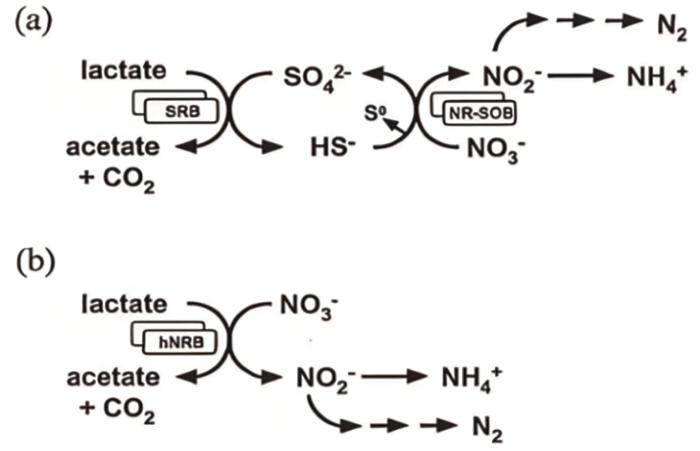
尽管已有研究关注NRB与SRB的相互作用,但主要聚焦于NRB对SRB的抑制作用,忽视了NRB自身也会引发金属腐蚀。注射硝酸盐抑制SRB产生硫化物的同时也可能促进NRB对金属基体的腐蚀[75]。与SRB类似,NRB也是造成油气管道微生物腐蚀的主要腐蚀性细菌,所以二者共存下的腐蚀行为仍需进一步深入研究。
2.2 硫酸盐还原菌与Fe氧化菌
Liu等[76]研究了IOB和SRB在碳钢管道混合微生物腐蚀中的作用,研究表明,碳钢在单一SRB中呈均匀腐蚀,在单一IOB中呈球瘤腐蚀。腐蚀初期,SRB的EPS可阻碍IOB粘附,抑制腐蚀结瘤形成,且腐蚀结瘤尺寸与SRB∶IOB含量比成反比;后期因SRB在低溶解氧(DO)环境下繁殖率高,混合体系中腐蚀结瘤加速传播。Xu等[77]研究冷却水系统中SRB与IOB对不锈钢的腐蚀行为,研究表明,SRB与IOB共存时,碳钢的腐蚀效率显著高于二者单独作用的情况。Nejad Ababaf和Jafari[78]研究了SRB、SOB和IOB对焊接不锈钢的腐蚀影响,结果表明,SOB和IOB降低了合金的腐蚀速率,并起到了抑制剂的作用。Lv等[79]研究X65钢在含SRB和IOB的海水中的腐蚀行为,研究表明,SRB和IOB可在材料表面形成协同群落(混合物种生物膜),其中厌氧SRB与好氧IOB的组合对X65钢腐蚀影响显著,腐蚀速率高于单一SRB或IOB介质。其腐蚀机理可分为3个阶段,分别受细菌代谢活动(SRB和IOB)、生物膜结构演化和代谢产物交互作用共同调控(图9)。
图9

SRB与IOB对碳钢、不锈钢等金属的腐蚀研究表明:单一微生物腐蚀特征具有特异性,二者单独作用表现差异显著;混合体系腐蚀行为非简单叠加,通过协同群落、生物膜等交互作用调控腐蚀,多数情况下腐蚀程度高于单一菌体系;SRB的EPS、低氧繁殖及IOB参与的生物膜形成等代谢与环境因素,通过改变微环境直接影响腐蚀结瘤与速率;微生物作用具双重性与环境关联性,部分微生物可在特定体系中发挥抑腐作用,但多数混合体系中易与SRB协同加剧腐蚀。
2.3 硫酸盐还原菌与Fe还原菌
IRB主要参与自然界中的Fe循环。Valencia-Cantero等[80]研究表明,具有氢化酶活性的细菌菌株不一定具有腐蚀性,并且腐蚀诱导的能力可以被更大的细菌群落(尤其是存在IRB)提供的代谢活动大大改变。Javaherdashti等[81]研究显示,含SRB纯培养物及SRB与IRB混合培养物的微生物环境对碳钢应力腐蚀开裂影响存在差异:混合细菌体系中金属失效时间长于纯SRB环境,碳钢耐腐蚀性相对更好;同时,SRB会促进碳钢氢致开裂。Sun等[82]研究表明,异化铁还原菌(DIRB)、SRB及混合菌群对As和Fe/硫物种迁移影响不同:混合菌群初始阶段增强Fe(III)和硫酸盐还原促进As释放,最大浓度为单独DIRB或SRB组的1.5倍;中间阶段抑制相关酶合成及有毒物质分泌,减少次生铁矿物形成与砷固定;后期分泌有机酸致氧化铁分解而再次释放As,揭示了DIRB与SRB的复杂相互作用及在As迁移转化中的协调作用。
目前IRB与SRB混合体系的相互作用机理研究较少,因二者代谢特性复杂(如碳源竞争、电子传递及代谢产物互作),其作用机制尚未明晰。对于该体系对金属腐蚀是加速还是抑制尚无定论。
2.4 硫酸盐还原菌与产甲烷古菌
目前产甲烷途径仅有3种类型,分别为CO₂还原、甲基还原和醋酸碎裂反应。产甲烷古菌(MA)作为生产生物甲烷的关键微生物,广泛存在于海洋、湿地和冻土等环境[83]。MA可能是碳钢海洋腐蚀的重要成因,其可通过直接从钢中提取电子显著提升腐蚀速率[84]。Zhou等[85]探究了X52钢管道在水压试验后因SRB和MA腐蚀导致的失效机制,研究表明,静水压测试后钢管道腐蚀速度显著加快。水压试验水引入的MA与SRB在X52钢片表面形成腐蚀性生物膜,引发严重点蚀。Rajala等[86]探究碳钢在含SRB和MA的缺氧地下水中的腐蚀与生物污染趋势,结果表明,非生物环境中碳钢腐蚀速率最低;生物环境中,SRB和MA均会引发严重点蚀,其中纯SRB体系腐蚀速率最高,SRB与MA复合体系最低。原因在于SRB形成的腐蚀产物无防护作用,而MA可形成致密生物膜保护金属。而Zhuang等[87]研究了SRB和MA对碳钢腐蚀的影响,结果表明,二者对腐蚀过程存在协同作用,导致SRB + MA组的腐蚀失重显著增加,是SRB组的8.64倍,是MA组的1.58倍。该协同作用源于二者对腐蚀产物形成的影响,混合体系中生成更多FeS等腐蚀产物,且碳钢与混合菌群间的电子转移过程进一步加剧了腐蚀。二者结论矛盾的可能原因在于实验环境差异:前者以缺氧地下水为实验环境,其独特化学组成与微生物群落结构或影响结果;后者侧重研究SRB与MA的协同作用,未针对特定环境的腐蚀影响展开,导致结论不一致。
上述研究表明,生物环境下SRB与MA的作用共同凸显了微生物腐蚀的复杂性:SRB与MA单独或复合作用均会引发钢材腐蚀,严重点蚀为共同表现。其中SRB在纯体系或复合体系中均明确促进腐蚀,其腐蚀产物无防护作用;MA作用具双重性,既可通过致密生物膜保护金属,也可能与SRB协同,经腐蚀产物形成或电子转移加剧腐蚀。而二者复合体系的腐蚀行为因微生物交互作用呈现非叠加的复杂特征,且点蚀为生物环境中普遍存在的严重腐蚀表现。
2.5 硫酸盐还原菌与产酸菌
APB通过分泌质子等氧化剂引发金属腐蚀,由发酵代谢物引发的电化学腐蚀属于II型MIC。无外源性氧化剂时,发酵微生物以代谢物为电子受体维持氧化还原平衡。浮游细胞的体积细胞质量密度通常为生物膜的10-2倍或更低,导致APB生物膜下pH值显著低于外部,形成局部高浓度腐蚀性氧化剂,引发生物膜下严重酸腐蚀[88]。Unsal等[89]以含油田生物膜(SRB、APB、异养菌)的人工海水研究碳钢腐蚀,研究表明,SRB和APB可在管道表面形成坚固的复合生物膜,60 d后质量减轻(7.1 ± 0.3) mg/cm2,最大凹坑深度为33.5 μm,碳钢腐蚀失重为单独SRB作用下的两倍[90]。APB与SRB混合体系存在协同加速腐蚀效应,但其机理尚不明确,研究仍处探索阶段。
2.6 硫酸盐还原菌与脱氮硫杆菌
脱氮硫杆菌(TDN)因具备高效脱硫脱氮能力,在生物脱硫、脱氮、污水处理及钢铁防腐等领域备受关注[91]。余栋宇等[92]以含适当浓度硫酸盐和硝酸盐的模拟污水研究TDN对SRB生长的抑制作用,结果表明,仅接种SRB时,硫酸盐和硝酸盐的含量均降低。同时接种TDN和SRB时,硫酸盐的含量升高,硝酸盐含量降低。由此推断,TDN通过反硝化过程的代谢产物改变SRB生长环境,抑制其生长并减少H2S产生。刘宏芳等[93]研究TDN生长特性及其对SRB的影响,TDN可与SRB共存,通过氧化代谢产物H2S及FeS降低硫化物浓度,减轻金属腐蚀。汪梅芳等[94]研究TDN与SRB混合培养时SRB腐蚀对Q235钢表面生物膜的影响,结果表明,TDN阻碍SRB生物膜形成,降低其粗糙度并增强致密性,同时减少生物膜中腐蚀性硫化物含量,显示出对SRB腐蚀的抑制作用。TDN硫化物代谢的8种典型生化反应如表1所示[95]。近年来,TDN凭借脱硫能力,在沼气及天然气脱H2S领域的研究已较为深入。同时,其对SRB引发的碳钢腐蚀具有显著抑制作用,但抑制效果及机制的研究不够系统,仍需进一步深化。
表1 脱氮硫杆菌获得能量的典型生化反应[95]
Table 1
| Oxidation reaction | ΔG / kJ·mol-1 |
|---|---|
| (1) H2S + 0.5O2 → S0 + H2O | -210.2 |
| (2) 4S0 + 3O2 + 4OH- → 2S2O | -71.2 |
| (3) 2S0 + O2 + H2O → S2O | -250.0 |
| (4) S0 + 1.5O2 + H2O → SO | -500.0 |
| (5) 2S2O | -10.9 |
| (6) S2O | -418.7 |
| (7) SO | -250.0 |
| (8) 5S2- + 2NO | -1168.4 |
3 微生物腐蚀的影响因素
造成管线腐蚀因素复杂多样,不同油气管线的致蚀因素有很大差别。针对不同因素需开展针对性的靶向研究,面对复杂地理环境还需综合考虑多因素影响,探究不同因素对微生物腐蚀的影响。
3.1 土壤类型
不同土壤环境的致蚀因子差异显著,可将土壤环境分为陆地土壤环境和海洋土壤环境两类,学者们结合微生物和土壤环境对金属腐蚀展开研究。孙福洋等[96]研究了盐渍性土壤中SRB对X100管线钢的腐蚀行为,研究表明,X100管线钢在无菌及含SRB的模拟溶液中均呈现中度腐蚀。在库尔勒土壤环境中,SRB的存在会加速X100管线钢的腐蚀,由生物膜与腐蚀产物结合形成的复合膜,可在短时间内显著抑制腐蚀进程。Liu和Cheng[97]研究X52管线钢在含SRB的模拟土壤溶液中不同厚度土壤层下的微生物腐蚀及电偶耦合效应,结果表明,厌氧无菌条件下,土壤层加速腐蚀,土层厚度与腐蚀速率成正比;SRB存在时平均腐蚀速率升高,但随土层厚度增加腐蚀速率降低。Xu等[98]研究表明,管道油泥(含石油、无机及金属化合物的复杂腐蚀性混合物)可作SRB与碳钢的电子转移“桥梁”,SRB生物膜能增强油泥电导率,二者共同加速MIC胞外电子转移与碳钢溶解;X60钢在SRB富集油泥中腐蚀速率为SRB溶液中1.6倍,腐蚀更严重(坑宽252.6 μm、深34.05 μm),且油泥会阻滞SRB代谢H2S致自身酸化。Zhang等[99]研究海泥中SRB对X80碳钢的MIC机制,鉴定出两种独特促进机制:一是海水-泥浆界面碳钢以海泥中碳钢为阳极,因无柄细胞浓度差异增强了两区域间的电偶效应;二是海泥中SRB在砂粒上形成生物膜,通过砂粒与金属接触参与MIC的生物催化阴极过程。
尽管部分学者已研究特定土壤中管线钢的MIC,但土壤组成复杂性导致腐蚀规律难系统归纳,故需针对特定土壤条件开展针对性研究,探究土壤类型对微生物生理活性及生物膜结构的影响。而垢下微生物腐蚀既影响微生物,又改变垢层化学成分与物理性质,因此需考虑环境因素对垢层和微生物的双重作用。
3.2 交流电流
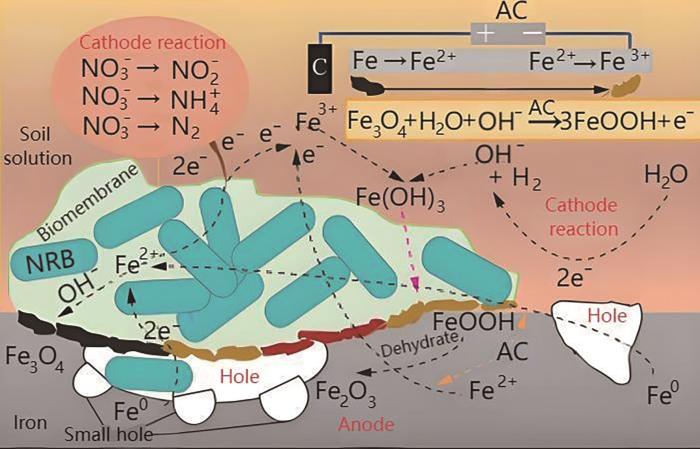
除了土壤类型外,当土壤中存在交流电流(AC)时会通过影响细菌新陈代谢及金属表面微生物膜的吸附状态,进一步作用于金属腐蚀过程。研究表明,交流电可促进NRB的生长(图10)[100],但对SRB的生长具有抑制作用。微生物与交流电的共同作用会加速管道点蚀进程,这一现象与钢的阳极溶解及生物膜降解过程密切相关[101]。Qin等[102]探究AC与SRB对沿海盐渍土中X80钢腐蚀行为的影响,结果表明,100 A/m2 AC可抑制无柄和浮游SRB细胞生长,但会增强活菌代谢活性并加速胞外电子转移;AC与SRB共同作用时,钢的腐蚀显著增加。SRB与AC均能增强腐蚀,且AC作用下的腐蚀速率远高于单纯SRB影响,二者对腐蚀增强存在协同作用。Qing等[103]研究了SRB和AC对X80管道钢在土壤浸出液中腐蚀的影响。研究表明,交流电流抑制浮游和无蒂SRB的生长,施加10 mA交流电流时,钢的腐蚀电流密度约为无电流时的9倍,腐蚀形态随电流密度增加从小点蚀转变为大点蚀。该腐蚀过程由Fe的主动溶解和生物膜降解共同控制。Dehghani等[104]研究表明,施加的交流电可增强反硝化细菌的代谢活性,促进反硝化作用。
图10
尽管学者们已开展交流电作用下微生物对金属腐蚀的相关研究,但关于交流电作用下生物膜动态过程研究不足,交流电引起的电场效应与微生物代谢活动耦合的界面作用机理报道仍较为匮乏。此外,复杂环境下管线钢的腐蚀行为及开裂机制目前尚未完全明确。
3.3 阴极保护
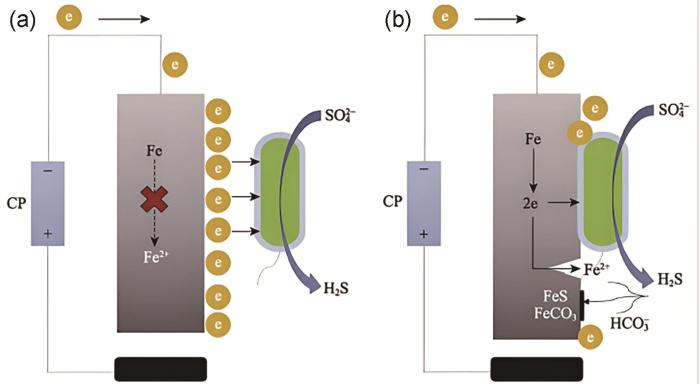
阴极保护(CP)虽能有效缓解金属腐蚀,但随着生物膜研究的深入,其对阴极保护的影响逐渐明确。微生物形成的生物膜会使极化电阻增大,达到相同电位所需极化电流也增大[105]。Li等[106]实验表明,即便管线处于CP状态下,SRB仍会加速金属腐蚀。Liu和Cheng[107]研究CP电位对X70钢管道在SRB介质中生物膜形成及腐蚀行为的影响,研究表明,施加CP会促使SRB附着在钢表面形成生物膜,削弱其保护效果。当CP电位相对于CSE(饱和CuSO4参比电极)负移至-1.0 V时,SRB可利用CP提供的电子作为电子供体维持代谢,不再仅依赖Fe作为电子供体(图11a)。过于密集的SRB团簇会通过利用Fe0中的电子,引发阴极保护下的点蚀现象(图11b)。Sun等[108]研究表明,相同电位下,无SRB土壤中CP效率高于含SRB土壤,表明SRB会削弱CP对钢的保护作用;含SRB土壤中钢的腐蚀速率显著高于无SRB环境,证实SRB加速金属腐蚀。在相同的阴极电位下,含SRB土壤中钢的阴极电流密度更大,推测SRB可能通过增强阴极反应(如电子竞争或代谢活动)影响电化学过程。
图11
3.4 磁场
实际工业中管道常处于输变电设施电磁场、地磁场、人工防腐磁场等复杂物理场环境,这些磁场可能通过未知机制影响微生物活性或腐蚀电化学过程,其对管道腐蚀的作用主要借助洛伦兹力和磁场梯度力实现,可通过磁流体动力学理论(MHD)解释。Liu等[109]通过研究磁场(MF)对Q235碳钢生物矿化及腐蚀行为的影响,研究表明,MF可有效抑制IOB的生长繁殖,从而减缓碳钢腐蚀。此外,MF显著改善生物矿化膜的微观结构,使其形成更致密均匀的防护层,进一步降低腐蚀速率。Gao等[110]研究了MF对SRB引起的X100管道钢电化学腐蚀行为的影响,结果表明,MF抑制了SRB的生长和活性,随MF强度增加,X100钢腐蚀速率呈先降低后增加的趋势,其中5 mT下腐蚀速率最低。Chen等[111]研究了磁场与SRB共存时金属的腐蚀行为,结果表明,磁场抑制SRB的生长,并促进更致密腐蚀产物膜的形成,进而抑制MIC。Fojt等[112]研究表明,细菌的活性蛋白和酶中存在磁性元素,磁场会影响溶液中离子运动方向和速度。Li等[113]研究了磁场与SRB联合作用下的应力腐蚀开裂(SCC)行为,磁场在0~20 mT范围内,与SRB共同作用会加速应力腐蚀开裂,而当磁场强度增加到30 mT时,SCC敏感性降低。
磁场可以通过影响SRB的生长、数量或金属表面生物膜的形成来影响腐蚀,但目前关于磁场与SRB是否共同加速金属腐蚀尚未形成统一结论。这一现象源于不同环境下磁场与微生物相互作用机制的复杂性,具体挑战包括:生物膜结构影响机制不明、微生物活性调控路径不清以及环境多因素耦合效应[114]。
4 展望
近年来,学者通过深入研究生物膜下腐蚀及生命活动机理,对油气管线外表面生物膜下MIC、沉积物垢下微生物代谢腐蚀协同机制及主要腐蚀性微生物间交互作用机理的认识逐渐清晰。但在役管线运行受多因素交互影响,不同环境致蚀因子复杂且存在差异,微生物引发的管道腐蚀仍难避免。尽管MIC领域研究成果丰厚,彻底解决该问题仍需从以下3方面深入研究:
(1) 既要聚焦微生物生命活动特征、细菌竞争腐蚀、抑制性与腐蚀性微生物互作等多因素耦合机制,开展微观层面研究以实现腐蚀机理认知的本质性突破;也要重点攻坚新型材料研发,着力开发高抗菌-缓蚀双功能纳米材料(如Ag/Cu双金属纳米颗粒)、强效无污染杀菌剂及可繁殖再生的单剂多功能高分子抗菌剂,夯实防护材料基础;同时需推动微生物抑制技术与传统防护手段深度融合,构建绿色长效防护体系,最大化综合防护效能,全面推动 MIC防治水平升级。
(2) 需深化多菌种协同作用机制探索:复合菌群下的MIC依赖微生物代谢联动,而环境因素驱动的微生物群落演替,进一步加剧了多菌种协同模式的复杂性;因此,需结合微生物组学、微流控技术与原位监测手段构建动态解析体系,同时整合分子生物学与多组学技术,解析腐蚀相关基因、代谢机制及微生物群落互作,为精准干预奠定基础;此外,还需从代谢物、硫化物转化及腐蚀产物等维度探讨抑制机理,借助基因编辑构建高效抑腐工程菌株,进而发展绿色、智能、原位“细菌抑菌”防控技术,实现对MIC的有效抑制。
(3) 生物膜在微生物生命活动及金属腐蚀中的作用机制仍未完全明晰,其既能为微生物提供物理屏障以抵御外界不利因素,又能通过维持内部离子平衡、营养梯度及氧气微分区营造稳态生长环境,且深度参与MIC过程;未来需依托多学科交叉技术,解析生物膜在MIC中的物质传递与电化学调控机制,并开发具备特定功能及环境响应能力的智能生物膜,以强化金属腐蚀防护。
参考文献
Analysis of interference and protection measures of high-voltage DC stray current on buried oil and gas pipelines
[J].
高压直流杂散电流对埋地油气管道的干扰及防护措施分析
[J].
Effect of cathodic protection potential fluctuations on pitting corrosion of X100 pipeline steel in acidic soil environment
[J].
Intergranular stress corrosion cracking of steel gas pipelines in weak alkaline soil electrolytes
[J].
Green corrosion inhibitor of β-cyclodextrin modified xanthan gum for X80 steel in 1 M H2SO4 at different temperature
[J].
Short-period corrosion of X80 pipeline steel induced by AC current in acidic red soil
[J].
Microbial corrosion of metals: The corrosion microbiome
[J].
Microbially catalyzed corrosion of metals is a substantial economic concern. Aerobic microbes primarily enhance Fe oxidation through indirect mechanisms and their impact appears to be limited compared to anaerobic microbes. Several anaerobic mechanisms are known to accelerate Fe oxidation. Microbes can consume H abiotically generated from the oxidation of Fe. Microbial H removal makes continued Fe oxidation more thermodynamically favorable. Extracellular hydrogenases further accelerate Fe oxidation. Organic electron shuttles such as flavins, phenazines, and possibly humic substances may replace H as the electron carrier between Fe and cells. Direct Fe-to-microbe electron transfer is also possible. Which of these anaerobic mechanisms predominates in model pure culture isolates is typically poorly documented because of a lack of functional genetic studies. Microbial mechanisms for Fe oxidation may also apply to some other metals. An ultimate goal of microbial metal corrosion research is to develop molecular tools to diagnose the occurrence, mechanisms, and rates of metal corrosion to guide the implementation of the most effective mitigation strategies. A systems biology approach that includes innovative isolation and characterization methods, as well as functional genomic investigations, will be required in order to identify the diagnostic features to be gleaned from meta-omic analysis of corroding materials. A better understanding of microbial metal corrosion mechanisms is expected to lead to new corrosion mitigation strategies. The understanding of the corrosion microbiome is clearly in its infancy, but interdisciplinary electrochemical, microbiological, and molecular tools are available to make rapid progress in this field.Copyright © 2021 Elsevier Ltd. All rights reserved.
Accidents statistical analysis and safety operation measures of the oil-gas pipeline
[J].
油气管道事故统计分析与安全运行对策
[J].
Statistical analysis and countermeasure research on pressure pipeline accidents
[J].
压力管道事故统计分析及对策研究
[J].
Oil & gas storage and transportation system and enlightenment of transit transportation
[J].
哈萨克斯坦油气储运系统与过境运输启示
[J].
Cause analysis of tube bundle corrosion of feed/reaction product heat exchanger of gasoline-diesel hydrogenation unit fractionator
[J].
汽柴油加氢装置分馏塔进料/反应产物换热器管束腐蚀原因分析
[J].
Effects of microbial redox cycling of iron on cast iron pipe corrosion in drinking water distribution systems
[J].Bacterial characteristics in corrosion products and their effect on the formation of dense corrosion scales on cast iron coupons were studied in drinking water, with sterile water acting as a reference. The corrosion process and corrosion scales were characterized by electrochemical and physico-chemical measurements. The results indicated that the corrosion was more rapidly inhibited and iron release was lower due to formation of more dense protective corrosion scales in drinking water than in sterile water. The microbial community and denitrifying functional genes were analyzed by pyrosequencing and quantitative polymerase chain reactions (qPCR), respectively. Principal component analysis (PCA) showed that the bacteria in corrosion products played an important role in the corrosion process in drinking water. Nitrate-reducing bacteria (NRB) Acidovorax and Hydrogenophaga enhanced iron corrosion before 6 days. After 20 days, the dominant bacteria became NRB Dechloromonas (40.08%) with the protective corrosion layer formation. The Dechloromonas exhibited the stronger corrosion inhibition by inducing the redox cycling of iron, to enhance the precipitation of iron oxides and formation of Fe3O4. Subsequently, other minor bacteria appeared in the corrosion scales, including iron-respiring bacteria and Rhizobium which captured iron by the produced siderophores, having a weaker corrosion-inhibition effect. Therefore, the microbially-driven redox cycling of iron with associated microbial capture of iron caused more compact corrosion scales formation and lower iron release. Copyright © 2014 Elsevier Ltd. All rights reserved.
The effect of marine biofilm formation ability on the corrosion behavior of X80 pipeline steel
[D].
海洋细菌成膜能力对X80管线钢腐蚀行为影响研究
[D].
Effects of Ag and Cu ions on the microbial corrosion of 316L stainless steel in the presence of Desulfovibrio sp
[J].The utilization of Ag and Cu ions to prevent both microbial corrosion and biofilm formation has recently increased. The emphasis of this study lies on the effects of Ag and Cu ions on the microbial corrosion of 316L stainless steel (SS) induced by Desulfovibrio sp. Electrochemical impedance spectroscopy (EIS) and potentiodynamic polarization were used to analyze the corrosion behavior. The biofilm formation, corrosion products and Ag and Cu ions on the surfaces were investigated using scanning electron microscopy (SEM), energy dispersive X-ray spectrometry (EDS) and elemental mapping. Through circuit modeling, EIS results were used to interpret the physicoelectric interactions between the electrode, biofilm and culture interfaces. EIS results indicated that the metabolic activity of Desulfovibrio sp. accelerated the corrosion rate of SS in both conditions with and without ions. However, due to the retardation in the growth of Desulfovibrio sp. in the presence of Ag and Cu ions, significant decrease in corrosion rate was observed in the culture with the ions. In addition, SEM and EIS analyses revealed that the presence of the ions leads to the formation on the SS of a biofilm with different structure and morphology. Elemental analysis with EDS detected mainly sulfide- and phosphorous-based corrosion products on the surfaces. Copyright © 2016 Elsevier B.V. All rights reserved.
Microbial corrosion of initial perforation on abandoned pipelines in wet soil containing sulfate-reducing bacteria
[J].
Microbiologically influenced corrosion as a function of environmental conditions: A laboratory study using oilfield multispecies biofilms
[J].
Corrosion behavior of carbon steel in the presence of two novel iron-oxidizing bacteria isolated from sewage treatment plants
[J].In this work, two novel iron oxidizing bacteria (IOB), namely Gordonia sp. MZ-89 and Enterobacter sp. M01101, were isolated from sewage treatment plants and identified by biochemical and molecular methods. Then, microbially influenced corrosion (MIC) of carbon steel in the presence of these bacteria was investigated. The electrochemical techniques such as potentiodynamic polarization measurements and electrochemical impedance spectroscopy (EIS) were used to measure the corrosion rate and observe the corrosion mechanism. The results showed that the existence of these microorganisms decreased the corrosion potential and enhanced the corrosion rate. Scanning electron microscopy (SEM) images revealed the ground boundary attacks and pitting on carbon steel samples in the presence of these bacteria after polarization. Corrosion scales were identified with X-ray diffraction (XRD). It was demonstrated that these bacteria can greatly affect the crystalline phase of corrosion products that also confirmed by SEM results. It was inferred that these bacteria were responsible for the corrosion of carbon steel, especially in the form of localized corrosion.
Microbial extracellular electron transfer and its relevance to iron corrosion
[J].Extracellular electron transfer (EET) is a microbial metabolism that enables efficient electron transfer between microbial cells and extracellular solid materials. Microorganisms harbouring EET abilities have received considerable attention for their various biotechnological applications, including bioleaching and bioelectrochemical systems. On the other hand, recent research revealed that microbial EET potentially induces corrosion of iron structures. It has been well known that corrosion of iron occurring under anoxic conditions is mostly caused by microbial activities, which is termed as microbiologically influenced corrosion (MIC). Among diverse MIC mechanisms, microbial EET activity that enhances corrosion via direct uptake of electrons from metallic iron, specifically termed as electrical MIC (EMIC), has been regarded as one of the major causative factors. The EMIC-inducing microorganisms initially identified were certain sulfate-reducing bacteria and methanogenic archaea isolated from marine environments. Subsequently, abilities to induce EMIC were also demonstrated in diverse anaerobic microorganisms in freshwater environments and oil fields, including acetogenic bacteria and nitrate-reducing bacteria. Abilities of EET and EMIC are now regarded as microbial traits more widespread among diverse microbial clades than was thought previously. In this review, basic understandings of microbial EET and recent progresses in the EMIC research are introduced.© 2016 The Author. Microbial Biotechnology published by John Wiley & Sons Ltd and Society for Applied Microbiology.
Microbiologically influenced corrosion and mechanisms
[J].
微生物腐蚀及腐蚀机理研究进展
[J].
Corrosion mechanisms of X80 steel under disbonded coating under the AC, microorganisms, and stress
[D].
交流电、微生物和应力作用下剥离涂层下X80钢腐蚀机理研究
[D].
Progress in studies on microbiologically influenced corrosion by sulfate-reducing bacteria
[J].
硫酸盐还原菌微生物腐蚀研究进展
[J].
The graphitization of cast iron as an electro-biochemical process in anaerobic soils
[J].Agricultural non-point source pollution (ANPSP) represents a major threat to water quality, yet its spatiotemporal dynamics in arid and semi-arid regions remain poorly quantified. This study establishes an integrated assessment framework to analyze the spatiotemporal patterns and driving mechanisms of ANPSP in Inner Mongolia, China, from 2002 to 2023. Using a combination of inventory analysis, pollution load equivalence assessment, and the Tapio decoupling model, we systematically examined the evolution of four pollution sources—chemical fertilizers, livestock breeding, agricultural solid waste, and rural domestic discharge—across 12 administrative regions. These methods were sequentially applied to quantify loads, standardize impacts, and evaluate the economy–environment relationship, forming a coherent analytical chain. Key results indicate the following: (1) Pollutant loads increased consistently over the study period, with chemical oxygen demand (COD), total nitrogen (TN), and total phosphorus (TP) rising by 24.21%, 31.67%, and 31.14%, respectively, largely driven by livestock sector expansion. (2) Spatial distribution was highly heterogeneous, with Tongliao, Chifeng, and Hulunbuir contributing 50.58–58.31% of total emissions, in contrast to minimal impacts in western regions. (3) Decoupling analysis indicated variable environment–economy relations, where fertilizer use and grain output reached strong decoupling in 2010–2011 and 2018–2019, whereas livestock pollution exhibited more unstable decoupling trajectories. A cluster-derived risk zoning scheme identified Bayannur as the only high-risk area and highlighted the need for tailored management approaches in medium- and low-risk zones. This study offers a scientific foundation for targeted ANPSP mitigation and sustainable agricultural strategy formulation in ecologically vulnerable areas.
A review of some characteristics of MIC caused by sulfate-reducing bacteria: Past, present and future
[J].Microbiologically‐influenced corrosion (MIC) is extremely harmful to both the industry and the environment. Sulfate‐reducing bacteria (SRB) are also important: we have to know what they really are and what they really do to us; this means we have to improve our understanding of SRB and their characteristics. MIC is the officially accepted terminology by NACE[1] to address this type of corrosion. It is a kind of corrosion in which effects of certain microorganisms are felt. MIC is still a matter open for discussion: we cannot explain what is really meant by “microbiological” component, i.e. does it express the possibility that some microbial activity observed at corroded sites on metal surfaces may not result from bacterial growth on metal, but rather that chemical or electrochemical attack on the metal may provide a favorable niche for bacteria to grow? Nor can we be sure about our understanding of the importance of working mechanisms and even the types of microorganisms involved in MIC. In order to have a deeper understanding about corrosion caused by sulfate‐reducing bacteria (SRB), we have to know more about SRB themselves. So, after discussing the importance of MIC, we will mainly focus on SRB and their characteristics that may be new and interesting to the reader.
Research progress on sulfate reducing bacteria induced corrosion of pipeline steel in soil environment
[J].
油气管线钢土壤环境硫酸盐还原菌腐蚀研究进展
[J].
Polarization studies of mild steel in cultures of sulphate-reducing bacteria
[J].
The role of hydrogenases in the anaerobic microbiologically influenced corrosion of steels
[J].The direct electron transfer between 316 L stainless steel and the NAD-dependent hydrogenase from Ralstonia eutropha was studied by spectroelectrochemistry. The presence of hydrogenase and NAD+ clearly increased the quantity of electricity, which was consumed during the electrolysis performed at potential lower than -0.70 V/SCE. The involvement of hydrogenase in the cathodic depolarisation theory was discussed in the light of these results.
The dual role of microbes in corrosion
[J].Corrosion is the result of a series of chemical, physical and (micro) biological processes leading to the deterioration of materials such as steel and stone. It is a world-wide problem with great societal and economic consequences. Current corrosion control strategies based on chemically produced products are under increasing pressure of stringent environmental regulations. Furthermore, they are rather inefficient. Therefore, there is an urgent need for environmentally friendly and sustainable corrosion control strategies. The mechanisms of microbially influenced corrosion and microbially influenced corrosion inhibition are not completely understood, because they cannot be linked to a single biochemical reaction or specific microbial species or groups. Corrosion is influenced by the complex processes of different microorganisms performing different electrochemical reactions and secreting proteins and metabolites that can have secondary effects. Information on the identity and role of microbial communities that are related to corrosion and corrosion inhibition in different materials and in different environments is scarce. As some microorganisms are able to both cause and inhibit corrosion, we pay particular interest to their potential role as corrosion-controlling agents. We show interesting interfaces in which scientists from different disciplines such as microbiology, engineering and art conservation can collaborate to find solutions to the problems caused by corrosion.
Surface chemistry and corrosion behaviour of 304 stainless steel in simulated seawater containing inorganic sulphide and sulphate-reducing bacteria
[J].
A study of microbiologically induced corrosion by sulfate-reducing bacteria on carbon steel using hydrogen permeation
[J].The mechanism of microbiologically influenced corrosion (MIC) on carbon steel (CS) by the bacteria Desulfovibrio desulfuricans subs. desulfuricans was studied using hydrogen permeation, open-circuit potential, and cathodic polarization techniques, in a concentrated culture medium containing bacteria cells (107 cell/mL) and ferrous ions (300 mg/L) designed to simulate a condition common in systems for the secondary recovery of crude oil, characterized by highly contaminated microenvironments that severely corrode iron alloys in a short time period. This research project was carried out using several 24-h experiments to define initial stages of the corrosive process under the conditions indicated. The results evidenced a hydrogen permeation current peak of about 12 μA correlated with a minimum open-circuit potential of –780 mV vs saturated calomel electrode (SCE), 400 min after inoculation. Next, the permeation current decreased abruptly to its base line and the potential increased, stabilizing at –585 mVSCE at 24 h, a condition that is associated with high, similar bacterial activity both with and without cathodic polarization (108 CFU/mL and 109 CFU/mL), typical hydrogen sulfide (H2S) attack morphology, and a weak iron sulfide film. These results using CS as the corrodible material, together with those obtained using a palladium strip as previously reported, show definitely that the cathodic depolarization theory does not represent the chief mechanism used by D. desulfuricans in the MIC process, whereas sulfide corrosion together with iron sulfide products seem to better explain the mechanism of this severe bacterial corrosion problem.
Corrosion of iron and formation of iron phosphide by Desulfovibrio desulfuricans
[J].
Corrosion by the Sulphate-reducing Bacteria
[J].
An overview of mechanisms by which sulphate-reducing bacteria influence corrosion of steel in marine environments
[J].This communication provides an overview of the literature on the biocorrosion of steel in marine media, influenced by the presence of sulphate-reducing bacteria (SRB). Electrochemical aspects, microbial interactions within biofilms, the significance of medium composition and the role of iron sulphides, and hydrogen effects are discussed. A brief description of recent experiments involving the use of electrochemical techniques for corrosion assessment, surface studies employing energy dispersive X-ray analysis (EDAX), X-ray photoelectron spectroscopy (XPS), X-ray diffraction (XRD) and electron microprobe complemented with electron microscopy observations, as well as the application of novel techniques, such as micro sensors and atomic force microscopy, is given. The growth of SRB in marine environments causes significant modifications of many physicochemical parameters at the steel/seawater interface, including local changes in pH and redox potential values, variations in anion and cation concentrations and alteration of the composition and structure of corrosion products. Complex chemical and biological reactions and equilibria are also markedly altered during bacterial proliferation. These effects, which are absent in abiotic media, often lead to significant changes in the corrosion behaviour of steel. The complicated nature of the local environment at the steel/seawater interface is enhanced in the presence of microorganisms and their extracellular polymeric substances (EPS). As a consequence of biofilm heterogeneity, areas with different ion concentrations are formed and the development of corrosion product layers of dissimilar protective characteristics occurs.
Research progress on oil & gas pipeline corrosion induced by SRB
[J].
油气管道SRB腐蚀研究新进展
[J].
New understandings of biocorrosion mechanisms and their classifications
[J].
Numerical simulation of submarine pipeline corrosion induced by the interaction of SRB and mechanical stress
[J].
SRB和应力耦合作用下海底管道腐蚀数值模拟研究
[J].
Toward a better understanding of microbiologically influenced corrosion caused by sulfate reducing bacteria
[J].Sulfate reducing bacteria (SRB) are often the culprits of microbiologically influenced corrosion (MIC) in anoxic environments because sulfate is a ubiquitous oxidant. MIC of carbon steel caused by SRB is the most intensively investigated topic in MIC because of its practical importance. It is also because biogenic sulfides complicate mechanistic SRB MIC studies, making SRB MIC of carbon steel is a long-lasting topic that has generated considerable confusions. It is expedient to think that biogenic H2S secreted by SRB acidifies the broth because it is an acid gas. However, this is not true because endogenous H2S gets its H+ from organic carbon oxidation and the fluid itself in the first place rather than an external source. Many people believe that biogenic H2S is responsible for SRB MIC of carbon steel. However, in recent years, well designed mechanistic studies provided evidence that contradicts this misconception. Experimental data have shown that cathodic electron harvest by an SRB biofilm from elemental iron via extracellular electron transfer (EET) for energy production by SRB is the primary cause. It has been demonstrated that when a mature SRB biofilm is subjected to carbon source starvation, it switches to elemental iron as an electron source and becomes more corrosive. It is anticipated that manipulations of EET related genes will provide genetic-level evidence to support the biocathode theory in the future. This kind of new advances will likely lead to new gene probes or transcriptomics tools for detecting corrosive SRB strains that possess high EET capabilities.
Study on regulating mechanism of pitting corrosion of sulfate-reducing bacteria
[D].
硫酸盐还原菌点蚀调控机制研究
[D].
Anaerobic microbiologically influenced corrosion mechanisms interpreted using bioenergetics and bioelectrochemistry: A review
[J].Microbiologically influenced corrosion (MIC) is a major cause of corrosion damages, facility failures, and financial losses, making MIC an important research topic. Due to complex microbiological activities and a lack of deep understanding of the interactions between biofilms and metal surfaces, MIC occurrences and mechanisms are difficult to predict and interpret. Many theories and mechanisms have been proposed to explain MIC. In this review, the mechanisms of MIC are discussed using bioenergetics, microbial respiration types, and biofilm extracellular electron transfer (EET). Two main MIC types, namely EET-MIC and metabolite MIC (M-MIC), are discussed. This brief review provides a state of the art insight into MIC mechanisms and it helps the diagnosis and prediction of occurrences of MIC under anaerobic conditions in the oil and gas industry.
Laboratory investigation of microbiologically influenced corrosion of C1018 carbon steel by nitrate reducing bacterium Bacillus licheniformis
[J].
The general physiology of the sulfate-reducing bacteria in relation to corrosion
[J].
Cathodic characteristics of mild steel in suspensions of sulphate-reducing bacteria
[J].
Corrosion of stainless steel by sulfate-reducing bacteria-total immersion test results
[J].Total immersion testing of a range of stainless alloys and a mild steel in cultures of sulfate-reducing bacteria (SRB) was conducted. A detailed study of corroded samples under the scanning electron microscope (SEM) indicated that corrosion manifested itself both as pitting and intergranular attack. AISI(1) 304L stainless steel (SS) and, to a lesser extent, AISI 316L SS was found to be susceptible to corrosion in the presence of SRB. A distinctive etched and shiny surface was produced on mild steel by the SRB. Those results agree closely with the results reported for accelerated electrochemical tests.
Research progress of SRB effect on corrosion of oil and gas pipelines
[J].
SRB对油气管道腐蚀影响的研究进展
[J].
Microbiologically influenced corrosion and current mitigation strategies: A state of the art review
[J].
Corrosion behavior of X80 pipeline steel under the coupling action of mixed bacteria and stress
[D].
混合菌和应力耦合作用下X80管线钢腐蚀行为研究
[D].
Microbial electrocatalysis: Redox mediators responsible for extracellular electron transfer
[J].Redox mediator plays an important role in extracellular electron transfer (EET) in many environments wherein microbial electrocatalysis occurs actively. Because of the block of cell envelope and the low difference of redox potential between the intracellular and extracellular surroundings, the proceeding of EET depends mainly on the help of a variety of mediators that function as an electron carrier or bridge. In this Review, we will summarize a wide range of redox mediators and further discuss their functional mechanisms in EET that drives a series of microbial electrocatalytic reactions. Studying these mediators adds to our knowledge of how charge transport and electrochemical reactions occur at the microorganism-electrode interface. This understanding would promote the widespread applications of microbial electrocatalysis in microbial fuel cells, bioremediation, bioelectrosynthesis, biomining, nanomaterial productions, etc. These improved applications will greatly benefit the sustainable development of the environmental-friendly biochemical industries.Copyright © 2018. Published by Elsevier Inc.
Characteristics and applications of extracellular polymeric substances of electroactive microorganisms
[J].
电活性微生物胞外聚合物的特征与应用
[J].
The process of extracellular electron transfer based on cytochrome c
[J].
基于细胞色素c的胞外电子传递过程
[J].
Structure of Geobacter cytochrome OmcZ identifies mechanism of nanowire assembly and conductivity
[J].
Electron transport across the cell envelope via multiheme c-type cytochromes in Geobacter sulfurreducens
[J].Extracellular electron transfer (EET) enables certain microorganisms to respire using soluble and insoluble extracellular electron acceptors by transporting electrons across the cell envelope. Among these, G. sulfurreducens serves as a model organism for understanding direct EET pathways, where multiheme c-type cytochromes mediate electron transport from intracellular redox carriers to extracellular acceptors such as Fe(III) oxides and electrodes. This review focuses on heme-dependent electron transfer in Geobacter sulfurreducens, detailing the roles of inner membrane cytochromes, periplasmic carriers, outer membrane conduits, and recently characterized extracellular nanowires formed by polymerized multiheme c-type cytochromes, including OmcS, OmcE, and OmcZ. We examine the state of understanding of their physiological function, their structural features, expression patterns, and essentiality under various respiratory conditions. These insights advance our understanding of microbial anaerobic respiration and have implications for biogeochemical cycling, bioenergy generation, and bioremediation. The molecular architecture, assembly mechanisms, and secretion pathways of multiheme c-type cytochrome nanowires remain active areas of investigation, offering promising directions for future research and biotechnological innovation in engineered microbial systems.
Geobacter cytochrome OmcZs binds riboflavin: Implications for extracellular electron transfer
[J].\n Geobacter sulfurreducens\n is an important model organism for understanding extracellular electron transfer (EET), i.e. transfer of electrons from the cell’s interior (quinone pool) to an extracellular substrate. This exoelectrogenic functionality can be exploited in bioelectrochemical applications. Nonetheless, key questions remain regarding the mechanisms of this functionality.\n G. sulfurreducens\n has been hypothesized to employ both multi-heme cytochromes and soluble, small molecule redox shuttles, as the final, redox-active species in EET. However, interactions between flavin redox shuttles and outer membrane, redox proteins in\n Geobacter\n have not been demonstrated. Herein, the heterologous expression and purification from\n E. coli\n of a soluble form of the multi-heme cytochrome OmcZs from\n G. sulfurreducens\n is reported. UV–vis absorption assays show that riboflavin can be reduced by OmcZs with concomitant oxidation of the protein. Fluorescence assays show that oxidized OmcZs and riboflavin interact with a binding constant of 34\n μ\n M. Furthermore, expression of OmcZs in\n E. coli\n enables EET in the host, and the current produced by these\n E. coli\n in a bioelectrochemical cell increases when riboflavin is introduced. These results support the hypothesis that OmcZs functions in EET by transiently binding riboflavin, which shuttles electrons from the outer membrane to the extracellular substrate.\n
Riboflavin-mediated extracellular electron transfer enhances microbiologically influenced corrosion of 316L stainless steel by Enterococcus faecalis
[J].
Synergistic effect between sulfate-reducing bacteria and Shewanella algae on corrosion behavior of 321 stainless steel
[J].
The nature of the film on coloured stainless steel
[J].
Some experiences with microbiologically influenced corrosion of pipelines
[J].
Corrosion mechanism of sulfate-reducing bacteria (SRB) on pipelines and protective measures
[J].
硫酸盐还原菌(SRB)对管道腐蚀机理及防护措施
[J].
Effect of deposit chemistry on microbial community structure and activity: Implications for under-deposit microbial corrosion
[J].The deposition of solid particles carried by production fluids from oil and gas companies in horizontal surfaces of different assets has shown to cause severe localised corrosion. Sand, one of the most common deposits in the energy sector pipelines, is frequently mixed with crude, oil, asphaltenes, corrosion inhibitors, and other organic compounds. For this reason, they might favour the metabolic activity of native microbial communities. This study aimed to determine the impact of sand-deposit chemical composition on the microbial community structure and functional attributes of a multispecies consortium recovered from an oilfield and the resulting risk of under-deposit microbial corrosion of carbon steel.
Diagnosing microbiologically influenced corrosion at a crude oil pipeline facility leak site-A multiple lines of evidence approach
[J].
Synergistic effects of deposits and sulfate reducing bacteria on the corrosion of carbon steel
[J].
Microbiologically influenced corrosion of carbon steel beneath a deposit in CO2-saturated formation water containing Desulfotomaculum nigrificans
[J].
Microbiologically-enhanced galvanic corrosion of the steel beneath a deposit in simulated oilfield-produced water containing Desulfotomaculum nigrificans
[J].
Influence of calcareous deposit on corrosion behavior of Q235 carbon steel with sulfate-reducing bacteria
[J].
In situ investigation of under-deposit microbial corrosion and its inhibition using a multi-electrode array system
[J].Carbon steel pipelines used in the oil and gas industry can be susceptible to the combined presence of deposits and microorganisms, which can result in a complex phenomenon, recently termed under-deposit microbial corrosion (UDMC). UDMC and its inhibition in CO2 ambiance were investigated in real-time using a multi-electrode array (MEA) system and surface profilometry analysis. Maps from corrosion rates, galvanic currents, and corrosion potentials recorded at each microelectrode allowed the visualization of local corrosion events on the steel surface. A marine bacterium Enterobacter roggenkampii, an iron-oxidizing, nitrate-reducing microorganism, generated iron deposits on the surface that resulted in pitting corrosion under anaerobic conditions. Areas under deposits displayed anodic behavior, more negative potentials, higher corrosion rates, and pitting compared to areas outside deposits. In the presence of the organic film-forming corrosion inhibitor, 2-Mercaptopyrimidine, the marine bacterium induced local breakdown of the protective inhibitor film and subsequent pitting corrosion of carbon steel. The ability of the MEA system to locally measure self-corrosion processes, galvanic effects and, corrosion potentials across the surface demonstrated its suitability to detect, evaluate and monitor the UDMC process as well as the efficiency of corrosion inhibitors to prevent this corrosion phenomenon. This research highlights the importance of incorporating the microbial component to corrosion inhibitors evaluation to ensure chemical effectiveness in the likely scenario of deposit formation and microbial contamination in oil and gas production equipment.
Corrosion inhibition of deposit-covered X80 pipeline steel in seawater containing Pseudomonas stutzeri
[J].
Effect of coexistence of sulfate reducing bacteria and nitrate reducing bacteria on the under-deposit corrosion of carbon steel
[J].
Nitrate pollution accelerated the microbial corrosion of Fe0: A simulated corrosion verification for understanding marine corrosion phenomenological model
[J].
Aggressive corrosion of steel by a thermophilic microbial consortium in the presence and absence of sand
[J].
Fungal corrosion behavior and mechanism of deposit-covered aluminum alloy 7075 in marine environment
[J].
Influence of Shewanella algae and calcium-magnesium deposit layer on the corrosion mechanism of X80 carbon steel in marine environment
[J].
Advanced microbial technologies for in-depth studies of microbiologically influenced corrosion and its mitigation
[J].
Control of reservoir souring by incomplete nitrate reduction in Indian oil fields
[J].
Oil field souring control by nitrate-reducing Sulfurospirillum spp. that outcompete sulfate-reducing bacteria for organic electron donors
[J].\n Nitrate injection into oil reservoirs can prevent and remediate souring, the production of hydrogen sulfide by sulfate-reducing bacteria (SRB). Nitrate stimulates nitrate-reducing, sulfide-oxidizing bacteria (NR-SOB) and heterotrophic nitrate-reducing bacteria (hNRB) that compete with SRB for degradable oil organics. Up-flow, packed-bed bioreactors inoculated with water produced from an oil field and injected with lactate, sulfate, and nitrate served as sources for isolating several NRB, including\n Sulfurospirillum\n and\n Thauera\n spp. The former coupled reduction of nitrate to nitrite and ammonia with oxidation of either lactate (hNRB activity) or sulfide (NR-SOB activity). Souring control in a bioreactor receiving 12.5 mM lactate and 6, 2, 0.75, or 0.013 mM sulfate always required injection of 10 mM nitrate, irrespective of the sulfate concentration. Community analysis revealed that at all but the lowest sulfate concentration (0.013 mM), significant SRB were present. At 0.013 mM sulfate, direct hNRB-mediated oxidation of lactate by nitrate appeared to be the dominant mechanism. The absence of significant SRB indicated that sulfur cycling does not occur at such low sulfate concentrations. The metabolically versatile\n Sulfurospirillum\n spp. were dominant when nitrate was present in the bioreactor. Analysis of cocultures of\n Desulfovibrio\n sp. strain Lac3, Lac6, or Lac15 and\n Sulfurospirillum\n sp. strain KW indicated its hNRB activity and ability to produce inhibitory concentrations of nitrite to be key factors for it to successfully outcompete oil field SRB.\n
Towards sulfide removal and sulfate reducing bacteria inhibition: Function of biosurfactants produced by indigenous isolated nitrate reducing bacteria
[J].
When nitrate treatment wins the battle against microbial reservoir souring but loses the war
[J].
Characterization and inhibition of hydrogen sulfide-producing bacteria from petroleum reservoirs subjected to alkali-surfactant-polymer flooding
[J].
Influence of multispecies biofilms of Pseudomonas aeruginosa and Desulfovibrio vulgaris on the corrosion of cast iron
[J].
The respective roles of sulfate-reducing bacteria (SRB) and iron-oxidizing bacteria (IOB) in the mixed microbial corrosion process of carbon steel pipelines
[J].
Pitting corrosion behavior of 316L stainless steel in the media of sulphate-reducing and iron-oxidizing bacteria
[J].
Study of microbiologically influenced corrosion of the welded stainless steel 316L
[J].
Mechanism of microbiologically influenced corrosion of X65 steel in seawater containing sulfate-reducing bacteria and iron-oxidizing bacteria
[J].
The corrosion effects of sulfate- and ferric-reducing bacterial consortia on steel
[J].
Microbiologically assisted stress corrosion cracking of carbon steel in mixed and pure cultures of sulfate reducing bacteria
[J].
Effect of sulfate-reducing bacteria (SRB) and dissimilatory iron-reducing bacteria (DIRB) coexistence on the transport and transformation of arsenic in sediments
[J].
Analysis of microbial communities associated with corrosion in low Sulphate/saline oil bearing environment
[J].
Novel Methanobacterium strain induces severe corrosion by retrieving electrons from Fe0 under a freshwater environment
[J].Methanogens capable of accepting electrons from Fe0 cause severe corrosion in anoxic conditions. In previous studies, all iron-corrosive methanogenic isolates were obtained from marine environments. However, the presence of methanogens with corrosion ability using Fe0 as an electron donor and their contribution to corrosion in freshwater systems is unknown. Therefore, to understand the role of methanogens in corrosion under anoxic conditions in a freshwater environment, we investigated the corrosion activities of methanogens in samples collected from groundwater and rivers. We enriched microorganisms that can grow with CO2/NaHCO3 and Fe0 as the sole carbon source and electron donor, respectively, in ground freshwater. Methanobacterium sp. TO1, which induces iron corrosion, was isolated from freshwater. Electrochemical analysis revealed that strain TO1 can uptake electrons from the cathode at lower than −0.61 V vs SHE and has a redox-active component with electrochemical potential different from those of other previously reported methanogens with extracellular electron transfer ability. This study indicated the corrosion risk by methanogens capable of taking up electrons from Fe0 in anoxic freshwater environments and the necessity of understanding the corrosion mechanism to contribute to risk diagnosis.
Methanogenic archaea and sulfate reducing bacteria induce severe corrosion of steel pipelines after hydrostatic testing
[J].Complex interactions within a microbial consortium can induce severe corrosion in oil pipelines. This study investigated the mechanism of microbiologically influenced corrosion (MIC) that led to failure of X52 steel pipelines after hydrostatic testing. Laboratory hydrostatic testing with untreated lake water and underground water were used to simulate and study the events that led to the actual corrosion. Biofilm analysis, weight loss, and several electrochemical measurements demonstrated rapid corrosion rates after hydrostatic testing. Analysis of microbial community structures revealed that methanogenic archaea and sulfate reducing bacteria (SRB), introduced by the hydrotest water, formed corrosive biofilms on X52 steel coupon surfaces that induced severe pitting.
Corrosion and biofouling tendency of carbon steel in anoxic groundwater containing sulphate reducing bacteria and methanogenic archaea
[J].
The synergistic corrosion of carbon steel by sulfate-reducing bacteria and methanogenic archaea microbial communities
[J].
Mechanistic modeling of biocorrosion caused by biofilms of sulfate reducing bacteria and acid producing bacteria
[J].Biocorrosion is also known as microbiologically influenced corrosion (MIC). Most anaerobic MIC cases can be classified into two major types. Type I MIC involves non-oxygen oxidants such as sulfate and nitrate that require biocatalysis for their reduction in the cytoplasm of microbes such as sulfate reducing bacteria (SRB) and nitrate reducing bacteria (NRB). This means that the extracellular electrons from the oxidation of metal such as iron must be transported across cell walls into the cytoplasm. Type II MIC involves oxidants such as protons that are secreted by microbes such as acid producing bacteria (APB). The biofilms in this case supply the locally high concentrations of oxidants that are corrosive without biocatalysis. This work describes a mechanistic model that is based on the biocatalytic cathodic sulfate reduction (BCSR) theory. The model utilizes charge transfer and mass transfer concepts to describe the SRB biocorrosion process. The model also includes a mechanism to describe APB attack based on the local acidic pH at a pit bottom. A pitting prediction software package has been created based on the mechanisms. It predicts long-term pitting rates and worst-case scenarios after calibration using SRB short-term pit depth data. Various parameters can be investigated through computer simulation. Copyright © 2016 Elsevier B.V. All rights reserved.
Laboratory investigation of microbiologically influenced corrosion of carbon steel in hydrotest using enriched artificial seawater inoculated with an oilfield biofilm consortium
[J].
Laboratory investigation of MIC threat due to hydrotest using untreated seawater and subsequent exposure to pipeline fluids with and without SRB spiking
[J].
Study of autotrophic denitrification process conducted by Thiobacillus denitrificans utilizing FeS
[J].
脱氮硫杆菌利用FeS自养反硝化过程研究
[J].
Inhibition of Thiobacillus denitrificans on SRB growth
[J].
脱氮硫杆菌对硫酸盐还原菌生长的抑制作用
[J].
Characteristics of Thiobacillus denitrificans and the effect on the growth of SRB
[J].
脱氮硫杆菌生长特性及其对SRB生长的影响
[J].
Applied research on the competitive growth of bacteria in biological control of MIC
[J].
细菌竞争生长在微生物腐蚀防治中的应用研究
[J].从土壤中分离得到一株自养型的脱氮硫杆菌(Thiobacillus denitrificans),该菌株的最佳生长pH值为70.借助扫描探针显微镜和电子探针分析技术,研究该菌株与硫酸盐还原菌(SRB)混合培养时,在SRB腐蚀过程中,对碳钢表面SRB生物膜形貌、致密性以及组成的影响.结果表明:脱氮硫杆菌的存在阻碍SRB生物膜的形成,降低生物膜的粗糙度,增强生物膜的致密性;脱氮硫杆菌存在时,生物膜中腐蚀性硫化物的含量降低,表明脱氮硫杆菌对SRB引起的腐蚀有抑制作用.
A study on the homology modeling and interactions of the SoxY, SoxZ and SoxB in Thiobacillus denitrificans
[D].
脱氮硫杆菌SoxY, SoxZ与SoxB蛋白的同源建模和相互作用研究
[D].
Influence of SRB on microbiological corrosion of X100 pipeline steel in saline soil
[J].
盐渍性土壤中SRB对X100管线钢微生物腐蚀行为的影响
[J].
Microbial corrosion of X52 pipeline steel under soil with varied thicknesses soaked with a simulated soil solution containing sulfate-reducing bacteria and the associated galvanic coupling effect
[J].
Unique corrosion reinforcement mechanism of pipeline oil sludge with sulfate-reducing bacteria on X60 steel and the targeted long-term inhibition of dazomet delivery
[J].
Dual corrosion promotion of pipeline steel in sea mud induced by sulfate reducing bacteria: Bacteria concentration cell and electronic conduction of the biofilms covered sand grains
[J].
Effect of alternating current and nitrate reducing bacteria on corrosion of X80 pipeline steel in Shenyang soil solution
[J].
Effect of alternating current frequency on corrosion behavior of X80 pipeline steel in coastal saline soil
[J].
Synergistic effect of alternating current and sulfate-reducing bacteria on corrosion behavior of X80 steel in coastal saline soil
[J].
Effect of alternating current and sulfate-reducing bacteria on corrosion of X80 pipeline steel in soil-extract solution
[J].AC corrosion has been considere d as a threat to the corrosion of buried pipelines. Effects of sulfate-reducing bacteria (SRB) and alternating current (AC) on corrosion of X80 pipeline steel in soil-extract solution were investigated by electrochemical and surface analysis techniques. AC current can inhibit the growth of planktonic and sessile SRB. The corrosion current density of steel with 10 mA/cm2 AC current is about nine times bigger than that without AC current. Corrosion morphology changes from small pitting to large pitting holes with increasing AC current density. Corrosion of steel with SRB and AC current is controlled by both active dissolution of iron and film degradation.
Effect of alternating electrical current on denitrifying bacteria in a microbial electrochemical system: Biofilm viability and ATP assessment
[J].
Progress on influence of cathodic polarization on sulfate-reducing bacteria induced corrosion
[J].
阴极极化对硫酸盐还原菌腐蚀影响的研究进展
[J].
Microbiologically influenced corrosion of carbon steel exposed to anaerobic soil
[J].Microbiologically influenced corrosion (MIC) of plain carbon steel in anaerobic soil was investigated using field survey, the electrochemical polarization technique, electrochemical impedance spectroscopy (EIS), scanning electron microscopy (SEM) coupled with energy-dispersive spectroscopy (EDS), a thin-film electrical resistance (ER) probe, and galvanic current measurement. The field survey revealed that the risk of MIC could be predicted by the analysis of environmental parameters such as soil resistivity, water content, the content of total organic carbon, reduction-oxidation potential, and the content of sulfate with the consideration of the effectiveness of cathodic protection (CP). From the results of conventional electrochemical experiments, it is evident that the presence and therefore the activity of sulfate-reducing bacteria (SRB) alter the corrosion mechanism of steel by the production of hydrogen sulfide (H2S) and iron sulfide (FeS) film on the steel surface, which reduces the polarization resistance and therefore increases the corrosion rate. SRB-induced MIC is a localized corrosion accompanying the breakdown of the biogenic FeS film. This fact is confirmed by SEM/EDS analysis and thin-film ER probe testing. The localized corrosion rate by SRB after the rupture of the sulfide film can be obtained by the zero-resistance ammeter (ZRA) technique and is comparable to that reported in field conditions.
The influence of cathodic protection potential on the biofilm formation and corrosion behaviour of an X70 steel pipeline in sulfate reducing bacteria media
[J].
Effects of SRB on cathodic protection of Q235 steel in soils
[J].
The effect of magneticfield on biomineralization and corrosion behavior of carbon steel induced by iron-oxidizing bacteria
[J].
Effects of magnetic field on corrosion behaviour of X100 pipeline steel in simulated soil solution containing sulphate-reducing bacteria
[J].
Influence of static magnetic field on microbiologically induced corrosion of Cu-Zn alloy in SRB culture medium
[J].
Extremely-low frequency magnetic field effects on sulfate reducing bacteria viability
[J].50 Hz magnetic fields effects on Sulfate Reducing Bacteria (SRB) viability were studied by colony forming units (CFU) counting. We found a 15% decrease of CFU number after magnetic field exposure (B=7.1 mT, f=50 Hz, t=24 min) compared to the control samples. These results are in good agreement with our previous work on other bacterial strains. The magnetic field effects on SRB are relatively large for small magnetic fields. The data correlations have been subjected to a simple physical chemical analysis, yielding surprisingly large estimates for the characteristic magnetic reaction susceptibility, even when the entire bacterium is assumed to be the direct target of interaction of the magnetic ac fields for the exposures in the time range from 3-24 min.
Effect of magnetic field on stress corrosion cracking induced by Sulfate-reducing bacteria
[J].


