Research progress and development of strengthening-toughening methods for molybdenum alloys prepared by powder metallurgy
1
2025
... 钼合金由于具备较高熔点、优良的导电导热性能、低热膨胀系数和极好的高温力学性能,在航空航天、核能核电等行业高温服役环境下具有广泛的应用[1,2].然而,钼合金在高温服役环境下会与空气反应并迅速氧化,其产生的MoO3氧化物不断升华损失,导致结构件快速失效[3].因此,钼合金在高温服役环境中较差的抗氧化性能极大限制了其在高温环境下的应用,提高钼合金高温抗氧化性能具有重要意义[4,5]. ...
The advance on the oxidation resistance coatings of molybdenum and its alloys
1
2012
... 钼合金由于具备较高熔点、优良的导电导热性能、低热膨胀系数和极好的高温力学性能,在航空航天、核能核电等行业高温服役环境下具有广泛的应用[1,2].然而,钼合金在高温服役环境下会与空气反应并迅速氧化,其产生的MoO3氧化物不断升华损失,导致结构件快速失效[3].因此,钼合金在高温服役环境中较差的抗氧化性能极大限制了其在高温环境下的应用,提高钼合金高温抗氧化性能具有重要意义[4,5]. ...
钼及其合金氧化防护涂层的研究进展
1
2012
... 钼合金由于具备较高熔点、优良的导电导热性能、低热膨胀系数和极好的高温力学性能,在航空航天、核能核电等行业高温服役环境下具有广泛的应用[1,2].然而,钼合金在高温服役环境下会与空气反应并迅速氧化,其产生的MoO3氧化物不断升华损失,导致结构件快速失效[3].因此,钼合金在高温服役环境中较差的抗氧化性能极大限制了其在高温环境下的应用,提高钼合金高温抗氧化性能具有重要意义[4,5]. ...
Oxidation behavior of molybdenum alloy coatings at 1200 oC
1
2025
... 钼合金由于具备较高熔点、优良的导电导热性能、低热膨胀系数和极好的高温力学性能,在航空航天、核能核电等行业高温服役环境下具有广泛的应用[1,2].然而,钼合金在高温服役环境下会与空气反应并迅速氧化,其产生的MoO3氧化物不断升华损失,导致结构件快速失效[3].因此,钼合金在高温服役环境中较差的抗氧化性能极大限制了其在高温环境下的应用,提高钼合金高温抗氧化性能具有重要意义[4,5]. ...
钼合金涂层在1200 ℃下的氧化行为
1
2025
... 钼合金由于具备较高熔点、优良的导电导热性能、低热膨胀系数和极好的高温力学性能,在航空航天、核能核电等行业高温服役环境下具有广泛的应用[1,2].然而,钼合金在高温服役环境下会与空气反应并迅速氧化,其产生的MoO3氧化物不断升华损失,导致结构件快速失效[3].因此,钼合金在高温服役环境中较差的抗氧化性能极大限制了其在高温环境下的应用,提高钼合金高温抗氧化性能具有重要意义[4,5]. ...
Microstructure and oxidation behavior of Si-MoSi2 functionally graded coating on Mo substrate
1
2017
... 钼合金由于具备较高熔点、优良的导电导热性能、低热膨胀系数和极好的高温力学性能,在航空航天、核能核电等行业高温服役环境下具有广泛的应用[1,2].然而,钼合金在高温服役环境下会与空气反应并迅速氧化,其产生的MoO3氧化物不断升华损失,导致结构件快速失效[3].因此,钼合金在高温服役环境中较差的抗氧化性能极大限制了其在高温环境下的应用,提高钼合金高温抗氧化性能具有重要意义[4,5]. ...
Preparation and thermal shock behavior of a metal-enamel high-temperature protective coating
1
2019
... 钼合金由于具备较高熔点、优良的导电导热性能、低热膨胀系数和极好的高温力学性能,在航空航天、核能核电等行业高温服役环境下具有广泛的应用[1,2].然而,钼合金在高温服役环境下会与空气反应并迅速氧化,其产生的MoO3氧化物不断升华损失,导致结构件快速失效[3].因此,钼合金在高温服役环境中较差的抗氧化性能极大限制了其在高温环境下的应用,提高钼合金高温抗氧化性能具有重要意义[4,5]. ...
金属搪瓷高温防护涂层的制备及其抗热震行为研究
1
2019
... 钼合金由于具备较高熔点、优良的导电导热性能、低热膨胀系数和极好的高温力学性能,在航空航天、核能核电等行业高温服役环境下具有广泛的应用[1,2].然而,钼合金在高温服役环境下会与空气反应并迅速氧化,其产生的MoO3氧化物不断升华损失,导致结构件快速失效[3].因此,钼合金在高温服役环境中较差的抗氧化性能极大限制了其在高温环境下的应用,提高钼合金高温抗氧化性能具有重要意义[4,5]. ...
Development status and prospects of molybdenum alloys
1
2024
... 目前,提高钼合金高温抗氧化性能的主要方法有两种[6,7],一是通过向钼合金中添加各种合金元素使其合金化,这种方法不需要对基体表面进行二次加工,也无需考虑涂层与基体的结合问题,但钼合金固溶合金含量较小,加入大量的合金元素以提高其抗氧化性能会显著降低钼及钼合金的加工性能,并对其高温下的力学性能产生不利影响[8,9].此外,钼合金表面制备高温抗氧化涂层来提高其高温抗氧化能力更加高效且实用.其中,MoSi2涂层作为最常用的抗氧化涂层,在高温条件下能够在钼合金表面形成致密的SiO2保护膜,阻止氧气进一步渗透和氧化[10,11].目前,硅化物涂层制备过程依然存在以下问题:(1) 常采用包埋渗工艺进行涂层制备,制备过程中需要超高的温度及高密度保护气体,因而,现场制备存在难度,且能耗及气体成本较高[12,13];(2) 目前制备的硅化物涂层存在界面开裂、第二相析出及超高温度下服役过程抗氧化性能较差等问题,需要进一步优化硅化物涂层成分,实现涂层较高致密度,提高其超高温度下抗氧化性能[14~16].因此,为解决上述问题,本文采用Si-ZrB2-Ti-Cr多元合金体系,通过激光熔覆技术制备钼合金抗氧化涂层,该设计基于以下考量:(1) 元素协同作用:Si作为基础成膜元素,高温下形成连续SiO2阻氧层;ZrB2中Zr可生成高熔点ZrO2,B促进玻璃相流动以提高自愈合能力;Ti贡献TiO2增强氧化膜致密性;Cr改善熔池润湿性,强化涂层/基体界面结合.(2) 解决现存单一硅化物缺陷:多元氧化物(SiO2-TiO2-ZrO2)形成致密复合膜,弥补单一SiO2膜的高温易挥发缺陷;激光熔覆一步成形避免包埋渗工艺的高温/高成本问题,并提升涂层与基体的冶金结合. ...
钼合金的发展现状及展望
1
2024
... 目前,提高钼合金高温抗氧化性能的主要方法有两种[6,7],一是通过向钼合金中添加各种合金元素使其合金化,这种方法不需要对基体表面进行二次加工,也无需考虑涂层与基体的结合问题,但钼合金固溶合金含量较小,加入大量的合金元素以提高其抗氧化性能会显著降低钼及钼合金的加工性能,并对其高温下的力学性能产生不利影响[8,9].此外,钼合金表面制备高温抗氧化涂层来提高其高温抗氧化能力更加高效且实用.其中,MoSi2涂层作为最常用的抗氧化涂层,在高温条件下能够在钼合金表面形成致密的SiO2保护膜,阻止氧气进一步渗透和氧化[10,11].目前,硅化物涂层制备过程依然存在以下问题:(1) 常采用包埋渗工艺进行涂层制备,制备过程中需要超高的温度及高密度保护气体,因而,现场制备存在难度,且能耗及气体成本较高[12,13];(2) 目前制备的硅化物涂层存在界面开裂、第二相析出及超高温度下服役过程抗氧化性能较差等问题,需要进一步优化硅化物涂层成分,实现涂层较高致密度,提高其超高温度下抗氧化性能[14~16].因此,为解决上述问题,本文采用Si-ZrB2-Ti-Cr多元合金体系,通过激光熔覆技术制备钼合金抗氧化涂层,该设计基于以下考量:(1) 元素协同作用:Si作为基础成膜元素,高温下形成连续SiO2阻氧层;ZrB2中Zr可生成高熔点ZrO2,B促进玻璃相流动以提高自愈合能力;Ti贡献TiO2增强氧化膜致密性;Cr改善熔池润湿性,强化涂层/基体界面结合.(2) 解决现存单一硅化物缺陷:多元氧化物(SiO2-TiO2-ZrO2)形成致密复合膜,弥补单一SiO2膜的高温易挥发缺陷;激光熔覆一步成形避免包埋渗工艺的高温/高成本问题,并提升涂层与基体的冶金结合. ...
Research progress of high-strength molybdenum alloys and their composite materials
1
2023
... 目前,提高钼合金高温抗氧化性能的主要方法有两种[6,7],一是通过向钼合金中添加各种合金元素使其合金化,这种方法不需要对基体表面进行二次加工,也无需考虑涂层与基体的结合问题,但钼合金固溶合金含量较小,加入大量的合金元素以提高其抗氧化性能会显著降低钼及钼合金的加工性能,并对其高温下的力学性能产生不利影响[8,9].此外,钼合金表面制备高温抗氧化涂层来提高其高温抗氧化能力更加高效且实用.其中,MoSi2涂层作为最常用的抗氧化涂层,在高温条件下能够在钼合金表面形成致密的SiO2保护膜,阻止氧气进一步渗透和氧化[10,11].目前,硅化物涂层制备过程依然存在以下问题:(1) 常采用包埋渗工艺进行涂层制备,制备过程中需要超高的温度及高密度保护气体,因而,现场制备存在难度,且能耗及气体成本较高[12,13];(2) 目前制备的硅化物涂层存在界面开裂、第二相析出及超高温度下服役过程抗氧化性能较差等问题,需要进一步优化硅化物涂层成分,实现涂层较高致密度,提高其超高温度下抗氧化性能[14~16].因此,为解决上述问题,本文采用Si-ZrB2-Ti-Cr多元合金体系,通过激光熔覆技术制备钼合金抗氧化涂层,该设计基于以下考量:(1) 元素协同作用:Si作为基础成膜元素,高温下形成连续SiO2阻氧层;ZrB2中Zr可生成高熔点ZrO2,B促进玻璃相流动以提高自愈合能力;Ti贡献TiO2增强氧化膜致密性;Cr改善熔池润湿性,强化涂层/基体界面结合.(2) 解决现存单一硅化物缺陷:多元氧化物(SiO2-TiO2-ZrO2)形成致密复合膜,弥补单一SiO2膜的高温易挥发缺陷;激光熔覆一步成形避免包埋渗工艺的高温/高成本问题,并提升涂层与基体的冶金结合. ...
高强钼合金及其复合材料的研究进展
1
2023
... 目前,提高钼合金高温抗氧化性能的主要方法有两种[6,7],一是通过向钼合金中添加各种合金元素使其合金化,这种方法不需要对基体表面进行二次加工,也无需考虑涂层与基体的结合问题,但钼合金固溶合金含量较小,加入大量的合金元素以提高其抗氧化性能会显著降低钼及钼合金的加工性能,并对其高温下的力学性能产生不利影响[8,9].此外,钼合金表面制备高温抗氧化涂层来提高其高温抗氧化能力更加高效且实用.其中,MoSi2涂层作为最常用的抗氧化涂层,在高温条件下能够在钼合金表面形成致密的SiO2保护膜,阻止氧气进一步渗透和氧化[10,11].目前,硅化物涂层制备过程依然存在以下问题:(1) 常采用包埋渗工艺进行涂层制备,制备过程中需要超高的温度及高密度保护气体,因而,现场制备存在难度,且能耗及气体成本较高[12,13];(2) 目前制备的硅化物涂层存在界面开裂、第二相析出及超高温度下服役过程抗氧化性能较差等问题,需要进一步优化硅化物涂层成分,实现涂层较高致密度,提高其超高温度下抗氧化性能[14~16].因此,为解决上述问题,本文采用Si-ZrB2-Ti-Cr多元合金体系,通过激光熔覆技术制备钼合金抗氧化涂层,该设计基于以下考量:(1) 元素协同作用:Si作为基础成膜元素,高温下形成连续SiO2阻氧层;ZrB2中Zr可生成高熔点ZrO2,B促进玻璃相流动以提高自愈合能力;Ti贡献TiO2增强氧化膜致密性;Cr改善熔池润湿性,强化涂层/基体界面结合.(2) 解决现存单一硅化物缺陷:多元氧化物(SiO2-TiO2-ZrO2)形成致密复合膜,弥补单一SiO2膜的高温易挥发缺陷;激光熔覆一步成形避免包埋渗工艺的高温/高成本问题,并提升涂层与基体的冶金结合. ...
Oxidation behavior and microstructural evolution of a slurry sintered Si-Mo coating on Mo alloy at 1650 oC
1
2017
... 目前,提高钼合金高温抗氧化性能的主要方法有两种[6,7],一是通过向钼合金中添加各种合金元素使其合金化,这种方法不需要对基体表面进行二次加工,也无需考虑涂层与基体的结合问题,但钼合金固溶合金含量较小,加入大量的合金元素以提高其抗氧化性能会显著降低钼及钼合金的加工性能,并对其高温下的力学性能产生不利影响[8,9].此外,钼合金表面制备高温抗氧化涂层来提高其高温抗氧化能力更加高效且实用.其中,MoSi2涂层作为最常用的抗氧化涂层,在高温条件下能够在钼合金表面形成致密的SiO2保护膜,阻止氧气进一步渗透和氧化[10,11].目前,硅化物涂层制备过程依然存在以下问题:(1) 常采用包埋渗工艺进行涂层制备,制备过程中需要超高的温度及高密度保护气体,因而,现场制备存在难度,且能耗及气体成本较高[12,13];(2) 目前制备的硅化物涂层存在界面开裂、第二相析出及超高温度下服役过程抗氧化性能较差等问题,需要进一步优化硅化物涂层成分,实现涂层较高致密度,提高其超高温度下抗氧化性能[14~16].因此,为解决上述问题,本文采用Si-ZrB2-Ti-Cr多元合金体系,通过激光熔覆技术制备钼合金抗氧化涂层,该设计基于以下考量:(1) 元素协同作用:Si作为基础成膜元素,高温下形成连续SiO2阻氧层;ZrB2中Zr可生成高熔点ZrO2,B促进玻璃相流动以提高自愈合能力;Ti贡献TiO2增强氧化膜致密性;Cr改善熔池润湿性,强化涂层/基体界面结合.(2) 解决现存单一硅化物缺陷:多元氧化物(SiO2-TiO2-ZrO2)形成致密复合膜,弥补单一SiO2膜的高温易挥发缺陷;激光熔覆一步成形避免包埋渗工艺的高温/高成本问题,并提升涂层与基体的冶金结合. ...
Investigation on the recrystallization and mechanical properties of a novel TZM alloy with heat treatment
1
2024
... 目前,提高钼合金高温抗氧化性能的主要方法有两种[6,7],一是通过向钼合金中添加各种合金元素使其合金化,这种方法不需要对基体表面进行二次加工,也无需考虑涂层与基体的结合问题,但钼合金固溶合金含量较小,加入大量的合金元素以提高其抗氧化性能会显著降低钼及钼合金的加工性能,并对其高温下的力学性能产生不利影响[8,9].此外,钼合金表面制备高温抗氧化涂层来提高其高温抗氧化能力更加高效且实用.其中,MoSi2涂层作为最常用的抗氧化涂层,在高温条件下能够在钼合金表面形成致密的SiO2保护膜,阻止氧气进一步渗透和氧化[10,11].目前,硅化物涂层制备过程依然存在以下问题:(1) 常采用包埋渗工艺进行涂层制备,制备过程中需要超高的温度及高密度保护气体,因而,现场制备存在难度,且能耗及气体成本较高[12,13];(2) 目前制备的硅化物涂层存在界面开裂、第二相析出及超高温度下服役过程抗氧化性能较差等问题,需要进一步优化硅化物涂层成分,实现涂层较高致密度,提高其超高温度下抗氧化性能[14~16].因此,为解决上述问题,本文采用Si-ZrB2-Ti-Cr多元合金体系,通过激光熔覆技术制备钼合金抗氧化涂层,该设计基于以下考量:(1) 元素协同作用:Si作为基础成膜元素,高温下形成连续SiO2阻氧层;ZrB2中Zr可生成高熔点ZrO2,B促进玻璃相流动以提高自愈合能力;Ti贡献TiO2增强氧化膜致密性;Cr改善熔池润湿性,强化涂层/基体界面结合.(2) 解决现存单一硅化物缺陷:多元氧化物(SiO2-TiO2-ZrO2)形成致密复合膜,弥补单一SiO2膜的高温易挥发缺陷;激光熔覆一步成形避免包埋渗工艺的高温/高成本问题,并提升涂层与基体的冶金结合. ...
Research progress on the interface diffusion induced degradation and anti-diffusion technology of silicide coatings on refractory alloys
1
2024
... 目前,提高钼合金高温抗氧化性能的主要方法有两种[6,7],一是通过向钼合金中添加各种合金元素使其合金化,这种方法不需要对基体表面进行二次加工,也无需考虑涂层与基体的结合问题,但钼合金固溶合金含量较小,加入大量的合金元素以提高其抗氧化性能会显著降低钼及钼合金的加工性能,并对其高温下的力学性能产生不利影响[8,9].此外,钼合金表面制备高温抗氧化涂层来提高其高温抗氧化能力更加高效且实用.其中,MoSi2涂层作为最常用的抗氧化涂层,在高温条件下能够在钼合金表面形成致密的SiO2保护膜,阻止氧气进一步渗透和氧化[10,11].目前,硅化物涂层制备过程依然存在以下问题:(1) 常采用包埋渗工艺进行涂层制备,制备过程中需要超高的温度及高密度保护气体,因而,现场制备存在难度,且能耗及气体成本较高[12,13];(2) 目前制备的硅化物涂层存在界面开裂、第二相析出及超高温度下服役过程抗氧化性能较差等问题,需要进一步优化硅化物涂层成分,实现涂层较高致密度,提高其超高温度下抗氧化性能[14~16].因此,为解决上述问题,本文采用Si-ZrB2-Ti-Cr多元合金体系,通过激光熔覆技术制备钼合金抗氧化涂层,该设计基于以下考量:(1) 元素协同作用:Si作为基础成膜元素,高温下形成连续SiO2阻氧层;ZrB2中Zr可生成高熔点ZrO2,B促进玻璃相流动以提高自愈合能力;Ti贡献TiO2增强氧化膜致密性;Cr改善熔池润湿性,强化涂层/基体界面结合.(2) 解决现存单一硅化物缺陷:多元氧化物(SiO2-TiO2-ZrO2)形成致密复合膜,弥补单一SiO2膜的高温易挥发缺陷;激光熔覆一步成形避免包埋渗工艺的高温/高成本问题,并提升涂层与基体的冶金结合. ...
难熔合金硅化物涂层界面扩散致退化与阻扩散技术研究进展
1
2024
... 目前,提高钼合金高温抗氧化性能的主要方法有两种[6,7],一是通过向钼合金中添加各种合金元素使其合金化,这种方法不需要对基体表面进行二次加工,也无需考虑涂层与基体的结合问题,但钼合金固溶合金含量较小,加入大量的合金元素以提高其抗氧化性能会显著降低钼及钼合金的加工性能,并对其高温下的力学性能产生不利影响[8,9].此外,钼合金表面制备高温抗氧化涂层来提高其高温抗氧化能力更加高效且实用.其中,MoSi2涂层作为最常用的抗氧化涂层,在高温条件下能够在钼合金表面形成致密的SiO2保护膜,阻止氧气进一步渗透和氧化[10,11].目前,硅化物涂层制备过程依然存在以下问题:(1) 常采用包埋渗工艺进行涂层制备,制备过程中需要超高的温度及高密度保护气体,因而,现场制备存在难度,且能耗及气体成本较高[12,13];(2) 目前制备的硅化物涂层存在界面开裂、第二相析出及超高温度下服役过程抗氧化性能较差等问题,需要进一步优化硅化物涂层成分,实现涂层较高致密度,提高其超高温度下抗氧化性能[14~16].因此,为解决上述问题,本文采用Si-ZrB2-Ti-Cr多元合金体系,通过激光熔覆技术制备钼合金抗氧化涂层,该设计基于以下考量:(1) 元素协同作用:Si作为基础成膜元素,高温下形成连续SiO2阻氧层;ZrB2中Zr可生成高熔点ZrO2,B促进玻璃相流动以提高自愈合能力;Ti贡献TiO2增强氧化膜致密性;Cr改善熔池润湿性,强化涂层/基体界面结合.(2) 解决现存单一硅化物缺陷:多元氧化物(SiO2-TiO2-ZrO2)形成致密复合膜,弥补单一SiO2膜的高温易挥发缺陷;激光熔覆一步成形避免包埋渗工艺的高温/高成本问题,并提升涂层与基体的冶金结合. ...
Study on preparation and performance of composite silicide coating on Nb-W alloy for space engine
1
2023
... 目前,提高钼合金高温抗氧化性能的主要方法有两种[6,7],一是通过向钼合金中添加各种合金元素使其合金化,这种方法不需要对基体表面进行二次加工,也无需考虑涂层与基体的结合问题,但钼合金固溶合金含量较小,加入大量的合金元素以提高其抗氧化性能会显著降低钼及钼合金的加工性能,并对其高温下的力学性能产生不利影响[8,9].此外,钼合金表面制备高温抗氧化涂层来提高其高温抗氧化能力更加高效且实用.其中,MoSi2涂层作为最常用的抗氧化涂层,在高温条件下能够在钼合金表面形成致密的SiO2保护膜,阻止氧气进一步渗透和氧化[10,11].目前,硅化物涂层制备过程依然存在以下问题:(1) 常采用包埋渗工艺进行涂层制备,制备过程中需要超高的温度及高密度保护气体,因而,现场制备存在难度,且能耗及气体成本较高[12,13];(2) 目前制备的硅化物涂层存在界面开裂、第二相析出及超高温度下服役过程抗氧化性能较差等问题,需要进一步优化硅化物涂层成分,实现涂层较高致密度,提高其超高温度下抗氧化性能[14~16].因此,为解决上述问题,本文采用Si-ZrB2-Ti-Cr多元合金体系,通过激光熔覆技术制备钼合金抗氧化涂层,该设计基于以下考量:(1) 元素协同作用:Si作为基础成膜元素,高温下形成连续SiO2阻氧层;ZrB2中Zr可生成高熔点ZrO2,B促进玻璃相流动以提高自愈合能力;Ti贡献TiO2增强氧化膜致密性;Cr改善熔池润湿性,强化涂层/基体界面结合.(2) 解决现存单一硅化物缺陷:多元氧化物(SiO2-TiO2-ZrO2)形成致密复合膜,弥补单一SiO2膜的高温易挥发缺陷;激光熔覆一步成形避免包埋渗工艺的高温/高成本问题,并提升涂层与基体的冶金结合. ...
航天发动机用铌钨合金复合硅化物涂层制备及性能研究
1
2023
... 目前,提高钼合金高温抗氧化性能的主要方法有两种[6,7],一是通过向钼合金中添加各种合金元素使其合金化,这种方法不需要对基体表面进行二次加工,也无需考虑涂层与基体的结合问题,但钼合金固溶合金含量较小,加入大量的合金元素以提高其抗氧化性能会显著降低钼及钼合金的加工性能,并对其高温下的力学性能产生不利影响[8,9].此外,钼合金表面制备高温抗氧化涂层来提高其高温抗氧化能力更加高效且实用.其中,MoSi2涂层作为最常用的抗氧化涂层,在高温条件下能够在钼合金表面形成致密的SiO2保护膜,阻止氧气进一步渗透和氧化[10,11].目前,硅化物涂层制备过程依然存在以下问题:(1) 常采用包埋渗工艺进行涂层制备,制备过程中需要超高的温度及高密度保护气体,因而,现场制备存在难度,且能耗及气体成本较高[12,13];(2) 目前制备的硅化物涂层存在界面开裂、第二相析出及超高温度下服役过程抗氧化性能较差等问题,需要进一步优化硅化物涂层成分,实现涂层较高致密度,提高其超高温度下抗氧化性能[14~16].因此,为解决上述问题,本文采用Si-ZrB2-Ti-Cr多元合金体系,通过激光熔覆技术制备钼合金抗氧化涂层,该设计基于以下考量:(1) 元素协同作用:Si作为基础成膜元素,高温下形成连续SiO2阻氧层;ZrB2中Zr可生成高熔点ZrO2,B促进玻璃相流动以提高自愈合能力;Ti贡献TiO2增强氧化膜致密性;Cr改善熔池润湿性,强化涂层/基体界面结合.(2) 解决现存单一硅化物缺陷:多元氧化物(SiO2-TiO2-ZrO2)形成致密复合膜,弥补单一SiO2膜的高温易挥发缺陷;激光熔覆一步成形避免包埋渗工艺的高温/高成本问题,并提升涂层与基体的冶金结合. ...
Microstructure and oxidation behaviour of MoSi2 coating combined MoB diffusion barrier layer on Mo substrate at 1300 oC
1
2021
... 目前,提高钼合金高温抗氧化性能的主要方法有两种[6,7],一是通过向钼合金中添加各种合金元素使其合金化,这种方法不需要对基体表面进行二次加工,也无需考虑涂层与基体的结合问题,但钼合金固溶合金含量较小,加入大量的合金元素以提高其抗氧化性能会显著降低钼及钼合金的加工性能,并对其高温下的力学性能产生不利影响[8,9].此外,钼合金表面制备高温抗氧化涂层来提高其高温抗氧化能力更加高效且实用.其中,MoSi2涂层作为最常用的抗氧化涂层,在高温条件下能够在钼合金表面形成致密的SiO2保护膜,阻止氧气进一步渗透和氧化[10,11].目前,硅化物涂层制备过程依然存在以下问题:(1) 常采用包埋渗工艺进行涂层制备,制备过程中需要超高的温度及高密度保护气体,因而,现场制备存在难度,且能耗及气体成本较高[12,13];(2) 目前制备的硅化物涂层存在界面开裂、第二相析出及超高温度下服役过程抗氧化性能较差等问题,需要进一步优化硅化物涂层成分,实现涂层较高致密度,提高其超高温度下抗氧化性能[14~16].因此,为解决上述问题,本文采用Si-ZrB2-Ti-Cr多元合金体系,通过激光熔覆技术制备钼合金抗氧化涂层,该设计基于以下考量:(1) 元素协同作用:Si作为基础成膜元素,高温下形成连续SiO2阻氧层;ZrB2中Zr可生成高熔点ZrO2,B促进玻璃相流动以提高自愈合能力;Ti贡献TiO2增强氧化膜致密性;Cr改善熔池润湿性,强化涂层/基体界面结合.(2) 解决现存单一硅化物缺陷:多元氧化物(SiO2-TiO2-ZrO2)形成致密复合膜,弥补单一SiO2膜的高温易挥发缺陷;激光熔覆一步成形避免包埋渗工艺的高温/高成本问题,并提升涂层与基体的冶金结合. ...
Preparation and research of high temperature oxidation resistance coating on molybdenum alloy
1
2021
... 目前,提高钼合金高温抗氧化性能的主要方法有两种[6,7],一是通过向钼合金中添加各种合金元素使其合金化,这种方法不需要对基体表面进行二次加工,也无需考虑涂层与基体的结合问题,但钼合金固溶合金含量较小,加入大量的合金元素以提高其抗氧化性能会显著降低钼及钼合金的加工性能,并对其高温下的力学性能产生不利影响[8,9].此外,钼合金表面制备高温抗氧化涂层来提高其高温抗氧化能力更加高效且实用.其中,MoSi2涂层作为最常用的抗氧化涂层,在高温条件下能够在钼合金表面形成致密的SiO2保护膜,阻止氧气进一步渗透和氧化[10,11].目前,硅化物涂层制备过程依然存在以下问题:(1) 常采用包埋渗工艺进行涂层制备,制备过程中需要超高的温度及高密度保护气体,因而,现场制备存在难度,且能耗及气体成本较高[12,13];(2) 目前制备的硅化物涂层存在界面开裂、第二相析出及超高温度下服役过程抗氧化性能较差等问题,需要进一步优化硅化物涂层成分,实现涂层较高致密度,提高其超高温度下抗氧化性能[14~16].因此,为解决上述问题,本文采用Si-ZrB2-Ti-Cr多元合金体系,通过激光熔覆技术制备钼合金抗氧化涂层,该设计基于以下考量:(1) 元素协同作用:Si作为基础成膜元素,高温下形成连续SiO2阻氧层;ZrB2中Zr可生成高熔点ZrO2,B促进玻璃相流动以提高自愈合能力;Ti贡献TiO2增强氧化膜致密性;Cr改善熔池润湿性,强化涂层/基体界面结合.(2) 解决现存单一硅化物缺陷:多元氧化物(SiO2-TiO2-ZrO2)形成致密复合膜,弥补单一SiO2膜的高温易挥发缺陷;激光熔覆一步成形避免包埋渗工艺的高温/高成本问题,并提升涂层与基体的冶金结合. ...
钼合金表面高温抗氧化涂层的制备与研究
1
2021
... 目前,提高钼合金高温抗氧化性能的主要方法有两种[6,7],一是通过向钼合金中添加各种合金元素使其合金化,这种方法不需要对基体表面进行二次加工,也无需考虑涂层与基体的结合问题,但钼合金固溶合金含量较小,加入大量的合金元素以提高其抗氧化性能会显著降低钼及钼合金的加工性能,并对其高温下的力学性能产生不利影响[8,9].此外,钼合金表面制备高温抗氧化涂层来提高其高温抗氧化能力更加高效且实用.其中,MoSi2涂层作为最常用的抗氧化涂层,在高温条件下能够在钼合金表面形成致密的SiO2保护膜,阻止氧气进一步渗透和氧化[10,11].目前,硅化物涂层制备过程依然存在以下问题:(1) 常采用包埋渗工艺进行涂层制备,制备过程中需要超高的温度及高密度保护气体,因而,现场制备存在难度,且能耗及气体成本较高[12,13];(2) 目前制备的硅化物涂层存在界面开裂、第二相析出及超高温度下服役过程抗氧化性能较差等问题,需要进一步优化硅化物涂层成分,实现涂层较高致密度,提高其超高温度下抗氧化性能[14~16].因此,为解决上述问题,本文采用Si-ZrB2-Ti-Cr多元合金体系,通过激光熔覆技术制备钼合金抗氧化涂层,该设计基于以下考量:(1) 元素协同作用:Si作为基础成膜元素,高温下形成连续SiO2阻氧层;ZrB2中Zr可生成高熔点ZrO2,B促进玻璃相流动以提高自愈合能力;Ti贡献TiO2增强氧化膜致密性;Cr改善熔池润湿性,强化涂层/基体界面结合.(2) 解决现存单一硅化物缺陷:多元氧化物(SiO2-TiO2-ZrO2)形成致密复合膜,弥补单一SiO2膜的高温易挥发缺陷;激光熔覆一步成形避免包埋渗工艺的高温/高成本问题,并提升涂层与基体的冶金结合. ...
Oxidation resistance comparison of MoSi2 and B-modified MoSi2 coatings on pure Mo prepared through pack cementation
1
2015
... 目前,提高钼合金高温抗氧化性能的主要方法有两种[6,7],一是通过向钼合金中添加各种合金元素使其合金化,这种方法不需要对基体表面进行二次加工,也无需考虑涂层与基体的结合问题,但钼合金固溶合金含量较小,加入大量的合金元素以提高其抗氧化性能会显著降低钼及钼合金的加工性能,并对其高温下的力学性能产生不利影响[8,9].此外,钼合金表面制备高温抗氧化涂层来提高其高温抗氧化能力更加高效且实用.其中,MoSi2涂层作为最常用的抗氧化涂层,在高温条件下能够在钼合金表面形成致密的SiO2保护膜,阻止氧气进一步渗透和氧化[10,11].目前,硅化物涂层制备过程依然存在以下问题:(1) 常采用包埋渗工艺进行涂层制备,制备过程中需要超高的温度及高密度保护气体,因而,现场制备存在难度,且能耗及气体成本较高[12,13];(2) 目前制备的硅化物涂层存在界面开裂、第二相析出及超高温度下服役过程抗氧化性能较差等问题,需要进一步优化硅化物涂层成分,实现涂层较高致密度,提高其超高温度下抗氧化性能[14~16].因此,为解决上述问题,本文采用Si-ZrB2-Ti-Cr多元合金体系,通过激光熔覆技术制备钼合金抗氧化涂层,该设计基于以下考量:(1) 元素协同作用:Si作为基础成膜元素,高温下形成连续SiO2阻氧层;ZrB2中Zr可生成高熔点ZrO2,B促进玻璃相流动以提高自愈合能力;Ti贡献TiO2增强氧化膜致密性;Cr改善熔池润湿性,强化涂层/基体界面结合.(2) 解决现存单一硅化物缺陷:多元氧化物(SiO2-TiO2-ZrO2)形成致密复合膜,弥补单一SiO2膜的高温易挥发缺陷;激光熔覆一步成形避免包埋渗工艺的高温/高成本问题,并提升涂层与基体的冶金结合. ...
Effect of PVB addition on microstructure and oxidation resistance of silicide coatings on TZM Mo-alloy by slurry method
0
2025
料浆法聚乙烯醇缩丁醛添加量对钼合金硅化物涂层微观结构及抗氧化性能的影响
0
2025
Preparation and properties of Mo-based alloys oxidation resistance coatings at elevated temperature
1
2014
... 目前,提高钼合金高温抗氧化性能的主要方法有两种[6,7],一是通过向钼合金中添加各种合金元素使其合金化,这种方法不需要对基体表面进行二次加工,也无需考虑涂层与基体的结合问题,但钼合金固溶合金含量较小,加入大量的合金元素以提高其抗氧化性能会显著降低钼及钼合金的加工性能,并对其高温下的力学性能产生不利影响[8,9].此外,钼合金表面制备高温抗氧化涂层来提高其高温抗氧化能力更加高效且实用.其中,MoSi2涂层作为最常用的抗氧化涂层,在高温条件下能够在钼合金表面形成致密的SiO2保护膜,阻止氧气进一步渗透和氧化[10,11].目前,硅化物涂层制备过程依然存在以下问题:(1) 常采用包埋渗工艺进行涂层制备,制备过程中需要超高的温度及高密度保护气体,因而,现场制备存在难度,且能耗及气体成本较高[12,13];(2) 目前制备的硅化物涂层存在界面开裂、第二相析出及超高温度下服役过程抗氧化性能较差等问题,需要进一步优化硅化物涂层成分,实现涂层较高致密度,提高其超高温度下抗氧化性能[14~16].因此,为解决上述问题,本文采用Si-ZrB2-Ti-Cr多元合金体系,通过激光熔覆技术制备钼合金抗氧化涂层,该设计基于以下考量:(1) 元素协同作用:Si作为基础成膜元素,高温下形成连续SiO2阻氧层;ZrB2中Zr可生成高熔点ZrO2,B促进玻璃相流动以提高自愈合能力;Ti贡献TiO2增强氧化膜致密性;Cr改善熔池润湿性,强化涂层/基体界面结合.(2) 解决现存单一硅化物缺陷:多元氧化物(SiO2-TiO2-ZrO2)形成致密复合膜,弥补单一SiO2膜的高温易挥发缺陷;激光熔覆一步成形避免包埋渗工艺的高温/高成本问题,并提升涂层与基体的冶金结合. ...
钼基合金高温抗氧化涂层的制备及其性能研究
1
2014
... 目前,提高钼合金高温抗氧化性能的主要方法有两种[6,7],一是通过向钼合金中添加各种合金元素使其合金化,这种方法不需要对基体表面进行二次加工,也无需考虑涂层与基体的结合问题,但钼合金固溶合金含量较小,加入大量的合金元素以提高其抗氧化性能会显著降低钼及钼合金的加工性能,并对其高温下的力学性能产生不利影响[8,9].此外,钼合金表面制备高温抗氧化涂层来提高其高温抗氧化能力更加高效且实用.其中,MoSi2涂层作为最常用的抗氧化涂层,在高温条件下能够在钼合金表面形成致密的SiO2保护膜,阻止氧气进一步渗透和氧化[10,11].目前,硅化物涂层制备过程依然存在以下问题:(1) 常采用包埋渗工艺进行涂层制备,制备过程中需要超高的温度及高密度保护气体,因而,现场制备存在难度,且能耗及气体成本较高[12,13];(2) 目前制备的硅化物涂层存在界面开裂、第二相析出及超高温度下服役过程抗氧化性能较差等问题,需要进一步优化硅化物涂层成分,实现涂层较高致密度,提高其超高温度下抗氧化性能[14~16].因此,为解决上述问题,本文采用Si-ZrB2-Ti-Cr多元合金体系,通过激光熔覆技术制备钼合金抗氧化涂层,该设计基于以下考量:(1) 元素协同作用:Si作为基础成膜元素,高温下形成连续SiO2阻氧层;ZrB2中Zr可生成高熔点ZrO2,B促进玻璃相流动以提高自愈合能力;Ti贡献TiO2增强氧化膜致密性;Cr改善熔池润湿性,强化涂层/基体界面结合.(2) 解决现存单一硅化物缺陷:多元氧化物(SiO2-TiO2-ZrO2)形成致密复合膜,弥补单一SiO2膜的高温易挥发缺陷;激光熔覆一步成形避免包埋渗工艺的高温/高成本问题,并提升涂层与基体的冶金结合. ...
Enhancing the oxidation resistance of TZM alloy by laser-clading MoSi2-TiVAlZrNb composite coating
1
2024
... 激光熔覆实验在Laserline LDF6000-100激光柔性增材制造系统上进行,实验设备由送粉器、工作台、半导体激光器等组成.实验采用同轴送粉方式,高纯氩气作为保护气体,激光光斑直径为3 mm,扫描速度为800 mm·min-1,气体流量为5 L·min-1,在2000、3000和4500 W不同功率下制备尺寸为50 mm × 20 mm × 8 mm的试样[17,18]. ...
Preparation and characterization of molybdenum disilicide coating on molybdenum substrate by air plasma spraying
1
2013
... 激光熔覆实验在Laserline LDF6000-100激光柔性增材制造系统上进行,实验设备由送粉器、工作台、半导体激光器等组成.实验采用同轴送粉方式,高纯氩气作为保护气体,激光光斑直径为3 mm,扫描速度为800 mm·min-1,气体流量为5 L·min-1,在2000、3000和4500 W不同功率下制备尺寸为50 mm × 20 mm × 8 mm的试样[17,18]. ...
Effect of laser power on microstructure and wear resistance of laser cladding Stellite 6 alloy coatings
1
2025
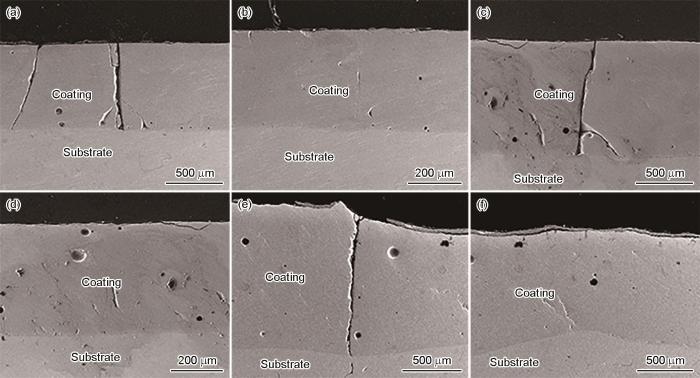
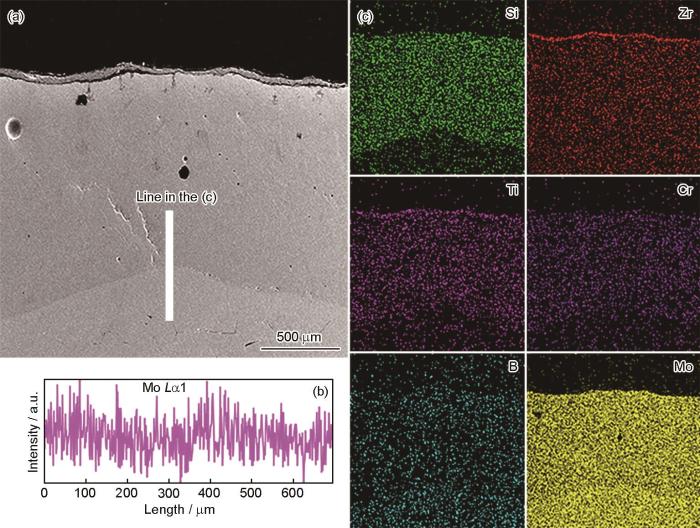
... 图3为不同功率制备的涂层截面SEM结果.由此可知,不同功率下的涂层均存在纵向裂纹缺陷,但裂纹的数量和尺寸并无显著差异,涂层与基体之间均有良好的冶金结合,熔合线处无明显裂纹缺陷.并且随着功率的增大,涂层的厚度增加[19,20]. ...
激光功率对激光熔覆Stellite 6合金涂层微观组织及耐磨性能的影响
1
2025
... 图3为不同功率制备的涂层截面SEM结果.由此可知,不同功率下的涂层均存在纵向裂纹缺陷,但裂纹的数量和尺寸并无显著差异,涂层与基体之间均有良好的冶金结合,熔合线处无明显裂纹缺陷.并且随着功率的增大,涂层的厚度增加[19,20]. ...
Microstructure regulation and performance of titanium alloy coating with Ni interlayer on the surface of mild steel by laser cladding
1
2024
... 图3为不同功率制备的涂层截面SEM结果.由此可知,不同功率下的涂层均存在纵向裂纹缺陷,但裂纹的数量和尺寸并无显著差异,涂层与基体之间均有良好的冶金结合,熔合线处无明显裂纹缺陷.并且随着功率的增大,涂层的厚度增加[19,20]. ...
Crack formation mechanisms and control methods of laser cladding coatings: A review
1
2023
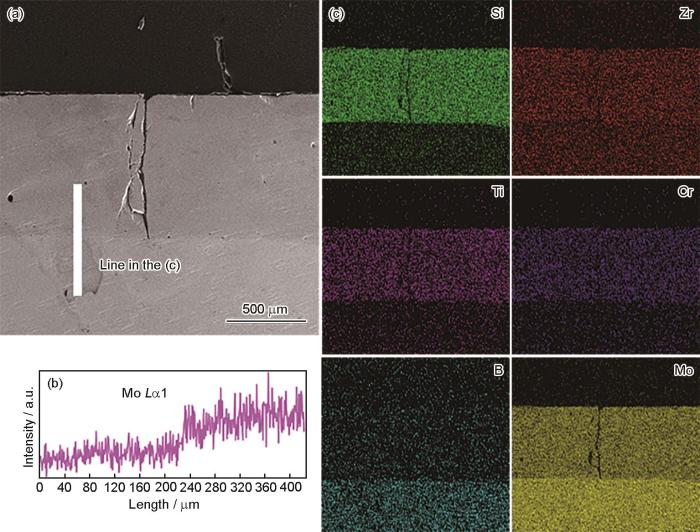
... 图5为3000 W功率制备的涂层截面EDS能谱图.如图所示,涂层厚度相对2000 W时明显增加,归因于功率增加温度升高,受热融化粉末增多,涂层厚度增加,约为900 μm.Si、Ti、Cr在涂层中均匀分布,并有少量Mo在制备过程中混入涂层.从截面可明显观察到有孔洞,这可能是因为功率提升后热输入过大导致熔池剧烈波动,形成气泡滞留[21,22]. ...
High-temperature oxidation of Zr-1Nb zirconium alloy with protective Cr/Mo coating
1
2022
... 图5为3000 W功率制备的涂层截面EDS能谱图.如图所示,涂层厚度相对2000 W时明显增加,归因于功率增加温度升高,受热融化粉末增多,涂层厚度增加,约为900 μm.Si、Ti、Cr在涂层中均匀分布,并有少量Mo在制备过程中混入涂层.从截面可明显观察到有孔洞,这可能是因为功率提升后热输入过大导致熔池剧烈波动,形成气泡滞留[21,22]. ...
Refractory WMoNbVTa high-entropy alloy as a diffusion barrier between a molybdenum substrate and MoSi2 ceramic coating
1
2022
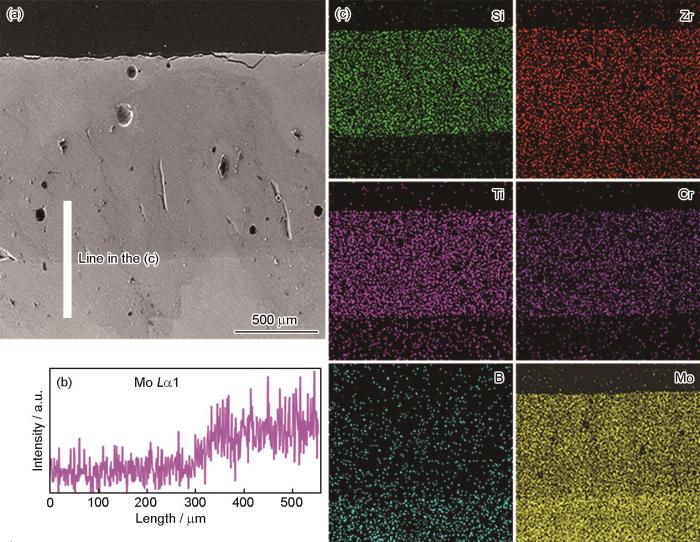
... 图6为4500 W功率制备的涂层截面EDS能谱图.由图可知,涂层表面出现一层较薄的Si、Ti、Cr聚集层,表明在制备过程中由于温度过高就形成了氧化层.同时,随着功率提高至4500 W,熔池尺寸增大,涂层厚度提高,且能谱分析表明,涂层中混入高含量的Mo,这主要归因于较高的激光能量,导致基体Mo熔化/挥发,最终引入涂层内部[23]. ...
Study on the organization and properties of anti-temperature oxidation coating by laser cladding on molybdenum surface
1
2024
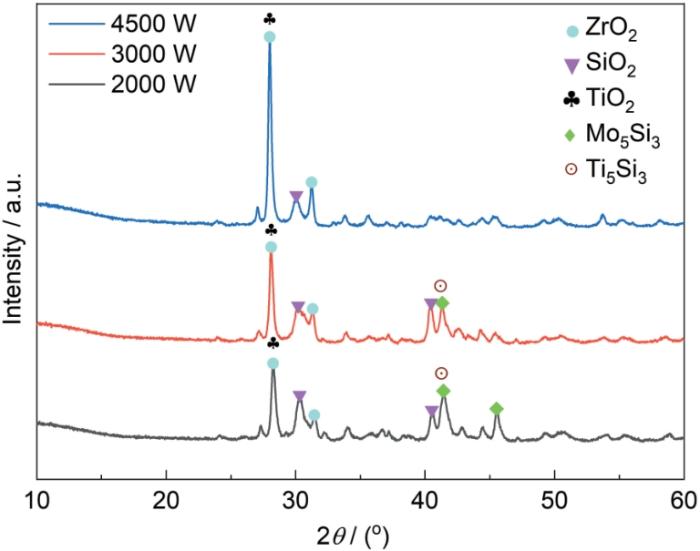
... 试样经氧化实验后称重可知,3000 W时熔覆样品质量变化情况较小,仅为589 mg/cm2,而2000 W和4500 W熔覆的样品质量变化较明显,这主要归因于2000 W时功率小能量密度较低,未能提供原子充分的扩散时间形成MoSi2相,从而停留在亚稳态的Mo5Si3相,而Mo5Si3氧化时会生成可挥发的MoO3,从而涂层在氧化过程中起到的保护作用差导致失效严重;4500 W时由于功率过高导致基体中Mo混入涂层,因而在氧化过程中形成MoO3挥发导致涂层存在大量孔洞[24,25].相比而言,在3000 W时制备的多元合金涂层抗氧化效果更佳. ...
钼表面激光熔覆抗高温氧化涂层组织及性能研究
1
2024
... 试样经氧化实验后称重可知,3000 W时熔覆样品质量变化情况较小,仅为589 mg/cm2,而2000 W和4500 W熔覆的样品质量变化较明显,这主要归因于2000 W时功率小能量密度较低,未能提供原子充分的扩散时间形成MoSi2相,从而停留在亚稳态的Mo5Si3相,而Mo5Si3氧化时会生成可挥发的MoO3,从而涂层在氧化过程中起到的保护作用差导致失效严重;4500 W时由于功率过高导致基体中Mo混入涂层,因而在氧化过程中形成MoO3挥发导致涂层存在大量孔洞[24,25].相比而言,在3000 W时制备的多元合金涂层抗氧化效果更佳. ...
Design, preparation and tribological properties of laser cladding Cu-Mo coating
1
2024
... 试样经氧化实验后称重可知,3000 W时熔覆样品质量变化情况较小,仅为589 mg/cm2,而2000 W和4500 W熔覆的样品质量变化较明显,这主要归因于2000 W时功率小能量密度较低,未能提供原子充分的扩散时间形成MoSi2相,从而停留在亚稳态的Mo5Si3相,而Mo5Si3氧化时会生成可挥发的MoO3,从而涂层在氧化过程中起到的保护作用差导致失效严重;4500 W时由于功率过高导致基体中Mo混入涂层,因而在氧化过程中形成MoO3挥发导致涂层存在大量孔洞[24,25].相比而言,在3000 W时制备的多元合金涂层抗氧化效果更佳. ...
激光熔覆Cu-Mo涂层的设计制备及摩擦学性能研究
1
2024
... 试样经氧化实验后称重可知,3000 W时熔覆样品质量变化情况较小,仅为589 mg/cm2,而2000 W和4500 W熔覆的样品质量变化较明显,这主要归因于2000 W时功率小能量密度较低,未能提供原子充分的扩散时间形成MoSi2相,从而停留在亚稳态的Mo5Si3相,而Mo5Si3氧化时会生成可挥发的MoO3,从而涂层在氧化过程中起到的保护作用差导致失效严重;4500 W时由于功率过高导致基体中Mo混入涂层,因而在氧化过程中形成MoO3挥发导致涂层存在大量孔洞[24,25].相比而言,在3000 W时制备的多元合金涂层抗氧化效果更佳. ...
Oxidation behavior of three different Ni-Cr coatings in 630 oC/25 MPa supercritical water
1
2024
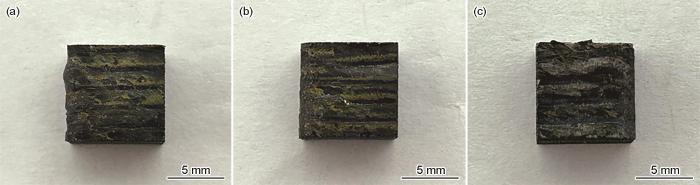
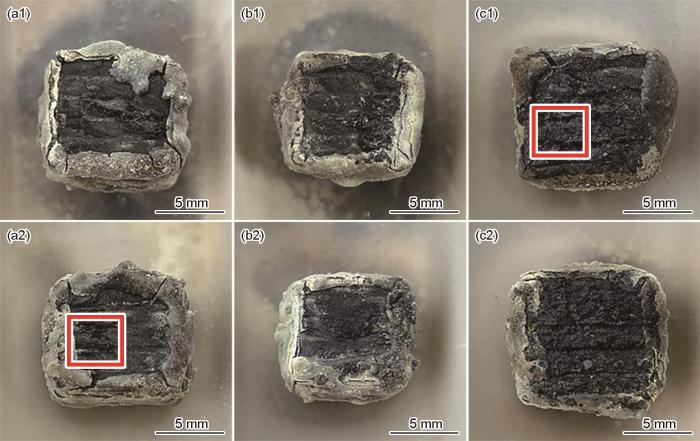
... 图8为氧化后所得试样的宏观形貌.由图可知,2000 W制备的涂层氧化后试样表面存在明显的开裂,涂层局部脱落.当功率为3000 W时制备的涂层氧化后外形完整无明显变化,与氧化前相比粗糙度变大.4500 W制备的涂层经氧化后表面存在较大的裂纹,明显看到涂层已经失效,存在较多的孔隙[26].3组氧化后试样的宏观形貌对比可以看出,3000 W制备的涂层对钼合金基体有着明显的保护作用,可有效缓解氧化引起的的质量损失及外形变化. ...
超临界水环境中三种Ni-Cr涂层氧化特性研究
1
2024
... 图8为氧化后所得试样的宏观形貌.由图可知,2000 W制备的涂层氧化后试样表面存在明显的开裂,涂层局部脱落.当功率为3000 W时制备的涂层氧化后外形完整无明显变化,与氧化前相比粗糙度变大.4500 W制备的涂层经氧化后表面存在较大的裂纹,明显看到涂层已经失效,存在较多的孔隙[26].3组氧化后试样的宏观形貌对比可以看出,3000 W制备的涂层对钼合金基体有着明显的保护作用,可有效缓解氧化引起的的质量损失及外形变化. ...
Oxidation behavior and effect of oxidation on mechanical properties of Mo5Si3 particle-reinforced Si3N4 composites
1
2004
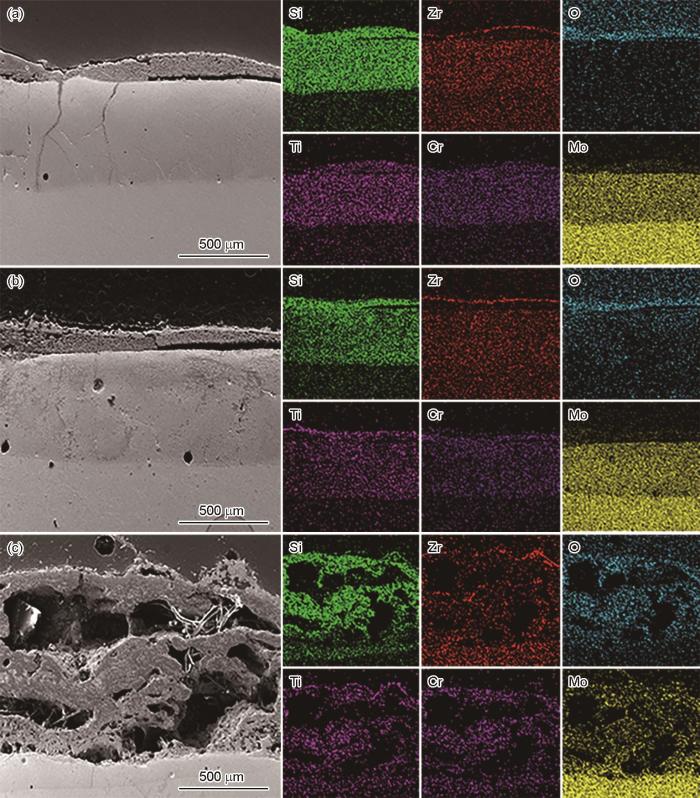
... 图9为不同功率制备的涂层样品经氧化后截面EDS能谱结果.图9a中可以看出激光功率为2000 W制备的涂层样品氧化后Si、Ti、Zr均有在表面聚集,但形成的氧化膜不连续.究其原因是制备时功率太小,涂层中没有充分形成MoSi2相,存在亚稳态Mo5Si3相,导致氧化时在表面未形成连续的氧化膜,并且氧气从不连续处渗入涂层内部,加速失效[27,28].当激光功率为3000 W时制备的涂层均匀完整、缺陷较少,明显看到表面形成的一层连续氧化膜,涂层中各类元素均匀分布.激光功率为4500 W制备的涂层氧化后表面密度降低,存在大量的孔隙,这是由于功率过大,导致Mo混入涂层,在氧化过程中形成MoO3挥发导致涂层失效[29~31].结果表明,3000 W制备的涂层在1200 ℃下仍具有优异的保护性能,并保持一定耐久性. ...
Low temperature oxidation behavior of MoSi2-Mo5Si3 composites
1
2002
... 图9为不同功率制备的涂层样品经氧化后截面EDS能谱结果.图9a中可以看出激光功率为2000 W制备的涂层样品氧化后Si、Ti、Zr均有在表面聚集,但形成的氧化膜不连续.究其原因是制备时功率太小,涂层中没有充分形成MoSi2相,存在亚稳态Mo5Si3相,导致氧化时在表面未形成连续的氧化膜,并且氧气从不连续处渗入涂层内部,加速失效[27,28].当激光功率为3000 W时制备的涂层均匀完整、缺陷较少,明显看到表面形成的一层连续氧化膜,涂层中各类元素均匀分布.激光功率为4500 W制备的涂层氧化后表面密度降低,存在大量的孔隙,这是由于功率过大,导致Mo混入涂层,在氧化过程中形成MoO3挥发导致涂层失效[29~31].结果表明,3000 W制备的涂层在1200 ℃下仍具有优异的保护性能,并保持一定耐久性. ...
MoSi2-Mo5Si3复合材料的低温氧化行为
1
2002
... 图9为不同功率制备的涂层样品经氧化后截面EDS能谱结果.图9a中可以看出激光功率为2000 W制备的涂层样品氧化后Si、Ti、Zr均有在表面聚集,但形成的氧化膜不连续.究其原因是制备时功率太小,涂层中没有充分形成MoSi2相,存在亚稳态Mo5Si3相,导致氧化时在表面未形成连续的氧化膜,并且氧气从不连续处渗入涂层内部,加速失效[27,28].当激光功率为3000 W时制备的涂层均匀完整、缺陷较少,明显看到表面形成的一层连续氧化膜,涂层中各类元素均匀分布.激光功率为4500 W制备的涂层氧化后表面密度降低,存在大量的孔隙,这是由于功率过大,导致Mo混入涂层,在氧化过程中形成MoO3挥发导致涂层失效[29~31].结果表明,3000 W制备的涂层在1200 ℃下仍具有优异的保护性能,并保持一定耐久性. ...
Study on preparation and oxidation properties of Mo5Si3-Al2O3 composites
1
2016
... 图9为不同功率制备的涂层样品经氧化后截面EDS能谱结果.图9a中可以看出激光功率为2000 W制备的涂层样品氧化后Si、Ti、Zr均有在表面聚集,但形成的氧化膜不连续.究其原因是制备时功率太小,涂层中没有充分形成MoSi2相,存在亚稳态Mo5Si3相,导致氧化时在表面未形成连续的氧化膜,并且氧气从不连续处渗入涂层内部,加速失效[27,28].当激光功率为3000 W时制备的涂层均匀完整、缺陷较少,明显看到表面形成的一层连续氧化膜,涂层中各类元素均匀分布.激光功率为4500 W制备的涂层氧化后表面密度降低,存在大量的孔隙,这是由于功率过大,导致Mo混入涂层,在氧化过程中形成MoO3挥发导致涂层失效[29~31].结果表明,3000 W制备的涂层在1200 ℃下仍具有优异的保护性能,并保持一定耐久性. ...
Mo5Si3-Al2O3复合材料的制备及抗氧化性能研究
1
2016
... 图9为不同功率制备的涂层样品经氧化后截面EDS能谱结果.图9a中可以看出激光功率为2000 W制备的涂层样品氧化后Si、Ti、Zr均有在表面聚集,但形成的氧化膜不连续.究其原因是制备时功率太小,涂层中没有充分形成MoSi2相,存在亚稳态Mo5Si3相,导致氧化时在表面未形成连续的氧化膜,并且氧气从不连续处渗入涂层内部,加速失效[27,28].当激光功率为3000 W时制备的涂层均匀完整、缺陷较少,明显看到表面形成的一层连续氧化膜,涂层中各类元素均匀分布.激光功率为4500 W制备的涂层氧化后表面密度降低,存在大量的孔隙,这是由于功率过大,导致Mo混入涂层,在氧化过程中形成MoO3挥发导致涂层失效[29~31].结果表明,3000 W制备的涂层在1200 ℃下仍具有优异的保护性能,并保持一定耐久性. ...
MoSi2 coating on Mo substrate for short-term oxidation protection in air
0
2009
Formation of MoSi2 and Al doped MoSi2 coatings on molybdenum base TZM (Mo-0.5Ti-0.1Zr-0.02C) alloy
1
2012
... 图9为不同功率制备的涂层样品经氧化后截面EDS能谱结果.图9a中可以看出激光功率为2000 W制备的涂层样品氧化后Si、Ti、Zr均有在表面聚集,但形成的氧化膜不连续.究其原因是制备时功率太小,涂层中没有充分形成MoSi2相,存在亚稳态Mo5Si3相,导致氧化时在表面未形成连续的氧化膜,并且氧气从不连续处渗入涂层内部,加速失效[27,28].当激光功率为3000 W时制备的涂层均匀完整、缺陷较少,明显看到表面形成的一层连续氧化膜,涂层中各类元素均匀分布.激光功率为4500 W制备的涂层氧化后表面密度降低,存在大量的孔隙,这是由于功率过大,导致Mo混入涂层,在氧化过程中形成MoO3挥发导致涂层失效[29~31].结果表明,3000 W制备的涂层在1200 ℃下仍具有优异的保护性能,并保持一定耐久性. ...
Preparation and structural properties of MoSi2 coatings on molybdenum-rhenium alloys
1
2024
... 图10为不同激光功率制备的Si-ZrB2-Ti-Cr涂层在1200 ℃下氧化机理图.随着氧化温度的升高,多元合金涂层表面逐渐形成Si、Ti、Cr的氧化物,阻碍了氧气向基体的扩散,从而提升钼合金的抗氧化性[32,33].然而,由于涂层制备时的激光功率不同,导致涂层表面所产生的氧化物均有所差异.当激光功率为2000 W时,能量密度低,涂层中存在亚稳态Mo5Si3相,且未能充分形成MoSi2相.氧化过程中,Mo5Si3易氧化生成MoO3挥发,表面难以形成连续致密的氧化膜,加速失效.在3000 W条件下制备的涂层均匀完整、缺陷较少,且与氧化前形貌变化不大,涂层厚度保持良好.其表面形成致密的Si、Ti、Zr氧化物层,显著抑制了氧化反应,为减少高温条件下的质量损失提供了有效屏障[34,35].当功率提高至4500 W时,过高的热输入导致基体中的Mo熔融并混入涂层,使表面Si元素含量降低并产生明显空隙,进而降低涂层的致密性和抗氧化性能. ...
钼铼合金表面MoSi2涂层制备及其结构性能
1
2024
... 图10为不同激光功率制备的Si-ZrB2-Ti-Cr涂层在1200 ℃下氧化机理图.随着氧化温度的升高,多元合金涂层表面逐渐形成Si、Ti、Cr的氧化物,阻碍了氧气向基体的扩散,从而提升钼合金的抗氧化性[32,33].然而,由于涂层制备时的激光功率不同,导致涂层表面所产生的氧化物均有所差异.当激光功率为2000 W时,能量密度低,涂层中存在亚稳态Mo5Si3相,且未能充分形成MoSi2相.氧化过程中,Mo5Si3易氧化生成MoO3挥发,表面难以形成连续致密的氧化膜,加速失效.在3000 W条件下制备的涂层均匀完整、缺陷较少,且与氧化前形貌变化不大,涂层厚度保持良好.其表面形成致密的Si、Ti、Zr氧化物层,显著抑制了氧化反应,为减少高温条件下的质量损失提供了有效屏障[34,35].当功率提高至4500 W时,过高的热输入导致基体中的Mo熔融并混入涂层,使表面Si元素含量降低并产生明显空隙,进而降低涂层的致密性和抗氧化性能. ...
Research on wear resistance of MoSi2 particle reinforced Co based coatings by laser cladding
1
2024
... 图10为不同激光功率制备的Si-ZrB2-Ti-Cr涂层在1200 ℃下氧化机理图.随着氧化温度的升高,多元合金涂层表面逐渐形成Si、Ti、Cr的氧化物,阻碍了氧气向基体的扩散,从而提升钼合金的抗氧化性[32,33].然而,由于涂层制备时的激光功率不同,导致涂层表面所产生的氧化物均有所差异.当激光功率为2000 W时,能量密度低,涂层中存在亚稳态Mo5Si3相,且未能充分形成MoSi2相.氧化过程中,Mo5Si3易氧化生成MoO3挥发,表面难以形成连续致密的氧化膜,加速失效.在3000 W条件下制备的涂层均匀完整、缺陷较少,且与氧化前形貌变化不大,涂层厚度保持良好.其表面形成致密的Si、Ti、Zr氧化物层,显著抑制了氧化反应,为减少高温条件下的质量损失提供了有效屏障[34,35].当功率提高至4500 W时,过高的热输入导致基体中的Mo熔融并混入涂层,使表面Si元素含量降低并产生明显空隙,进而降低涂层的致密性和抗氧化性能. ...
激光熔覆MoSi2颗粒增强Co基涂层的耐磨性能研究
1
2024
... 图10为不同激光功率制备的Si-ZrB2-Ti-Cr涂层在1200 ℃下氧化机理图.随着氧化温度的升高,多元合金涂层表面逐渐形成Si、Ti、Cr的氧化物,阻碍了氧气向基体的扩散,从而提升钼合金的抗氧化性[32,33].然而,由于涂层制备时的激光功率不同,导致涂层表面所产生的氧化物均有所差异.当激光功率为2000 W时,能量密度低,涂层中存在亚稳态Mo5Si3相,且未能充分形成MoSi2相.氧化过程中,Mo5Si3易氧化生成MoO3挥发,表面难以形成连续致密的氧化膜,加速失效.在3000 W条件下制备的涂层均匀完整、缺陷较少,且与氧化前形貌变化不大,涂层厚度保持良好.其表面形成致密的Si、Ti、Zr氧化物层,显著抑制了氧化反应,为减少高温条件下的质量损失提供了有效屏障[34,35].当功率提高至4500 W时,过高的热输入导致基体中的Mo熔融并混入涂层,使表面Si元素含量降低并产生明显空隙,进而降低涂层的致密性和抗氧化性能. ...
Unveiling the effect of Si on the microstructure and properties of AlFeCoCrNi high entropy alloy coating
1
2023
... 图10为不同激光功率制备的Si-ZrB2-Ti-Cr涂层在1200 ℃下氧化机理图.随着氧化温度的升高,多元合金涂层表面逐渐形成Si、Ti、Cr的氧化物,阻碍了氧气向基体的扩散,从而提升钼合金的抗氧化性[32,33].然而,由于涂层制备时的激光功率不同,导致涂层表面所产生的氧化物均有所差异.当激光功率为2000 W时,能量密度低,涂层中存在亚稳态Mo5Si3相,且未能充分形成MoSi2相.氧化过程中,Mo5Si3易氧化生成MoO3挥发,表面难以形成连续致密的氧化膜,加速失效.在3000 W条件下制备的涂层均匀完整、缺陷较少,且与氧化前形貌变化不大,涂层厚度保持良好.其表面形成致密的Si、Ti、Zr氧化物层,显著抑制了氧化反应,为减少高温条件下的质量损失提供了有效屏障[34,35].当功率提高至4500 W时,过高的热输入导致基体中的Mo熔融并混入涂层,使表面Si元素含量降低并产生明显空隙,进而降低涂层的致密性和抗氧化性能. ...
High-temperature oxidation performance of novel environmental barrier coating 50HfO2-50SiO2/Y x Yb(2- x)Si2O7 at 1475 oC
1
2023
... 图10为不同激光功率制备的Si-ZrB2-Ti-Cr涂层在1200 ℃下氧化机理图.随着氧化温度的升高,多元合金涂层表面逐渐形成Si、Ti、Cr的氧化物,阻碍了氧气向基体的扩散,从而提升钼合金的抗氧化性[32,33].然而,由于涂层制备时的激光功率不同,导致涂层表面所产生的氧化物均有所差异.当激光功率为2000 W时,能量密度低,涂层中存在亚稳态Mo5Si3相,且未能充分形成MoSi2相.氧化过程中,Mo5Si3易氧化生成MoO3挥发,表面难以形成连续致密的氧化膜,加速失效.在3000 W条件下制备的涂层均匀完整、缺陷较少,且与氧化前形貌变化不大,涂层厚度保持良好.其表面形成致密的Si、Ti、Zr氧化物层,显著抑制了氧化反应,为减少高温条件下的质量损失提供了有效屏障[34,35].当功率提高至4500 W时,过高的热输入导致基体中的Mo熔融并混入涂层,使表面Si元素含量降低并产生明显空隙,进而降低涂层的致密性和抗氧化性能. ...